Alterations, Fit & Preservation
Wedding Dress Alterations Timeline: When to Start & What to Expect
The 8-to-12-week start window, the first-through-final fitting structure, how many appointments you'll need by gown complexity, what changes at each visit, and what to bring — so no fitting is wasted.
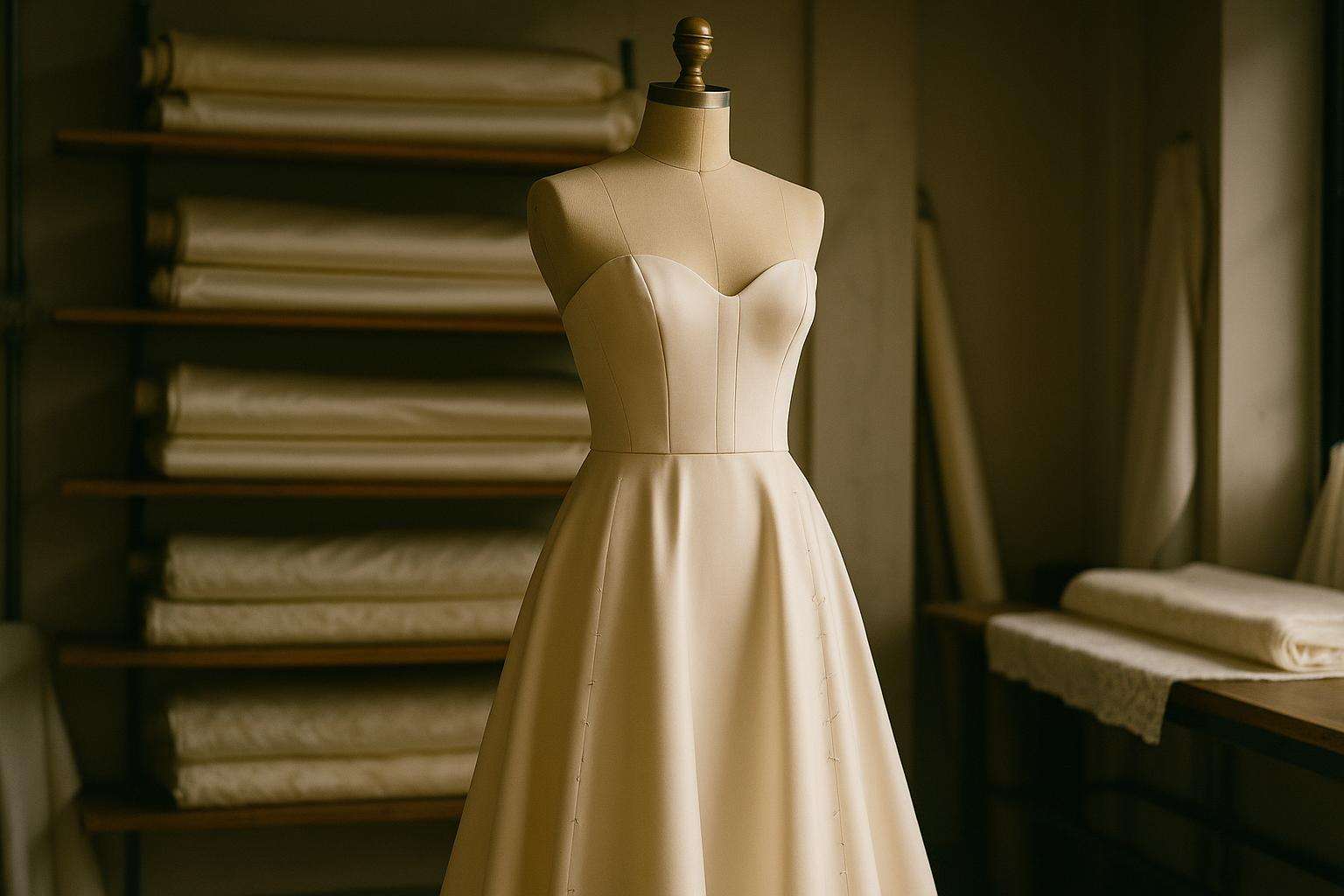
Most brides begin wedding dress alterations 8–12 weeks before their wedding, completing two to four fittings spaced roughly two to four weeks apart. The first appointment maps structural work; the second refines it; the final fitting polishes and teaches the bustle. Budget $300–$800 for standard alterations — more for beaded or lace-heavy gowns — and book your seamstress before the dress arrives, not after.
Alterations are not a finishing touch. For any made-to-order gown, they are the last structural phase of construction — the step that converts a dress sized to your largest measurement into one that fits the actual contours of your body. Skipping or compressing this phase is the most common cause of a gown that photographs poorly, feels uncomfortable throughout a long day, or requires an emergency fix in a bridal suite at dawn. Understanding the timeline — and what happens at each appointment — removes the anxiety and keeps every fitting productive.
When Should You Start Wedding Dress Alterations?
Bridal industry consensus, sourced from David's Bridal, The Knot, and boutique-level specialists, places the first alterations fitting at 8 to 12 weeks before the wedding date. This window balances two competing risks: too early and natural body fluctuations may invalidate the pinning; too late and there is no buffer for additional rounds of adjustment or seamstress availability.
Booking a seamstress should happen even earlier. Zola's planning timeline recommends researching alteration specialists five months out and booking the first appointment four months before the wedding. During peak wedding season — roughly April through October — talented bridal seamstresses fill their schedules quickly, and Chicago-area boutique Fifi's Bridal & Custom Tailoring in Elmhurst, Illinois, explicitly warns that rush alterations during busy months carry premium fees of 25–50% above standard rates.
As a general rule: if your gown needs only minor hemming and minimal shaping, a six-to-eight-week window can work. If you are adding sleeves, reworking a neckline, or handling heavily beaded fabric, budget three to five months from first fitting to wedding day.
How Many Fittings Does a Wedding Dress Need?
Two to four fittings cover the vast majority of brides, with three being the standard most commonly cited by bridal specialists. The exact number scales directly with gown complexity and the scope of changes requested.
| Gown Type | Typical Fittings | Common Changes | Timeline Start |
|---|---|---|---|
| Simple silhouette (sheath, slip, minimalist A-line) | 2–3 fittings | Hem, basic side-seam shaping, strap adjustment | 8 weeks out |
| Structured gown (corsetry, lace overlay, beadwork) | 3–4 fittings | Bodice shaping, lace-seam alignment, bustle installation | 10–12 weeks out |
| Custom modifications (sleeves, neckline redesign, major resize) | 5–8 fittings | Structural reconstruction, pattern-matched resewing, multiple review rounds | 4–5 months out |
Bridal and Tuxedo Galleria notes that approximately half of their clients require a fourth fitting, and any custom change often necessitates a fifth. Justin Alexander's 2025 alterations guide cautions brides following a pre-wedding fitness program to communicate target measurements to their seamstress at the first fitting, since major body changes between appointments can reset progress and add rounds. Each fitting typically runs 45 to 60 minutes.
What Happens at Each Fitting Appointment?
First Fitting (8–12 Weeks Out): Evaluation and Pinning
The opening appointment is the most comprehensive. The seamstress assesses the gown from every angle — bust, waist, hip, hem, straps, and back construction — and pins adjustments to map the full scope of work. Major structural decisions happen here: hemline height set against your actual wedding shoes, bustle style selection, bodice shaping, and any cosmetic customizations such as sleeve additions or modesty adaptations.
What to bring: Wedding shoes (heel height directly determines hem length), correct undergarments and shapewear, and any belt or sash that will be worn. Grace + Ivory, a direct-to-consumer bridal brand with detailed published alteration guidance, specifies that a veil and jewelry should come along if they affect neckline or shoulder proportions. If shoes have not yet been purchased, bring a pair with a comparable heel height as a placeholder.
Second Fitting (4–6 Weeks Out): Refinement
The initial pinned adjustments return as actual sewn changes. Brides try the gown on with the corrections completed, then identify any remaining areas — side seams, strap tension, bust padding — that need further tweaking. If a bustle was planned, it is typically pinned or installed at this appointment. Lovella Bridal in Glendale, California, frames this fitting as the point where the gown's shape becomes stable enough to confirm accessory proportions.
What to bring: Same shoes and undergarments as the first fitting, plus the veil, headpiece, and any jewelry that interacts with the neckline. Photographs of your intended hairstyle help the seamstress evaluate neckline and back exposure — particularly relevant for low-back gowns or off-the-shoulder styles.
Final Fitting (1–2 Weeks Out): Polish and Bustle Lesson
All major alterations should be complete. This appointment is a polish pass: a final tweak on any remaining detail, a steam or press, and — critically — a bustle lesson for a designated helper (maid of honor, family member, or bridesperson) who will manage the train at the reception. The Knot recommends bringing that helper to this appointment specifically so the bustle operation is practiced in real time, not improvised in a crowded reception hall.
Some brides schedule an optional day-before touch-up for steaming or emergency fixes, particularly for heavily structured gowns or dresses that have traveled a significant distance to the venue. Ask your seamstress whether this is offered at the final fitting appointment.
What Are the Most Common Wedding Dress Alterations and What Do They Cost?
The table below reflects typical cost ranges sourced from The Knot's alterations cost report and Sophia's Bridal Tux & Prom's published breakdown — two of the most comprehensive alteration cost compilations in the bridal industry.
| Alteration | Typical Cost Range | Notes |
|---|---|---|
| Hem (simple fabric) | $125–$300 | Single-layer fabric; cost rises with layers |
| Hem (beaded or lace edge) | $300–$450+ | Beads must be removed and hand-reattached |
| Taking in side seams | $50–$200 | Straightforward on plain fabrics; complex on lace |
| Bodice shaping or resize | $200–$600 | Scope-dependent; corsetry adds cost |
| Bustle installation | $75–$300 | Style-dependent (American, French, ballroom) |
| Add bra cups | $20–$40 | Common addition for strapless silhouettes |
| Zipper to corset conversion | $100–$280 | Popular for adjustability and silhouette control |
| Neckline reshape | $40–$100 | Minor adjustments only; major reworks cost more |
| Add sleeves | $200–$400 | Fabric-matching and attachment complexity varies |
Overall alteration spend for most brides falls between $300 and $800, with complex structural work or dense beadwork pushing totals to $1,200 or more. A practical budgeting heuristic from Zola: set aside 10–20% of your gown's purchase price for alterations from the outset, and treat it as a non-negotiable line item rather than an afterthought. Rush fees — triggered by starting the alteration process too late — commonly add 25–50% to standard rates, making early booking both a practical and financial advantage.
How Does Fabric and Construction Affect the Alterations Timeline?
Delicate fabrics require slower handling and add time at every fitting stage. Silk charmeuse and chiffon are prone to distortion if cut too quickly; organza frays at every seam edge and must be finished with precision. Lace overlays demand that every seam alteration carefully preserve pattern continuity — a misaligned motif is visible in photographs. Beadwork must be removed and hand-reattached around every adjustment point, which on a heavily embellished gown can double the labor cost of an otherwise simple resize.
A plain satin sheath that needs two fittings may require four or five when executed in re-embroidered lace. Radiant Bride in Rocky River, Ohio, advises brides to factor construction complexity into their timeline estimate from the very first conversation with a seamstress — not after the dress has arrived and the appointment is already booked.
Designers including Pronovias and Maggie Sottero, whose gowns frequently feature lace appliqués and beaded bodices, include alteration guidance in their care materials precisely because complex construction changes both the cost and the appointment count. If you have purchased a gown from Kleinfeld Bridal, BHLDN, or another retailer that offers in-house alteration services, confirm at purchase whether their seamstresses specialize in the specific construction type of your gown.
What Happens After the Final Fitting?
Once the final fitting is complete, the gown typically goes home with the bride within one to two weeks of the wedding, pressed and covered in a breathable garment bag. Store it hanging — never folded — in a cool, dry space away from direct sunlight, which yellows fabric even over short periods.
After the wedding, professional cleaning and preservation is strongly recommended within a few weeks. Invisible stains from champagne, body oils, and perspiration oxidize and become permanent if left untreated, often within six months. Preservation services such as those offered by Trusted Wedding Gown Preservation typically cost $250–$600 and include hand-cleaning, stain treatment, and acid-free chest boxing to prevent long-term yellowing. Many services allow the veil, train, and shoes to be added to a single preservation package — a practical choice if you plan to store the ensemble together.
The alterations timeline is, ultimately, a sequence of careful decisions made at the right moments. Book the seamstress early, arrive at every fitting with the right shoes and undergarments, bring your bustle helper to the final appointment, and the dress will be exactly what it was always meant to be on the day itself.
Considered Counsel
Frequently asked
When should I start wedding dress alterations?
The bridal industry consensus — reflected in guidance from David's Bridal, The Knot, and boutique-level specialists — is to begin alterations 8 to 12 weeks before your wedding date. Book your seamstress even earlier: Zola's planning timeline recommends researching alteration specialists five months out and booking the first appointment four months before the wedding. In peak bridal season (roughly April through October) the best seamstresses fill their calendars quickly. Starting at the 8-to-12-week mark gives you the buffer needed for two to four appointments plus any unexpected rounds of adjustment, and ensures alterations are complete with time to spare for steaming and a day-before touch-up if needed.
How many fittings does a wedding dress need?
Most brides require two to four fittings, with three being the most commonly cited standard across bridal specialists including Bridal and Tuxedo Galleria and The Knot. The precise number scales with gown complexity: simple sheaths or minimalist A-line silhouettes typically need two to three fittings; structured gowns with corsetry, lace overlays, or intricate beadwork require three to four; and dresses undergoing custom modifications — added sleeves, a reworked neckline, or a major structural resize — may need five to eight appointments. Bridal and Tuxedo Galleria notes that roughly half of their clients require a fourth fitting, and any custom change often necessitates a fifth. Each fitting typically runs 45 to 60 minutes.
What happens at the first wedding dress fitting?
The first fitting is the most comprehensive appointment. The seamstress assesses the gown from every angle — bust, waist, hip, hem, straps, and back construction — and pins adjustments to map the full scope of work. Major structural decisions happen here: hemline height (set against your actual wedding shoes), bustle style selection, bodice shaping, and any cosmetic customizations such as sleeve additions or modesty panels. You should bring your wedding shoes, correct undergarments and shapewear, and any belt or sash that will be worn on the day. Grace + Ivory recommends bringing your veil and jewelry if they affect neckline or shoulder proportions. This appointment sets every measurement that the subsequent fittings will refine.
What should I bring to a bridal alteration appointment?
Wedding shoes are non-negotiable at every fitting — heel height directly determines hem length, and a hem set against the wrong shoes will need to be redone. Alongside shoes, bring your exact undergarments and shapewear (what you wear changes the silhouette), plus any belt, sash, or waist accent that will appear in the final look. At the second fitting and beyond, add your veil, headpiece, and any jewelry that interacts with the neckline. Lovella Bridal in Glendale, California, suggests bringing photographs of your intended hairstyle so the seamstress can evaluate neckline and back exposure. At the final fitting, bring your designated bustle helper — typically a maid of honor or bridesperson — so they can learn the bustle mechanism in person.
How much do wedding dress alterations cost?
Overall alteration spend for most brides falls between $300 and $800, with complex structural work or dense beadwork pushing totals to $1,200 or more, according to The Knot and Sophia's Bridal Tux & Prom. Individual alteration costs break down roughly as follows: a simple hem runs $125–$300; a beaded or lace-edged hem $300–$450 or more; taking in side seams $50–$200; bodice shaping or resize $200–$600; bustle installation $75–$300; and adding sleeves $200–$400. Zola recommends budgeting 10–20% of your gown's purchase price for alterations from the outset. Rush fees — triggered by starting too late — commonly add 25–50% on top of standard rates, which is the strongest financial argument for booking your seamstress well in advance.
What is a bustle and when is it added during alterations?
A bustle is the mechanism that lifts and secures a wedding dress train for the reception, allowing the bride to walk, dance, and move freely without trailing fabric. There are several bustle styles — the American bustle (loops and buttons on the outside of the train), the French bustle (hooks on the underside), and the ballroom bustle (fabric gathered up under itself) — and the choice is typically made at the first fitting based on the train's weight and construction. The bustle is physically installed or pinned at the second fitting, and the operation is practiced in detail at the final fitting, where The Knot recommends bringing a designated helper (maid of honor or bridesperson) specifically so they can learn it in real time.
Can you start wedding dress alterations too early?
Yes. Starting more than 12 weeks before your wedding introduces the risk that natural body fluctuations will change your measurements between the pinning appointment and the final fitting, potentially requiring work to be redone. Justin Alexander's alterations guide cautions brides who are following a pre-wedding fitness program to communicate their target measurements at the first fitting but to wait until the body has stabilized before confirming the final silhouette. As a rule of thumb: if your gown needs only minor hemming and minimal shaping, a six-to-eight-week window is sufficient. If you are adding sleeves or reworking a neckline in heavily beaded fabric, begin at the 12-week mark or slightly earlier — but not much beyond that.