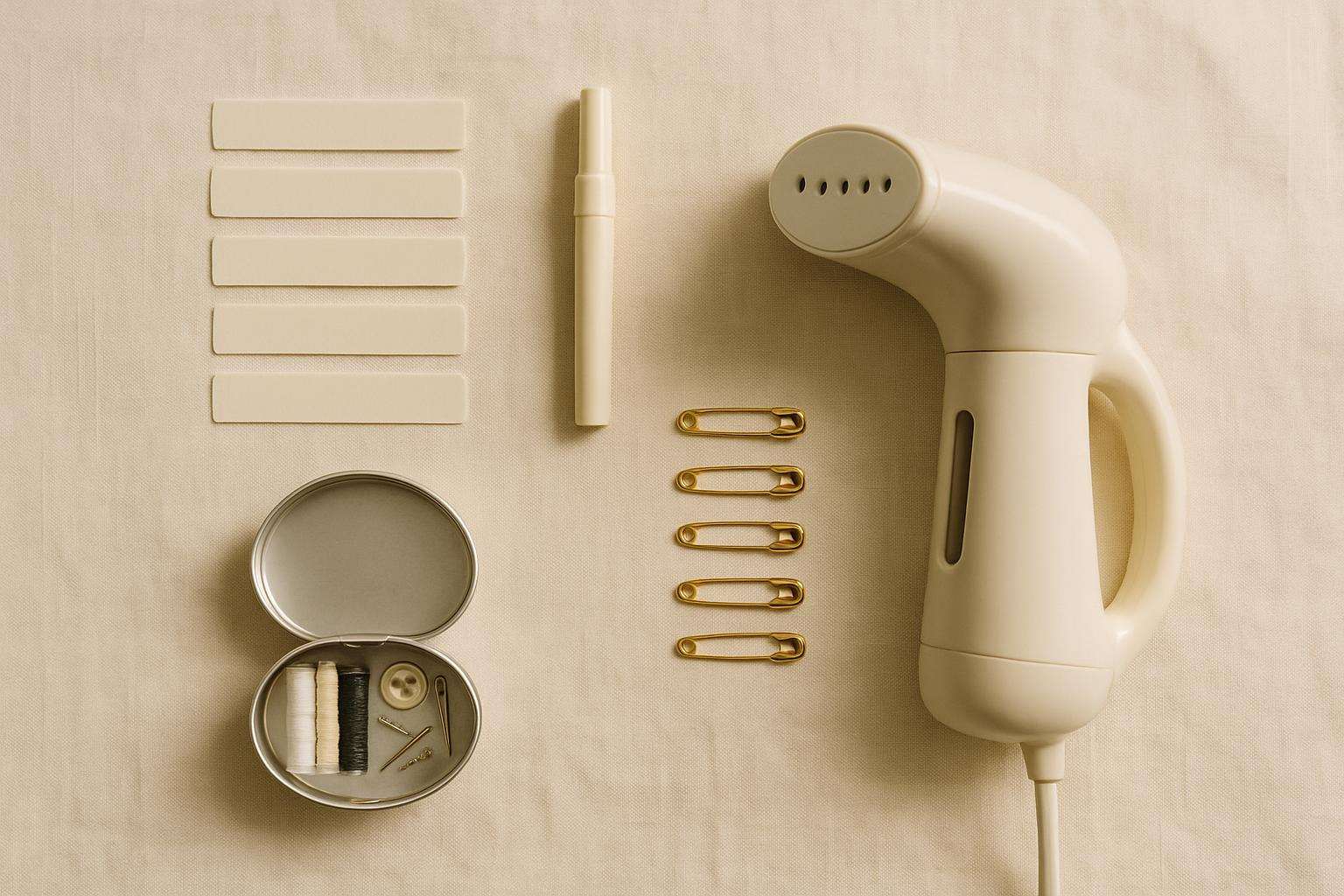
Wedding Dress Emergency Kit: The Day-Of Checklist (2026)
A ranked must-have list — from fashion tape to a stain pen — with the dress disaster each item solves, sourced from bridal salons and specialist vendors who know what actually goes wrong.
Your complete guide to the gown — and the woman wearing it.
Fittings, bustles, foundations and museum-grade preservation.
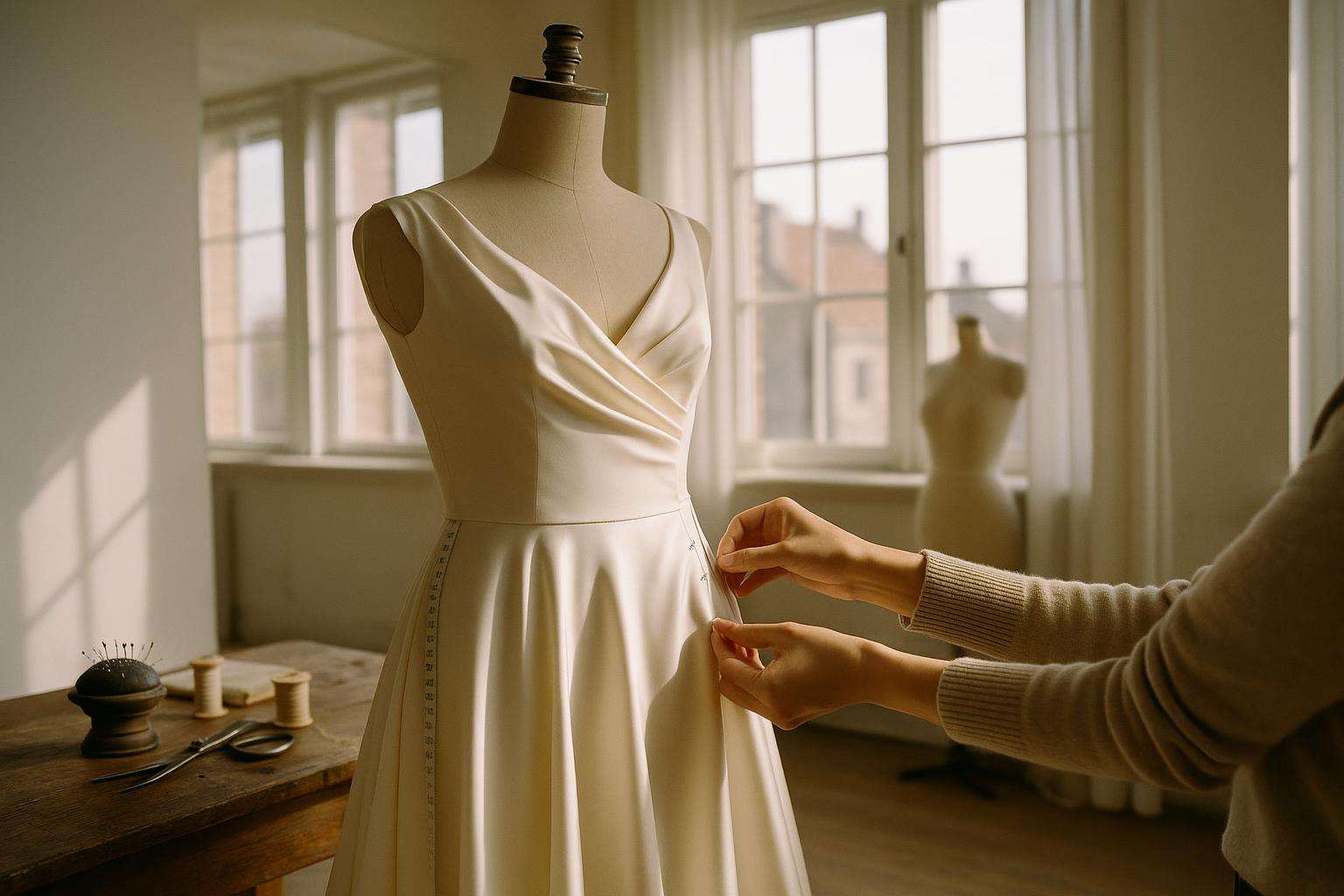
The difference between a beautiful dress and a breathtaking one is almost always the fit. This section is the craft that the salon photographs never show: the sequence of fittings, what a seamstress can and cannot change, how a bustle is built so your train lifts cleanly for the dancing, the right foundation garments, and the small structural choices that make a gown move with you. And because a wedding dress is an heirloom, we close with preservation — how to have a gown cleaned and boxed to museum standard so it survives, unyellowed, for the next bride in the family.
A ranked must-have list — from fashion tape to a stain pen — with the dress disaster each item solves, sourced from bridal salons and specialist vendors who know what actually goes wrong.
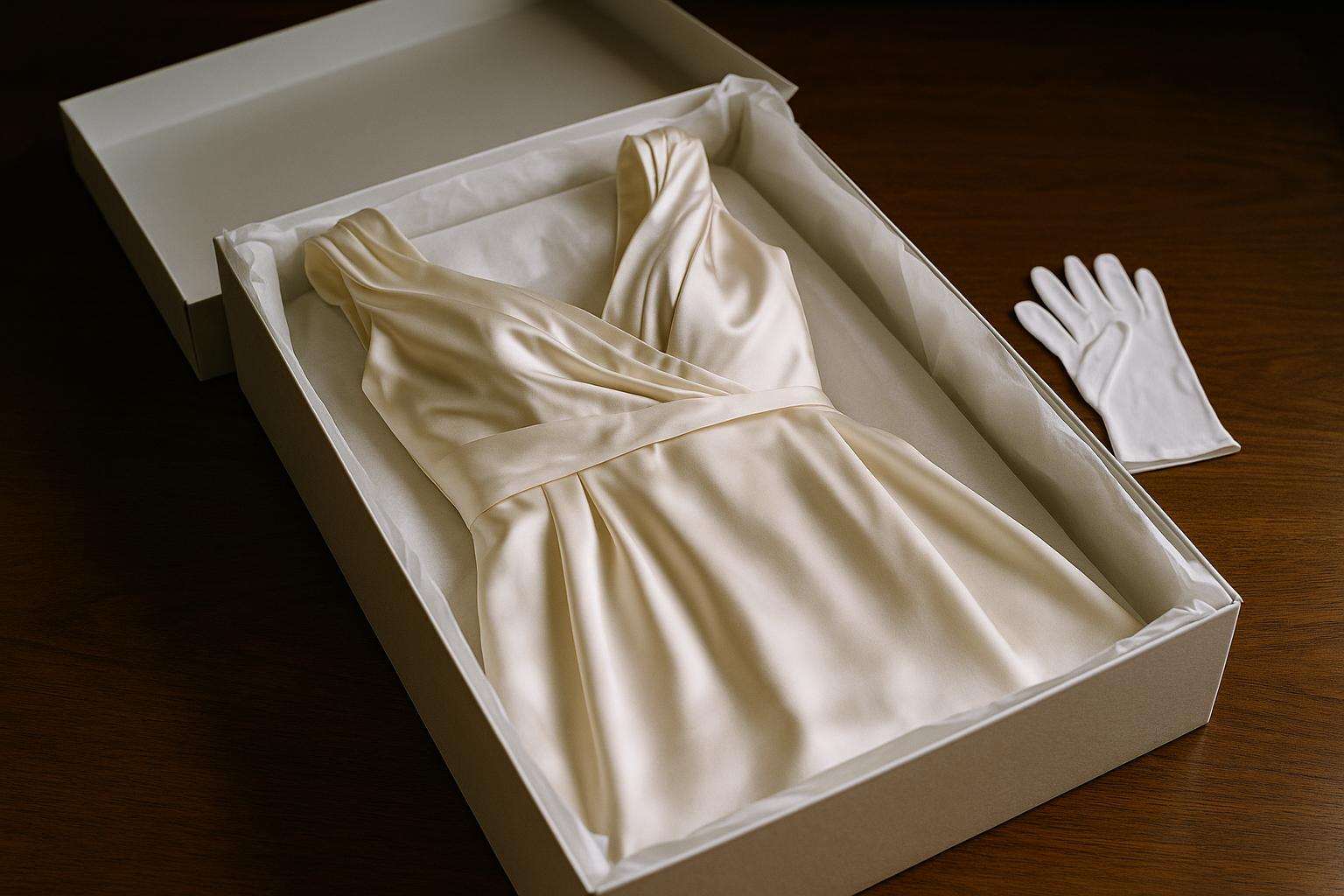
Your gown survived the day. Preservation ensures it survives the decade — and perhaps the generation. We ranked the national mail-in services and kits brides trust most, by process quality, cost, turnaround, and the guarantee that backs it all.
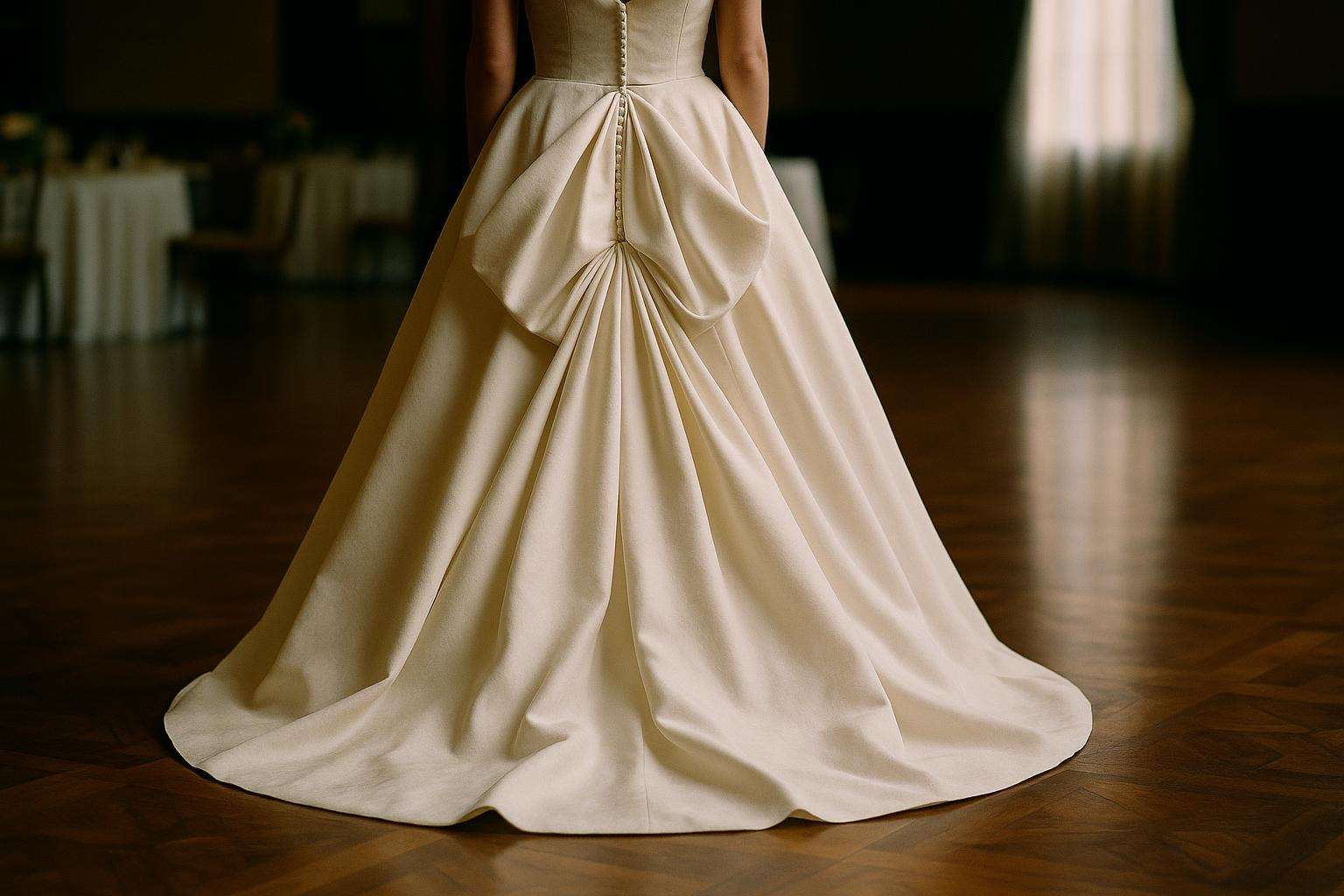
The right bustle depends on your train length, your fabric, and who is fastening it in a rushed bridal suite. Here is every style ranked — with honest costs, real fabric rules, and the look each creates.
The complete fitting-day checklist — wedding shoes that set your hem, the exact shapewear and undergarments your seamstress needs, the veil and jewelry that change your neckline assessment, and why your maid of honor must be at the final fitting for the bustle lesson.
The realistic envelope of bridal customization — resizing limits, neckline and back changes, what is structurally impossible, and when to choose a different gown instead.
Why invisible stains oxidize, how the hand-clean-and-box process works, what it costs in 2026, when to send your gown, and what a preservation kit actually includes.
The bustle is the alteration that sets your train free — but not all bustles are equal. Here is every style explained, with real costs, fabric rules, and a practical guide to choosing the right one for your gown.
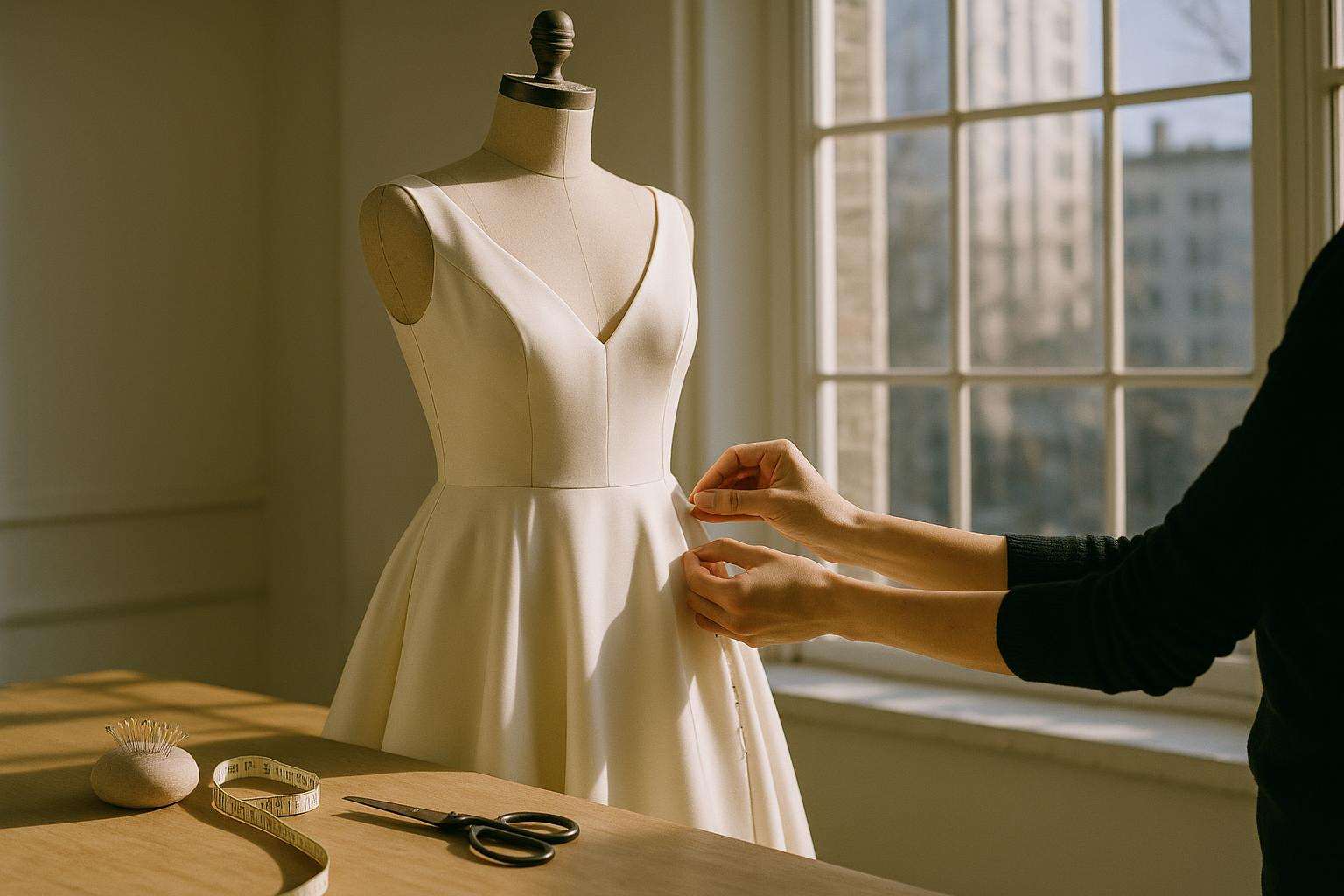
The 8-to-12-week start window, the first-through-final fitting structure, how many appointments you'll need by gown complexity, what changes at each visit, and what to bring — so no fitting is wasted.
Per-alteration price ranges for hemming, bodice take-ins, bustles, sleeves, and straps — plus the 10–20% budgeting heuristic, rush fee realities, and what makes complex fabrics cost more.
How seamstresses reduce a gown by one, two, or more sizes — seam strategy, bodice architecture, lace and beading complications, real cost ranges, and when DIY becomes a genuine risk.
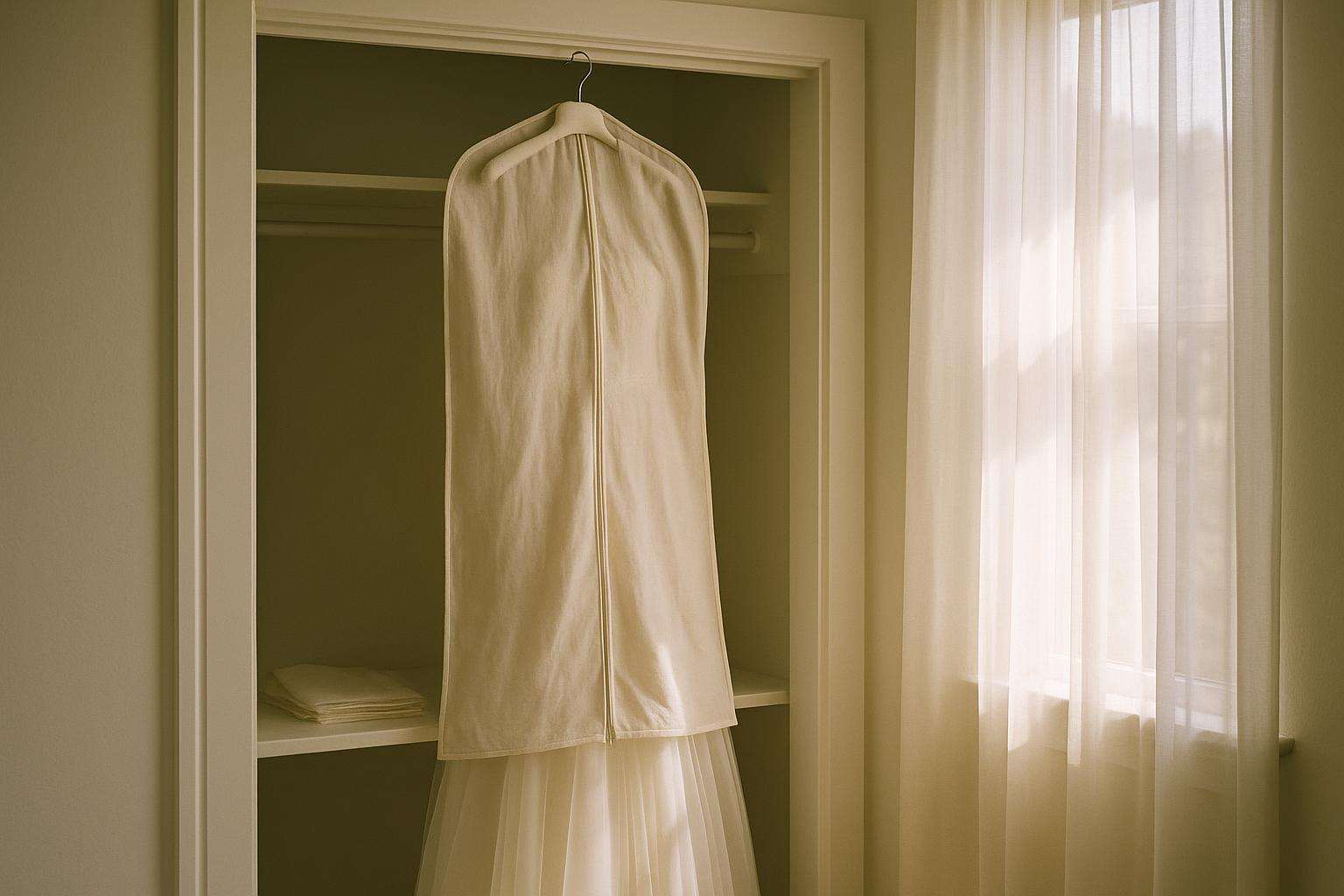
The right garment bag, correct temperature, and a few sheets of acid-free tissue are all that stand between a pristine gown and a yellowed, creased disaster on your wedding morning.
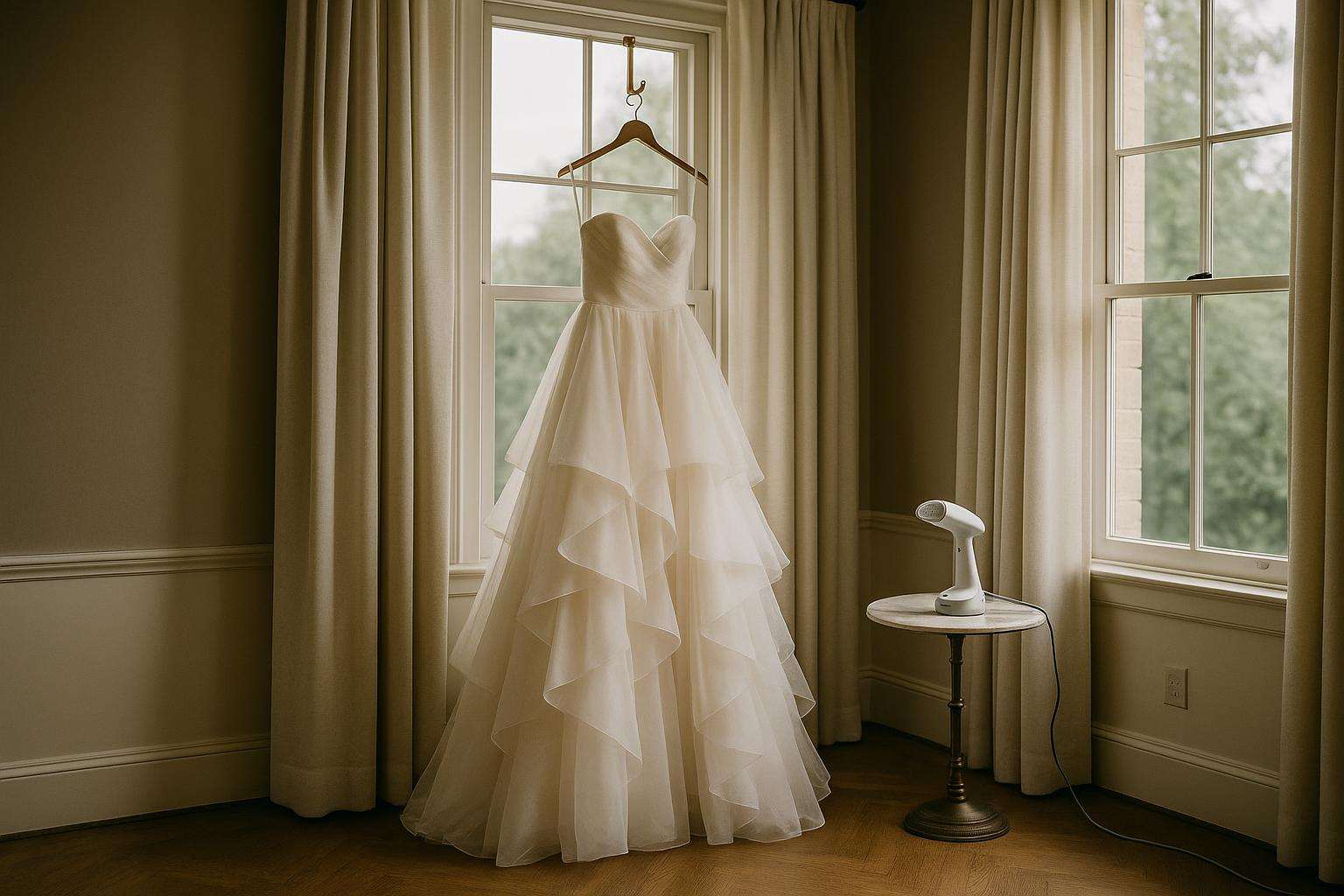
Fabric-by-fabric steaming temperatures, step-by-step technique, water-spot prevention, and an honest guide to when the professionals should take over.
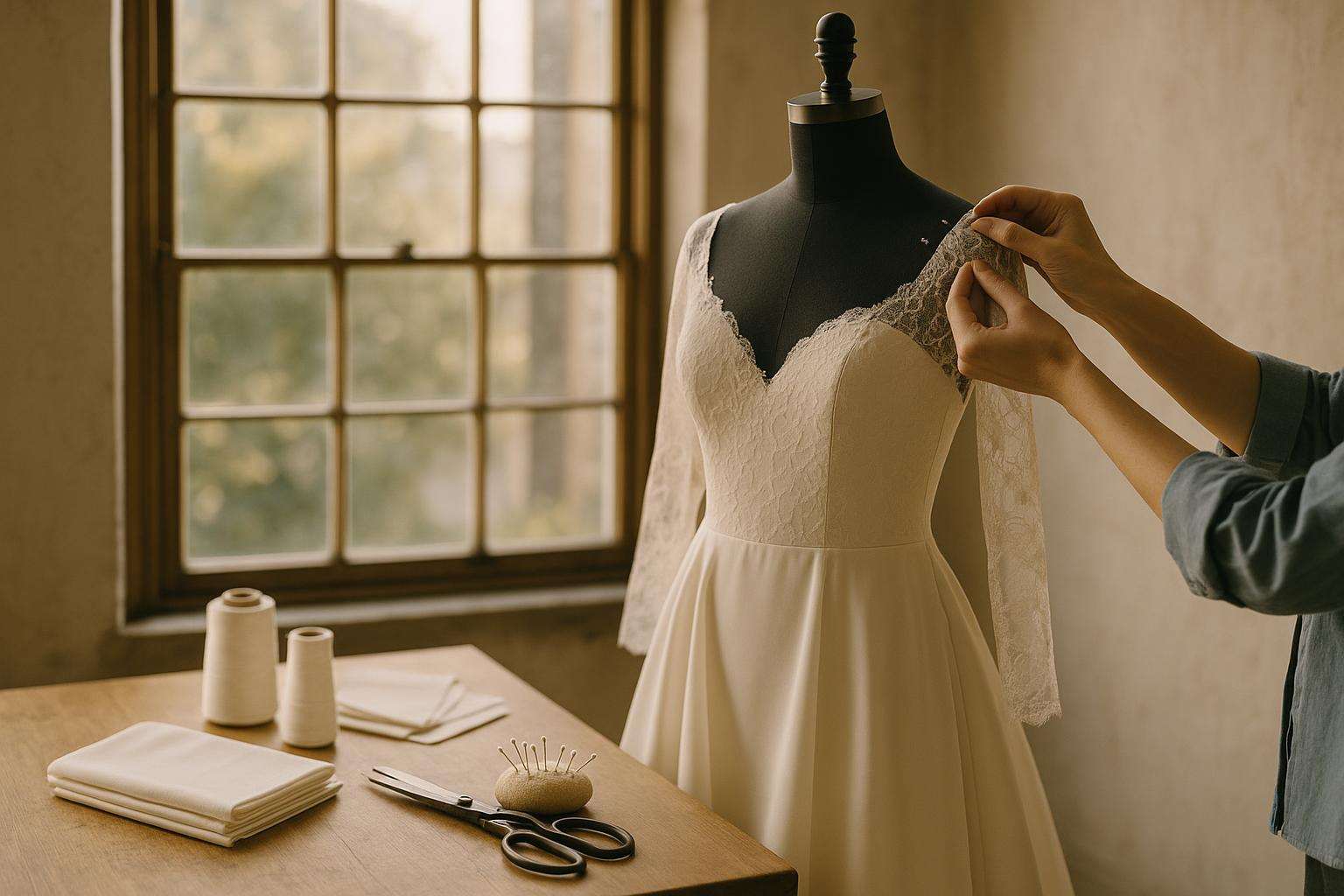
Detachable vs. sewn-in, illusion vs. lace, strapless bodice conversions, and the seamstress skill that separates a flawless result from a costly mistake — everything a bride needs to know before committing.
Most brides need two to three fittings, beginning six to ten weeks before the wedding. The first addresses the major alterations, the second refines the fit, and the final is a confirmation with shoes, undergarments and bustle. Allow more time for heavily beaded or boned gowns, which work slowly.
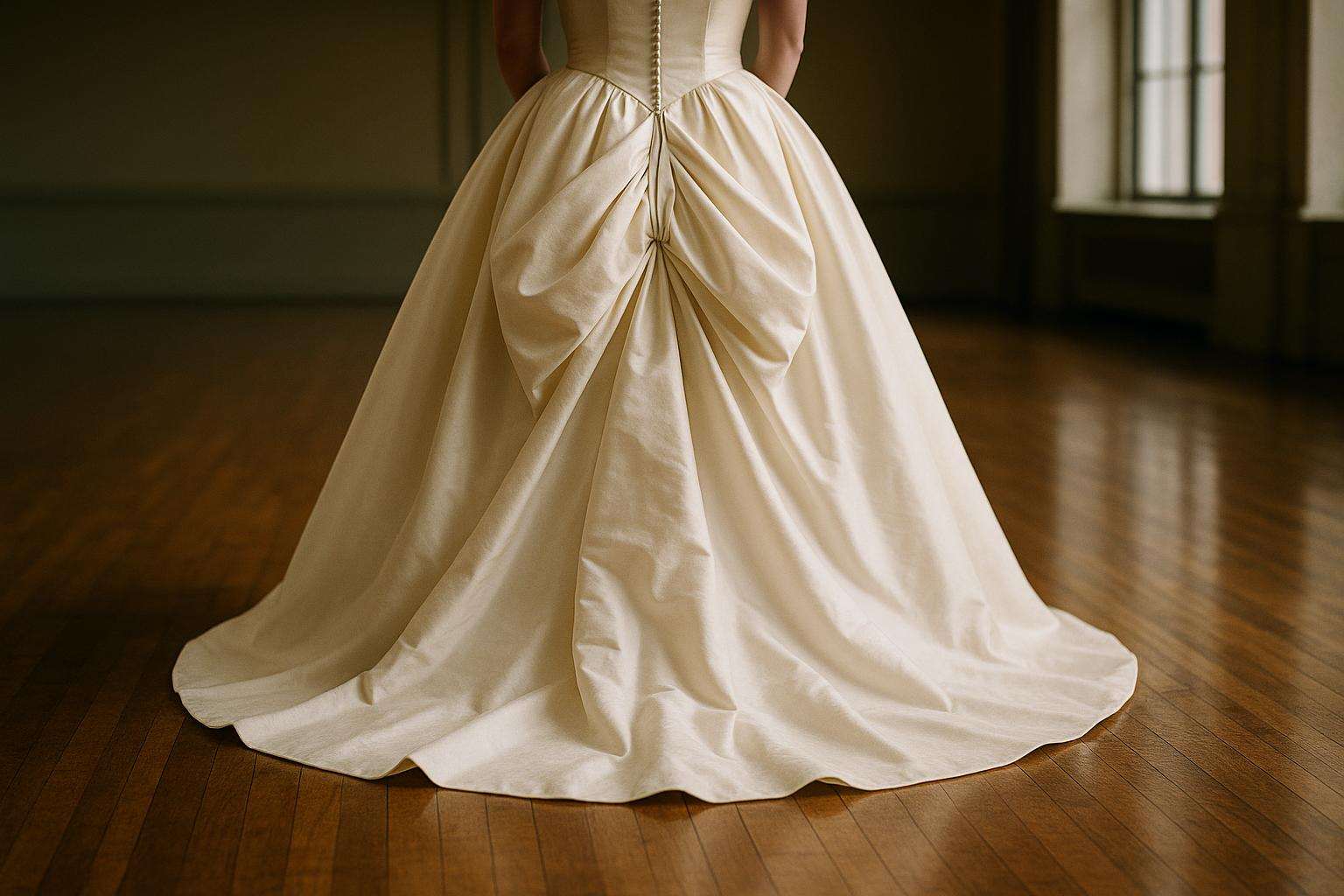
A bustle gathers and secures the train off the floor after the ceremony so you can move and dance freely. If your gown has any train at all, you will want one. There are several styles — the over-bustle (American), the under-bustle (French), and the ballroom — chosen to suit the weight and fabric of your dress.
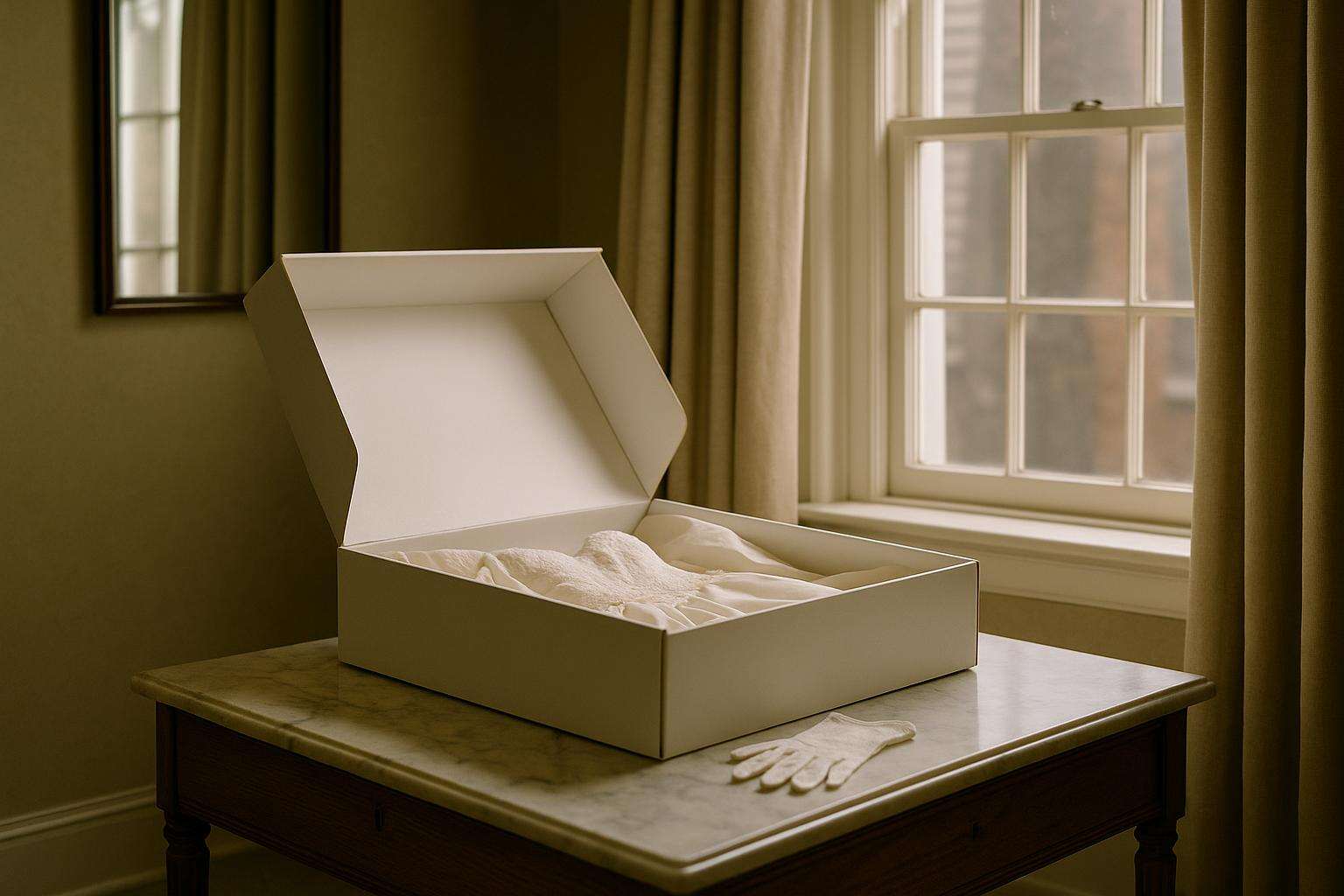
Have it professionally cleaned within a few weeks — set-in stains and invisible sugar marks oxidize and yellow over time. Then store it in an acid-free box with acid-free tissue, away from light and humidity, or flat in a breathable garment bag. A properly preserved gown can last for generations.