Alterations, Fit & Preservation
What to Bring to a Wedding Dress Fitting
The complete fitting-day checklist — wedding shoes that set your hem, the exact shapewear and undergarments your seamstress needs, the veil and jewelry that change your neckline assessment, and why your maid of honor must be at the final fitting for the bustle lesson.
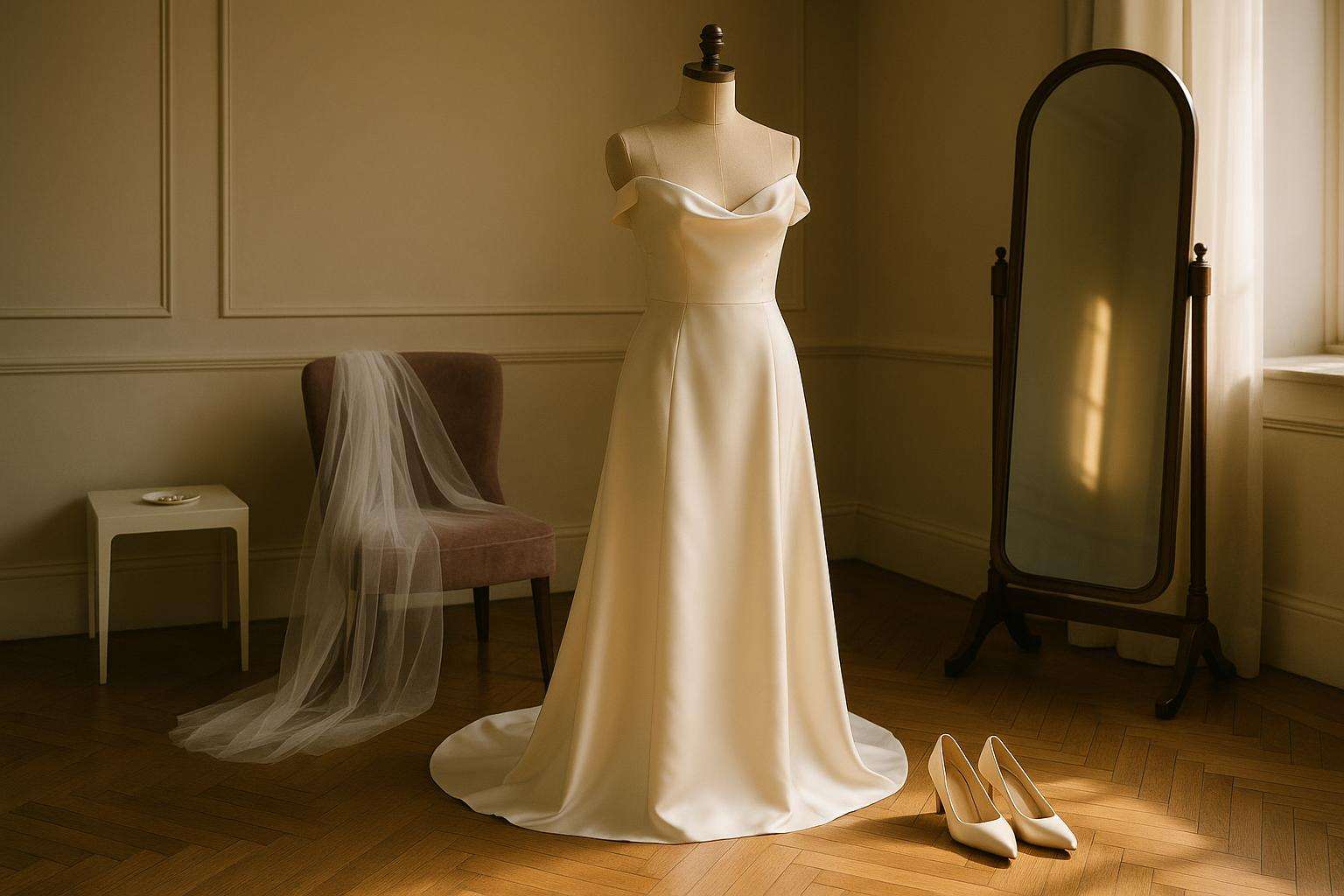
Bring your actual wedding shoes to every fitting — heel height sets the hem, and changing footwear mid-process creates extra appointments. Pack your wedding-day shapewear and undergarments (purchase them before alterations begin), carry your veil and any neckline jewelry to the first fitting, and ensure your maid of honor attends the final fitting to learn the bustle. These four items are what turn a fitting into an accurate calibration session.
A wedding dress fitting is not a second shopping appointment. It is a precision exercise in which your seamstress maps your body against your gown and pins the changes that will make the two align perfectly on the day that matters most. Every item you carry in — or forget to carry in — changes what she can accomplish. The shoe left at home means a hem that cannot be set. The shapewear purchased after alterations means a bodice that must be re-pinned. The veil mentioned but not brought means a neckline that may need reworking later, when reworking costs more.
This guide organizes the fitting-day checklist by purpose, appointment by appointment, so nothing falls through the cracks.
Why Do Your Shoes Matter So Much at a Wedding Dress Fitting?
Heel height is the single most technically consequential item on this list, and it is the one most often left in the car. Your seamstress sets your hem length while you are standing in your actual shoes — at your actual posture, your actual height. Even a half-inch difference in heel height shifts where the skirt meets the floor, changes the angle of a structured silhouette, and alters how the front and back hems compare.
Kleinfeld Bridal — which has fitted brides at its flagship 30,000-square-foot Manhattan salon for over seventy years — states explicitly that changing shoes mid-alteration process "will create more work for your seamstress and more fittings for you." That is not a mild caution. It is a description of what actually happens: an already-pinned hem must be unpinned, reset, and re-sewn when the shoe changes.
If your wedding shoes have not yet arrived, bring the closest substitute you own. Dimitra Designs, a multi-location bridal boutique with salons in Maryland and Virginia, advises bringing a heel-height match rather than estimating, because "footwear height can vary even within the same style category." Ballpark approximations produce ballpark hems. Your ceremony shoes are the target — not the flats or low heels you may change into later at the reception. Most fittings are calibrated for ceremony wear.
What Shapewear and Undergarments Should You Bring to a Bridal Fitting?
The rule from every major salon and designer is the same: wear and bring the exact undergarments you plan to wear on your wedding day, to every single fitting. This is a structural requirement, not a comfort preference.
Maggie Sottero's official fitting guide is direct on the timing question: purchase your shapewear before alterations begin, not after. The measurements your seamstress takes must reflect what you will actually be wearing. Choosing different shapewear — even a slightly different compression level or cut — after pinning forces her to rework the hem and bodice from the start. Kleinfeld Bridal advises brides who have not yet chosen shapewear to bring candidate pieces to the second fitting, so the fitter can evaluate options in person before any basting is complete.
Bra selection by neckline type:
- Strapless or sweetheart necklines (a large portion of the bridal market, represented by designers from Vera Wang to Pronovias to Maggie Sottero): a strapless bra with silicone gripper strips along the band. SKIMS and Vanity Fair — specifically the Vanity Fair Smooth Strapless with removable multi-way straps — are consistently recommended by bridal editors for grip and all-day hold.
- Plunging or deep-V necklines: a plunge bra with adjustable straps to set the center depth precisely.
- Backless gowns: an adhesive bra — strapless, bandless, and silicone-backed. Widely cited options include NuBra (available in seven colorways and an extended cup-size range), Niidor (available on Amazon, cups A through G, typically under $25), CAKES Body (grip-based rather than adhesive, heat-activated, waterproof and sweatproof), and MAGIC Bodyfashion's Angel Bra for sweetheart or strapless cuts.
- Gowns with built-in cups and boning: adding your own bra creates bulk that distorts pinning. In these cases, silicone nipple covers are the seamless alternative recommended by multiple bridal boutiques.
All undergarments should be nude or skin-tone, seamless, and free of thick seams or embellishments. Maggie Sottero's undergarment guide specifies seamless construction and nude palettes that "disappear under white." Dark or patterned pieces shadow through chiffon, charmeuse, and organza. Mon Amie Bridal Salon in Chicago states it plainly: "communication, communication, communication" — and that includes communicating with your seamstress about exactly what you are wearing underneath.
Does Your Veil or Jewelry Change What the Seamstress Needs to See?
Yes — and this is the item brides most consistently save for the final fitting when it belongs at the first.
Your veil's length, attachment point, and volume interact directly with the neckline and back construction of your gown. A seamstress evaluating a V-back, a keyhole, or an illusion-fabric panel needs to see how the veil clears those details before finalizing any fabric work in that area. A floor-length cathedral veil attached at the crown behaves very differently against a low-back gown than a shorter fingertip veil — and the difference matters for how the back seam is finished and how any bustling is structured.
Neckline jewelry carries a similar principle. A statement collar necklace, a choker, an heirloom brooch worn at the neck — any of these can require the bodice neckline to sit slightly differently to accommodate them without digging in or riding up. Grace + Ivory's alterations guide and Justin Alexander's 2025 alterations guide both specify that veils and neckline jewelry belong at the first fitting, not the final one, because identifying neckline or back adjustments later — after the major seam work is complete — is significantly more expensive to correct.
If your veil is borrowed or not yet purchased, describe its approximate length, weight, and attachment style to your seamstress. A rough picture is better than silence.
What Is the Complete Fitting-Day Checklist for Each Appointment?
| Item | First Fitting (10–12 wks) | Second Fitting (6–8 wks) | Final Fitting (1–2 wks) |
|---|---|---|---|
| Wedding shoes (ceremony heel height) | Essential — sets the hem | Essential — confirms hem after basting | Essential — final hem check |
| Wedding-day shapewear | Essential — bodice pinned against it | Essential — same piece, no substitutes | Essential — wear exactly as on the day |
| Wedding-day bra or adhesive | Essential — neckline and strap work | Essential | Essential |
| Veil (or description if not yet purchased) | Bring — neckline and back assessment | Bring — proportion check | Bring — final look confirmation |
| Neckline jewelry | Bring — affects bodice fit | Bring | Bring |
| Reference photos (design changes) | Essential if requesting modifications | If changes remain open | Not needed |
| Maid of honor or bustle helper | Optional | Helpful for bustle selection | Essential — bustle lesson |
| Written question list | Bring — fitting anxiety is real | Bring for remaining concerns | Bring for final sign-off |
| Light snack and water | Recommended — 45–60 min standing in heels | Recommended | Recommended |
| No spray tan, heavy lotion, or body oil | Avoid — transfers to fabric, blocks pins | Avoid | Avoid |
Kleinfeld Bridal recommends eating a light meal before every fitting appointment — you will be standing in heels for 45–60 minutes, possibly in a warm fitting suite, and lightheadedness is a common and avoidable problem. Bring water.
Why Does the Final Fitting Require a Specific Person in the Room?
The final fitting is the only fitting with a mandatory guest: whoever will bustle your gown at the reception. This is not a formality. Bustle mechanisms vary significantly by gown construction and by the style selected during the alteration process. An American bustle (hooks the hem to the waist seam), an Austrian bustle (creates an elegant puffed underskirt), and an over-bustle (loops the train up to buttons at the back) each work differently — and they require different hands-on technique to execute quickly without mishap.
Your seamstress will demonstrate the bustle at the final appointment. That demonstration, watched once in person, is the entire training. The Knot's wedding fittings guide is explicit: bring the bustle helper to this appointment. Kleinfeld Bridal's alterations documentation states the same. The maid of honor is the traditional choice because she will typically be nearby at the reception, but any trusted person who will be present and paying close attention works.
Keep the final fitting small — the bride, the bustle helper, and one additional trusted guest at most. The seamstress needs space to move around you and deliver a precise polish pass. A crowded room slows detail work and creates the conditions for something to be missed.
What Are the Red Flags to Watch For at a Wedding Dress Fitting?
The fitting environment and the fitting itself can reveal problems worth catching early:
- Bodice gaps, zipper strain, or a waist that sits in the wrong position after basting almost always mean the initial pinning was done without the correct undergarments. The fitting must be repeated with the right pieces before work continues.
- No itemized written quote before work begins. Wedding dress alteration costs range from $300–$800 for standard work up to $1,200 or more for complex gowns with lace, beading, or full bodice restructuring, per Zola's alteration cost guide. Vague verbal estimates are a documented source of bridal industry disputes.
- Promises made without seeing the gown. A qualified fitter assesses in person before committing to outcomes. Guaranteed results described at booking, before the seamstress has seen the construction, are a warning sign.
- An uneven hemline or crooked seams after the first basting. Basted hems should be level. Request a re-assessment before full sewing proceeds.
- Rush timelines without clear scheduling. Wedding Shoppe Inc. and multiple alteration specialists recommend a three-fitting process starting 10–12 weeks out. Beginning fewer than 8 weeks before the wedding is high-risk territory: it compresses the window for catching and correcting errors between appointments. Rush alterations, when available, typically carry fees of 25–50% above standard rates.
The fittings that go smoothly share a common thread: the bride arrived with her shoes, her undergarments, and her accessories — and she communicated clearly and immediately about anything that was not sitting correctly. Your seamstress can only fix what she knows about. Speak up, and speak specifically.
Considered Counsel
Frequently asked
Do you need to bring your wedding shoes to every fitting appointment?
Yes — your wedding shoes must come to every fitting, starting with the first. Heel height determines where the seamstress sets the hem: even a half-inch difference changes where the skirt meets the floor, alters your posture, and affects the angle of any structured silhouette. Kleinfeld Bridal, whose alterations team handles thousands of gowns a year, states explicitly that changing shoes mid-alteration process creates additional work and additional appointments. If your wedding shoes are not yet purchased, bring the closest heel-height substitute you own. Dimitra Designs, a multi-location bridal boutique in Maryland and Virginia, advises this specifically: bring a substitute with a comparable heel height rather than estimating, because footwear height varies even within the same shoe category. Ceremony shoes are the priority — not the flats you plan to change into at the reception.
What shapewear should you bring to a wedding dress fitting?
Bring the exact shapewear you plan to wear on your wedding day — and purchase it before alterations begin, not after. Maggie Sottero's official fitting guide is clear on this point: measurements taken for alterations must reflect what you will actually wear, and changing your shapewear choice after pinning forces your seamstress to rework the hem and bodice from the start. If you have not yet chosen shapewear, Kleinfeld Bridal advises bringing candidate pieces to the second fitting so the fitter can assess options in person. All shapewear should be seamless and nude — dark or patterned pieces can shadow through chiffon, organza, and charmeuse. As a baseline, look for seamless control briefs or a light bodysuit; heavier compression garments change your silhouette meaningfully and must be present for accurate pinning.
Should you bring your veil and jewelry to a bridal fitting?
Yes, and this matters more than most brides expect. Your veil length, attachment point, and volume interact directly with the neckline and back construction of your gown — a seamstress assessing a V-back or keyhole closure needs to see how the veil clears those details before finalizing any fabric work. Jewelry that sits at the neckline — a statement collar necklace, a choker, an heirloom brooch — can require the bodice to be adjusted to accommodate it. Grace + Ivory's alterations guide and Justin Alexander's 2025 fitting guide both specify that veils and neckline jewelry should come to the first fitting, not the final one, precisely because changes become more difficult and expensive the later they are identified. If your veil is borrowed or not yet purchased, describe its approximate length and weight to your seamstress.
Who should you bring to the final wedding dress fitting?
Your maid of honor — or whoever will be responsible for managing your bustle at the reception — must attend the final fitting. This is not optional. The final appointment is when the seamstress demonstrates the bustle: how many buttons or hooks to fasten, in what order, and how to arrange the train. Bustle mechanisms vary significantly by gown construction and by the style selected (an American bustle, an Austrian bustle, and an over-bustle each work differently), and learning by watching in real time is far more reliable than a post-wedding walkthrough. The Knot's wedding fittings guide recommends bringing this person specifically to the final fitting, and Kleinfeld Bridal's alterations documentation echoes the same instruction. Bring one or two trusted people to the final appointment, keep it small, and make sure whoever comes is paying close attention during the bustle demonstration.
What should you not bring to a wedding dress fitting?
Leave behind fresh spray tan, heavy body lotion, and body oil — all of which transfer to delicate bridal fabrics and can prevent pins from gripping correctly. Dark or embellished underwear should also stay home; it shadows through sheer and lightweight fabrics and adds bulk that distorts pinning accuracy. Avoid heavy perfume, which can affect delicate materials at close working range. Large entourages are also discouraged for fittings (unlike shopping appointments): the seamstress needs space to move around you, pin efficiently, and communicate clearly. One or two guests is ideal; the final fitting specifically needs only the bustle helper in addition to the bride. A chaotic fitting room is not just uncomfortable — it slows precision work and adds appointment time.
How many fittings does a wedding dress typically need, and what happens at each one?
Most brides complete two to three fittings, with three being the standard for gowns requiring meaningful structural work. The first fitting (10–12 weeks before the wedding) is where the seamstress evaluates the gown from every angle and pins the full scope of changes: hem height against your actual shoes, bodice shaping, bustle style selection, and any cosmetic alterations. The second fitting (6–8 weeks out) reviews the basted corrections and addresses any remaining areas — side seams, strap tension, veil integration. The final fitting (1–2 weeks before the wedding) is a polish pass: the last detail tweaks, a steam or press, and the bustle lesson. Wedding Shoppe Inc. and multiple alteration specialists recommend starting this process at 10–12 weeks. Beginning fewer than 8 weeks out is considered high-risk because it eliminates the buffer for catching and correcting errors between appointments.
What is the cost range for wedding dress alterations in 2026?
Standard alterations — a hem, side-seam shaping, and a bustle installation — typically range from $300 to $800 for most bridal gowns. Complex work on embellished, beaded, or lace-overlay gowns can push totals to $1,000 or more; full structural redesigns (added sleeves, a reworked neckline) can reach $1,200 or higher. Zola's alteration cost guide recommends budgeting 10–20% of your gown's purchase price as a baseline alteration reserve. Individual alterations carry their own costs: a simple hem runs $125–$300; a beaded-edge hem, $300–$450 or more; bustle installation, $75–$300; adding bra cups, $20–$40. Rush fees — triggered by starting alterations fewer than 45 days before the wedding — commonly add 25–50% to standard rates, according to Fifi's Bridal & Custom Tailoring in Elmhurst, Illinois, a boutique known for its in-house master tailoring.