Alterations, Fit & Preservation
Wedding Dress Cleaning & Preservation: The Complete Guide
Why invisible stains oxidize, how the hand-clean-and-box process works, what it costs in 2026, when to send your gown, and what a preservation kit actually includes.
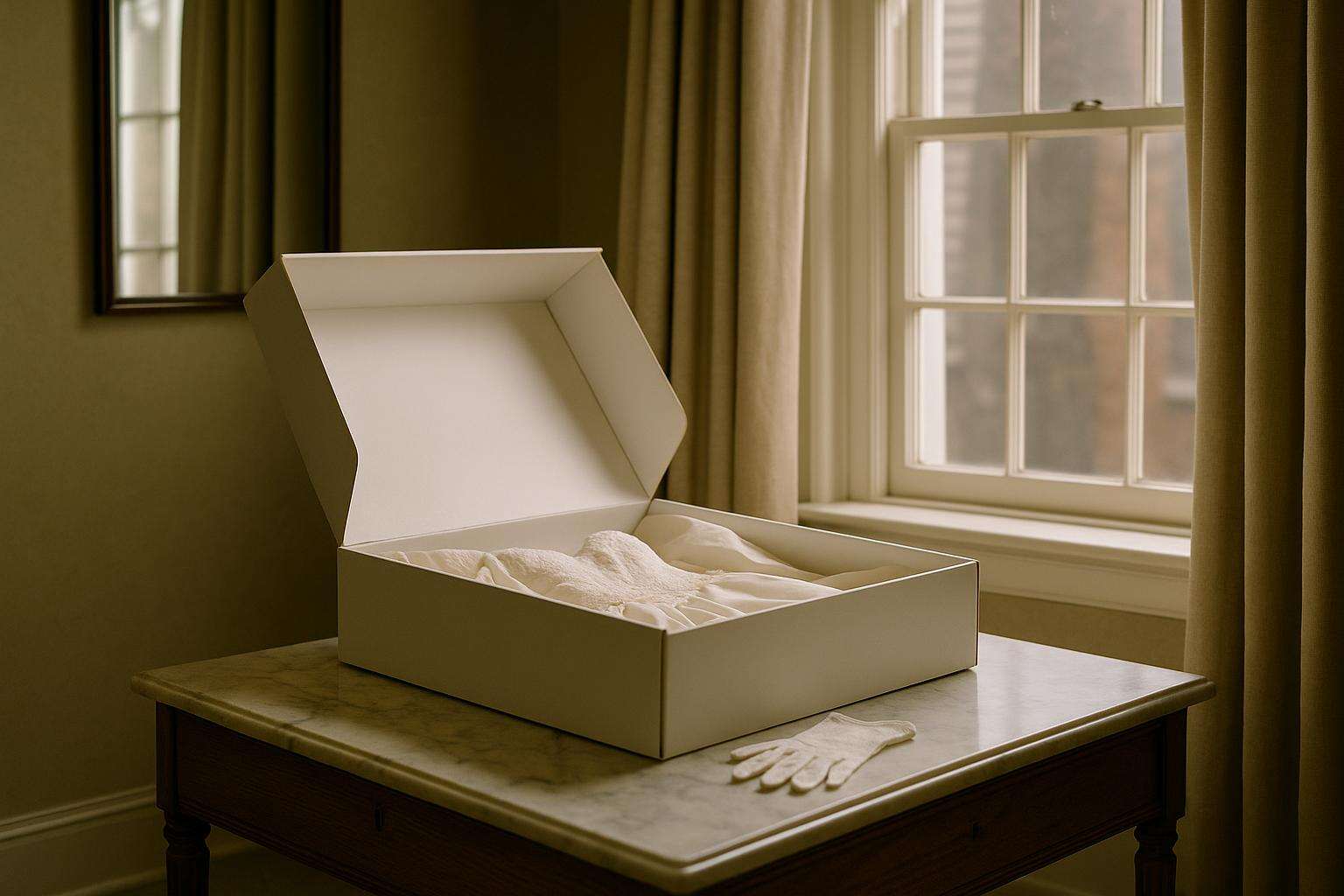
Wedding dress preservation is a two-step process: specialist cleaning that removes invisible oxidizing stains, followed by archival boxing in acid-free, lignin-free materials that seal the gown against light, moisture, and oxygen. In 2026, professional preservation costs $165–$1,000+ depending on service tier, and the single most important timing rule is this: send the gown within 48 hours of the wedding — before invisible chemistry becomes irreversible damage.
Most brides pack their dress away the morning after the wedding with every intention of dealing with it soon. A few weeks turn into a few months. The gown, which looks absolutely pristine when folded into the garment bag, begins to show faint yellowing along the hemline or bodice. By the time it is unpacked — perhaps ahead of a vow renewal, or to pass on to a daughter — the damage is permanent. Understanding exactly why this happens, and what the preservation process actually does, is the difference between a gown that endures for generations and one that quietly deteriorates in a closet.
Why Do Invisible Stains Cause Permanent Yellowing on a Wedding Dress?
The chemistry of fabric oxidation is the foundation of every preservation argument. Champagne, prosecco, white wine, lemonade, body perspiration, and cake sugar all share a critical property: they are largely colourless or very pale when wet, which means they leave no visible trace on an ivory or white gown at the time of contact. But each of these substances is rich in organic compounds — sugars, amino acids, and proteins — that begin reacting with oxygen in the fabric the moment the liquid dries.
The Drycleaning and Laundry Institute, the principal industry body for professional textile care, states plainly: "The single biggest mistake we see is brides storing their dress before cleaning it. Even when a gown looks pristine, invisible staining from body oils and drinks is already present. In storage, those residues oxidise and become permanent. Clean first, always." Heritage Garment Preservation notes that a dress that appears spotless the morning after can show irreversible yellowing within four weeks as sugar-based residues complete their oxidation cycle.
Body oils from the arms, décolletage, and waist area are a second class of invisible stain with the same trajectory. They penetrate the top layer of fabric fibres and, in storage without air circulation, slowly darken into permanent yellow or brown staining — particularly visible on silk, satin, and organza. The message from every specialist is consistent: the gown should be in the hands of a professional cleaner within 48 hours of the wedding, and absolutely no later than two weeks post-event.
What Cleaning Methods Are Used on Wedding Dresses, and Which Is Best?
Wedding gowns are among the most fabric-complex garments a dry cleaner or specialist will ever handle. A single dress may combine duchess satin, silk chiffon, Chantilly lace, structured boning, hand-applied beading, and a tulle underskirt — fabrics with entirely different sensitivities to water, heat, and chemical solvents. This is why bridal cleaning is a genuine specialism, and why standard dry cleaners without bridal experience are a meaningful risk.
Dry cleaning uses petroleum-derived or silicone-based chemical solvents — common formulations include DF-2000, hydrocarbon, and GreenEarth — to dissolve oil-based stains without water. It is well suited to silk, satin, and structured synthetics. One important caveat: older perchloroethylene (perc) solvents, still used by some non-specialist cleaners, can dissolve adhesive on bead backing and melt sequins. Ask any cleaner directly which solvent they use before entrusting a beaded gown.
Wet cleaning uses water-based solutions and is more effective for the stains that actually account for the majority of wedding day contamination: sweat, champagne, wine, coffee, and cake sugar. Heritage Garment Preservation notes that roughly 95% of wedding dress stains are water-based, which means wet cleaning addresses the primary threat more completely — and leaves no chemical residue in the fabric that could degrade fibres over a preservation period of decades. Affordable Preservation Company, a Knot Hall of Fame member, uses Kreussler Inc.'s SYSTEMK4 organic wet-cleaning technology — the same process trusted by museum curators for historic textile preservation.
Most premium bridal preservation specialists combine both methods: dry cleaning first to remove oil-based soiling, followed by targeted wet cleaning on water-based stain areas. Each gown is assessed individually. Fabric-specific protocols apply: silk must not be subjected to mechanical agitation; organza cannot withstand high heat; lace must be hand-cleaned by a specialist with fabric experience, since improper handling can permanently distort the woven pattern.
What Is the Preservation Boxing Process, and What Does the Box Actually Do?
Once a gown is cleaned and inspected under UV light (a standard step at premium specialists, which reveals stains invisible to the naked eye), it moves into the archival boxing process. The steps are precise:
- Acid-free tissue stuffing: Tissue is placed inside the sleeves, around the bodice, inside structured cups, and around embellishments to prevent crushing, permanent fold lines, and contact between decorative elements and fabric.
- Layered wrapping: The gown is folded with additional acid-free tissue between every layer to prevent transfer of dye, oxidation, or surface damage between fabric sections.
- Placement in an archival chest: The gown is laid inside an acid-free, lignin-free preservation box — sometimes called a museum-quality or archival chest. True preservation boxes carry a minimum pH of 8.5 with a 3% calcium carbonate buffer; TAPPI accelerated aging tests show properly buffered boxes can prevent acid migration for centuries. This buffering is the critical variable that separates a genuine archival chest from a cardboard box marketed as "pH-neutral."
- Sealing and finishing: The chest is sealed and typically returned with white cotton gloves, a muslin liner, and a care instruction card. Premium tiers include a UV-protective viewing window in the lid that allows a bride to see the gown without opening the box or exposing it to light.
The distinction between "acid-free" and "pH-neutral" deserves emphasis. A pH-neutral box has been chemically treated to reach a neutral pH at the time of manufacturing — but the neutralizing agent is water-soluble. Over years of humidity cycling in storage, it dissolves, and the underlying wood-pulp cardboard returns to its natural acidic state. McLendon Cleaners documents this as the mechanism by which "safe" boxes cause the very acid streaking and yellowing they were supposed to prevent. A genuine archival chest with a calcium carbonate buffer actively neutralizes incoming acidity over the long term; it does not merely start neutral and drift.
How Much Does Wedding Dress Preservation Cost in 2026?
The market spans a clear tier structure, from mail-in kit services at the entry level to bespoke museum-quality handling for couture gowns.
| Tier | Price Range | Key Includes | Guarantee | Best For |
|---|---|---|---|---|
| Entry / mail-in kit | $165–$250 | Standard cleaning, acid-free box, prepaid shipping, 30-year warranty | 30 years | Polyester/synthetic gowns, budget-conscious brides |
| Mid-range specialist | $250–$400 | UV inspection, SYSTEMK4 cleaning, accessories included, 100-year anti-yellowing guarantee, $2,000–$3,000 insurance | 100 years | Most gowns; silk, satin, lace; heirloom intent |
| Premium / museum-quality | $400–$1,000+ | Couture handling, master dry cleaner oversight, lifetime warranty, restoration services, high insurance | Lifetime | Designer gowns, couture, heavy beading, family heirlooms |
The primary cost drivers are fabric type (genuine silk costs more to clean than polyester satin), gown complexity (heavy boning, multiple fabric layers, cathedral trains), embellishment density (hand-applied beading and sequins require individual attention), train length, and severity of staining. At an average gown price of $1,500–$3,000 in 2026, professional preservation at $300–$500 represents 10–20% of the original investment — and the only meaningful protection against that investment becoming a yellowed reminder of a bad storage decision.
Which Wedding Dress Preservation Services Are Worth Considering?
Wedding Gown Preservation Company / DressPreservation.com (Endicott, NY) — Founded in 1913 by Sara and Joseph Schapiro, this third-generation family business has served over 3 million brides and is the oldest specialist in the field. It uses Kreussler Inc.'s SYSTEMK4 cleaning technology and backs its work with a 100-year anti-yellowing guarantee. Packages include free shipping, $2,000–$3,000 insurance, accessory preservation for up to five items, and a GownTracker system for real-time status updates. Pricing: approximately $165–$400 depending on tier.
Affordable Preservation Company (Long Beach, CA) — A Knot Hall of Fame member operating since 1913. UV-light inspection on arrival, SYSTEMK4 organic cleaning, 100-year anti-yellowing guarantee, free shipping, and — notably — a policy that allows brides to open and inspect the sealed box upon delivery without voiding the guarantee. Starting at $249.
David's Bridal Preservation Kit — Priced at $189.99 (periodically discounted to $99), processed by Memories Gown Preservation. Includes prepaid UPS shipping, specialist cleaning, pressing, acid-free box, and a 30-year guarantee. Add-ons for veil, garter, and engraved box bring totals to $250–$350. Suitable for polyester and synthetic gowns at the accessible price point.
Wedding Dress Preservation by The Knot (Prestige Preservation Program) — Specialist individual inspection, acid-free museum-quality chest, lifetime warranty, free shipping in the continental US, and $500 shipping insurance included. Positioned at the upper mid-range.
Elegance Preserved — A nationally recognized premium firm overseen by a master dry cleaner with dedicated cleaning, pressing, inspection, and repair teams. Custom quotes, pickup and delivery available where applicable. Pricing: $260–$550.
The Wedding Gown Specialists of Los Angeles / Door To Door Cleaners — A boutique LA specialist led by Yosr, head of Bridal Services and Couture Care, with staff trained in current fabricare techniques and experience with gowns from designers including Vera Wang and Carolina Herrera. Particularly well regarded for restoration of vintage and aged gowns.
What Should a Well-Preserved Gown Look Like When You Open It in 50 Years?
When a gown has been properly cleaned by a specialist, wrapped in certified acid-free tissue, sealed in a calcium-carbonate-buffered archival chest, and stored in a cool, dark, temperature-stable room (ideally 60–70°F with relative humidity between 45–55%), it should be white or ivory — not yellowed, not streaked, not misshapen. The Association of Wedding Gown Specialists has documented cases of gowns preserved correctly under these conditions remaining stable for 50 years or more. The 100-year guarantees offered by DressPreservation.com and Affordable Preservation Company are not marketing hyperbole; they reflect genuine confidence in the SYSTEMK4 process combined with properly buffered archival storage.
The most common failure points in real-world preservation outcomes are: waiting too long after the wedding to clean (invisible stains finish oxidizing before the gown reaches a specialist); using pH-neutral rather than genuinely acid-free buffered boxes; storing in an attic or basement where humidity and temperature fluctuate seasonally; and using plastic garment bags or standard tissue paper that off-gas acids onto the fabric. Avoid all four, and a gown cleaned and preserved correctly in 2026 has every reasonable prospect of being worn or admired with pride in 2076.
For a broader look at how fabric type affects long-term care and alteration options, see the Bride Atlas Wedding Dress Fabrics Guide. For specialist alteration guidance before the wedding day, the Alterations & Fit hub covers timing, cost, and how to choose the right seamstress.
Considered Counsel
Frequently asked
How soon after the wedding should I get my dress cleaned?
The industry consensus is within 48 hours of the wedding, and no longer than two weeks. The reason is chemistry: champagne, body oils, perspiration, and cake sugar are largely invisible the morning after the reception, but they begin oxidizing in fabric from the moment of contact. The Drycleaning and Laundry Institute notes that sugar-based residues finish their oxidation cycle in as little as four weeks, at which point the yellowing they cause is permanent and cannot be reversed by any cleaning method. David's Bridal echoes this, specifically recommending professional cleaning within the first two days. The longer the wait, the greater the chance that what looks like a pristine gown becomes a permanently stained one — not from visible spills, but from the invisible chemistry already under way in the fibres.
What is the difference between wedding dress cleaning and wedding dress preservation?
Cleaning and preservation are two distinct steps that must happen in sequence — cleaning always first. Professional cleaning removes stains (visible and invisible), body oils, environmental soils, and fabric-degrading residues using specialist dry-cleaning solvents, wet-cleaning solutions, or a combination of both. Preservation is what happens after cleaning: the gown is wrapped in acid-free tissue, placed in an acid-free, lignin-free archival chest, and sealed to exclude light, moisture, oxygen, and dust — the four primary agents of long-term fabric decay. A gown that is boxed without being cleaned first is not preserved; it is packaged with its own damage mechanism already inside the box. The Dry Cleaning Factory describes preservation without prior cleaning as "not protection — it's just packaging." Both steps are required; neither substitutes for the other.
How much does wedding dress preservation cost in 2026?
Professional wedding dress preservation ranges from approximately $165 at the entry tier to $1,000 and above for museum-quality couture services. The Wedding Gown Preservation Company (DressPreservation.com) — the oldest specialist in the field, founded in 1913 — offers packages from roughly $165 to $400 inclusive of free shipping, $2,000–$3,000 insurance coverage, and accessory preservation for up to five items. David's Bridal's mail-in kit is priced at $189.99 (periodically on sale for $99) processed by Memories Gown Preservation. Affordable Preservation Company, a Knot Hall of Fame member, starts at $249 with free shipping. The Knot's own Prestige Preservation Program and premium boutique specialists such as Elegance Preserved ($260–$550) occupy the mid-to-upper tier. Museum-quality boutique handling of couture gowns with restoration services can reach $1,000 or more. Given that the average gown costs $1,500–$3,000, most industry professionals consider $300–$500 preservation a sound investment.
What does a wedding dress preservation kit include?
A standard wedding dress preservation kit — such as the one offered by David's Bridal (processed by Memories Gown Preservation) or the Wedding Gown Preservation Company — includes: prepaid shipping materials (usually UPS or FedEx) to send the gown to the cleaning facility; professional specialist cleaning using dry-cleaning solvents or wet-cleaning solutions appropriate to the fabric; pressing and shaping the gown after cleaning; wrapping in acid-free tissue paper, stuffed into sleeves and bodice to prevent crushing; placement inside an acid-free, lignin-free archival preservation chest; a care instruction card; and return shipping with insurance. Premium tiers add white cotton gloves, a muslin liner, a UV-protective viewing window in the chest lid, accessory preservation (veil, garter, shoes), and extended warranty periods of 30, 100, or lifetime coverage. Some kits, including Affordable Preservation Company's, explicitly allow brides to open and inspect the sealed chest without voiding the guarantee — a meaningful policy distinction.
How long does wedding dress preservation last?
A gown that has been properly cleaned, wrapped in acid-free tissue, and sealed in a certified acid-free, lignin-free archival chest — stored in a cool, dry, temperature-controlled room away from direct sunlight — can remain white or ivory for 50 years or more. The Wedding Gown Preservation Company and Affordable Preservation Company both offer 100-year anti-yellowing guarantees backed by Kreussler Inc.'s SYSTEMK4 cleaning technology, the same process trusted by museum curators for textile preservation. The quality of the box is the critical variable in long-term outcomes: boxes marketed as only "pH-neutral" (rather than acid-free with a calcium carbonate buffer) will re-acidify over time as the neutralizer dissolves, ultimately causing the very yellowing and streaking the box was meant to prevent. True archival chests carry a minimum pH of 8.5 with a 3% calcium carbonate buffer, a distinction that matters enormously over decades.
What is the difference between dry cleaning and wet cleaning a wedding dress?
Dry cleaning uses chemical solvents — common formulations include DF-2000, hydrocarbon, and GreenEarth — to dissolve oil-based stains without water. It is well suited to silk, satin, and structured synthetic fabrics, though older perchloroethylene (perc) solvents can melt sequins and beads and are increasingly avoided by specialist bridal cleaners. Wet cleaning uses water-based solutions and is generally more effective for water-based stains — sweat, champagne, wine, coffee, cake sugar — which account for roughly 95% of all wedding dress staining. Heritage Garment Preservation notes that wet cleaning removes these stains more completely and leaves no chemical solvent residue in the fabric that could degrade fibres over time. Many premium bridal preservation specialists, including Affordable Preservation Company, prefer wet cleaning using SYSTEMK4 organic technology for this reason. In practice, a skilled specialist often combines both methods based on fabric type and stain composition.
Can you preserve a wedding dress yourself at home?
DIY home preservation can protect a professionally cleaned gown from dust and minor environmental exposure, but it cannot replicate specialist cleaning, and it carries real risk if the materials used are not genuinely acid-free. The critical failure point of home storage is acidic packaging: standard cardboard, tissue paper, and garment bags all contain acid that migrates into fabric over time, causing dark brown streaks and yellowing wherever the material contacts the gown. McLendon Cleaners documents this as one of the most common causes of storage-related gown damage. If you choose to store the gown at home after professional cleaning, use only certified acid-free, lignin-free tissue and a properly buffered archival chest (pH 8.5+ with calcium carbonate buffer) — not a plastic bin or standard wardrobe box. Store the chest horizontally in a cool, dark, temperature-stable room, never in an attic or basement where humidity and temperature fluctuate seasonally.