Bridal Accessories
Bridal Shoes: Comfort, Heel Height & Style
From heel height calibration to multi-week break-in protocols — a complete framework for choosing the right pair of wedding shoes across every budget, venue, and silhouette.
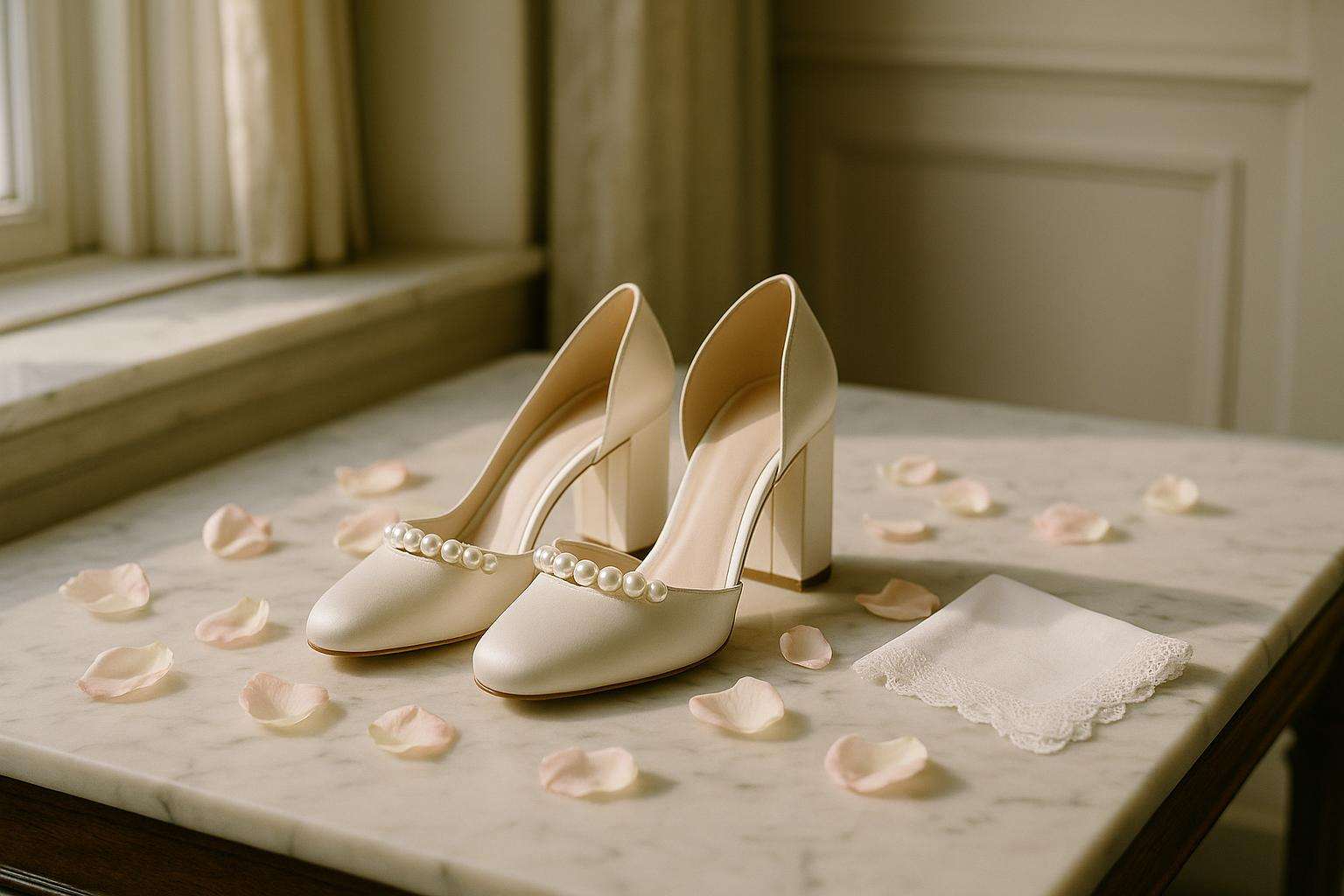
Choose your bridal shoes before your first fitting, not after — the seamstress sets your hem to your exact heel height. Select your heel type based on venue terrain first, then comfort engineering, then aesthetics. Begin a structured six-week break-in protocol so your shoes feel like second skin by the morning of the wedding.
Your bridal shoes are load-bearing decisions in the truest sense: they determine the fall of your gown's hem, the stability of your step down the aisle, and whether you are dancing at 11 p.m. or sidelined with a blister by 8. The good news is that every variable — heel height, sole type, comfort construction, color, and even dye shade — can be resolved systematically, well before the wedding day. This guide addresses each one in sequence.
What heel height should I choose for my wedding dress?
The single most consequential rule in bridal shoe shopping is this: select your heel height before your first fitting, not after. A seamstress sets the hem of a gown to within an inch of the floor while the bride is standing in her chosen shoes. Dropping from a three-inch stiletto to a flat after hemming will cause the gown to pool and drag across the floor. Switching up in the other direction after hemming will expose the ankle and rob the silhouette of its intended line. A single dress cannot be hemmed for two different heel heights — the decision is permanent once alterations are complete.
Beyond that foundational rule, heel type maps to dress silhouette in predictable ways. Ball gowns and cathedral-length trains suit higher heels, because the volume of the skirt conceals the shoe entirely and the additional height is visible only in posture and presence. Slinky slip dresses and column gowns pair elegantly with kitten heels or mid-block heels, where a grounding lower profile complements the body-conscious line. Tea-length and short gowns work best with flats or low heels, since the shoe is fully visible and becomes a deliberate style statement rather than a structural support.
| Heel Type | Height Range | Comfort for All Day | Best Venue Surface | Price Example |
|---|---|---|---|---|
| Flat / sandal | 0–1 in. | Excellent — no heel fatigue | Beach, sand, woodland paths | BHLDN Carina Flats, ~$150 |
| Kitten heel | 1.5–2 in. | Very good — retro-chic silhouette with low pitch | Cobblestone, garden, indoor venues | Bella Belle low-heel collection, from ~$345 |
| Block heel | 2–3 in. | Good — widest base distributes weight evenly | Grass, cobblestone, mixed terrain | Bella Belle EMERY, $345; BHLDN Charlotte Block Heels, ~$200 |
| Mid stiletto | 2.5–3.5 in. | Moderate — best for regular high-heel wearers | Smooth indoor (ballroom, hotel, restaurant) | Badgley Mischka Kiara, ~$231–$245 |
| Stiletto | 3.5–4 in. | Low — formal glamour, not endurance | Smooth indoor only | Bella Belle Eve Lavender, $435; Jimmy Choo Saeda, ~$1,095 |
| Platform | 4 in.+ (reduced pitch) | Moderate — platform reduces effective incline | Level indoor floors only | Loeffler Randall Roz Sandal (platform), ~$350–$450 |
Kitten heels have trended strongly through 2025 and into 2026 for their retro-chic silhouette — they offer the sleek vertical line of a skinny heel without the instability of a stiletto on uneven ground. Bella Belle's ultimate bridal shoe guide notes that the wedding day is categorically not the occasion to debut a heel height you have never worn before — comfort is earned in practice, not intention.
Which bridal shoes work best for outdoor and mixed-terrain weddings?
Venue surface is the second major filter, and it should narrow the field before aesthetic preference enters the picture at all. The terrain eliminates certain heel types outright; style decisions happen within what remains.
Grass and garden venues expose the fundamental flaw of narrow heels: a stiletto tip has approximately the same surface area as a thick nail and sinks into turf with every step. Block heels, which distribute weight across a wider rectangular base, are the practical standard here. Wedge soles are equally effective. For brides committed to a stiletto silhouette on grass, Sole Guard produces clear plastic heel protectors that increase the tip's surface area up to five times — a useful contingency, but one that should always be tested across the actual venue surface well before the ceremony.
Cobblestone and pavers present a different hazard: narrow heel tips catch in the joints between stones. A closed-toe block heel or a kitten heel with an ankle strap is the correct choice here — the strap prevents the shoe from shifting on uneven ground, and the wider heel clears the gaps between pavers.
Beach and sand ceremonies resolve cleanly: flat soles win without exception. Heels of any kind sink immediately into loose sand, and no protector compensates. Sandals and slides with flat construction are the practical and photogenic standard — they slip off easily for the barefoot-in-the-surf portraits that beach weddings are made for.
Woodland paths and garden estates typically combine soil, gravel, roots, and morning dew on grass. Textured rubber or synthetic soles provide meaningfully better traction than smooth leather on damp surfaces. A closed-toe flat or low block heel with a structured sole is ideal.
What are the most comfortable bridal shoes built for all-day wear?
Comfort engineering in bridal footwear has advanced considerably. The factors that separate a shoe you can wear for twelve hours from one you abandon at hour five are:
- Insole cushioning. Brands built around comfort-first construction invest heavily here. Bella Belle — which markets its entire range as the "Prettiest 12-Hour Shoe" — handcrafts footwear in silks, leathers, and tulle with plush padded insoles as a foundational element. Harriet Wilde builds soft padded leather socks into its satin bridal range. Rainbow Club's Bliss Cushion Comfort padded lining is a branded comfort system engineered specifically for extended wear.
- Heel width and base area. As noted in the heel-type table, a wider base distributes weight. Ball-of-foot pressure — the leading cause of reception-hour pain in heeled shoes — is significantly reduced in a block heel versus a stiletto of the same height.
- Ankle support. A strap or back enclosure prevents the foot from sliding forward into the toe box under weight, which causes the most common blister points at the ball and the little toe.
- Toe box shape. A rounded or square toe box allows the toes to splay naturally under load; a pointed toe box compresses them. Pointed-toe bridal shoes are often most comfortable when worn a half-size up.
BHLDN's mid-range lineup — including the Charlotte Block Heels ($200 range) with pearl embellishments and a 2.5-inch block heel — is routinely cited by brides as a sweet spot between aesthetic polish and functional comfort. At the luxury end, the Bella Belle EMERY ($345) and Easton slingback block heel with removable bow ($375) are specifically engineered for endurance. Badgley Mischka's Galia ($255) and Clara ($235) offer cushioned footbeds within a formal stiletto frame for brides who need that silhouette.
What color options are available, and when are dyeable shoes worth considering?
Ivory satin is the industry default and for good reason: it reads as white in photographs while matching the warm undertones of most wedding gowns, which are almost universally some variation of ivory, champagne, or off-white rather than optical white. Bringing a fabric swatch or a phone photograph of your gown's lining when shopping is essential — the difference between a warm ivory and a cool white is invisible on a website but conspicuous in person and in print.
Champagne, blush, and nude tones have surged in 2026 as deliberate contrast choices that photograph beautifully under golden-hour light. Metallic silver and gold function as a subtle "something different" that disappears into the background of ceremony photographs while adding texture and depth in close-up portraits. BHLDN's Adelaide Heels offer a vintage-inspired "something blue" detail that references the traditional bridal rhyme without requiring a visible blue accessory.
Dyeable shoes are the right call for bridesmaid coordination, where a single style can be dyed post-purchase to exactly match any gown swatch. Harriet Wilde (established 2008, crafted in Spain) offers a dye service across its full satin bridal range covering the complete color spectrum. Rainbow Club's Harriet courts — ivory satin, d'orsay cut, low block heel — are also dyeable, with a hidden blue crystal embedded in the sole. UK retailer Lace & Favour stocks both brands alongside dyeable options from Perfect Bridal and Paradox London for full-party matching.
How do I break in bridal shoes before the wedding day?
Unbroken-in bridal shoes are the leading cause of reception-hour discomfort — and the solution is entirely preventable with a structured, six-week protocol. Block heels and flats typically require two to three weeks of consistent wear; high stilettos may require up to six weeks before the upper softens enough for extended wear.
Weeks 7–6 before: Wear the shoes at home on carpet for twenty-to-thirty-minute sessions. Carpet wear softens the upper without exposing the sole to abrasion — preserving the finish while beginning the break-in process. Identify where the shoe presses or rubs.
Weeks 5–4 before: Use the thick-socks stretching technique — wear the shoes with thick socks for thirty-minute sessions at home. The slight volume expansion gently stretches the upper and confirms where pressure points are developing. Apply moleskin patches or gel pads to known rub zones.
Weeks 3–2 before: Wear the shoes to every dress fitting. This is strategically efficient — the seamstress needs the exact heel for hemming, and you accrue meaningful break-in time at zero extra effort. Any persistent tight spots should be addressed by a cobbler at this stage; a professional can stretch satin and embellished materials safely with specialized tools that a home stretcher cannot replicate.
Week 1 before: A single short wear of under an hour confirms fit. All major conditioning should be complete. Do not introduce new interventions at this stage.
Day-of backup: Many stylists recommend packing a second pair — embellished flats or low slides — in the bridal bag for dancing. BHLDN, Bella Belle, and Jimmy Choo Bridal all carry flat styles within their bridal ranges that coordinate with their heeled counterparts, making a ceremony-to-reception changeover seamless and stylistically coherent.
Weeks 7–6: carpet wear, 20–30 min. Weeks 5–4: thick-socks stretch, identify pressure points. Weeks 3–2: wear to every fitting. Week 1: one short confirmation wear. Pack backup flats for dancing. A cobbler can safely stretch bridal materials; home stretchers cannot.
Considered Counsel
Frequently asked
When should I buy my bridal shoes — before or after dress alterations?
Buy your bridal shoes before your first fitting, ideally as early as possible after saying yes to the dress. A seamstress sets the hem to within an inch of the floor while you are standing in the exact shoes you plan to wear on the day. If you decide after hemming to switch from a three-inch stiletto to a flat, the gown will pool and drag — it is not structurally possible to hem one dress for two different heel heights. Bringing your actual shoes to every fitting also clocks meaningful break-in time without requiring extra effort. Most bridal consultants at salons such as Kleinfeld Bridal and BHLDN advise making the shoe decision simultaneously with the gown, or within the first two to four weeks of ordering.
What heel height is most comfortable for a full wedding day?
Block heels in the two-to-three-inch range are consistently rated the most comfortable option for a full wedding day by bridal footwear brands and stylists alike. A wide heel base distributes body weight evenly across a larger surface area, reducing the concentrated pressure on the ball of the foot that makes stilettos painful after two hours. Bella Belle, whose entire brand premise is the "Prettiest 12-Hour Shoe," engineers its block-heel styles — including the EMERY at $345 — with plush padded insoles designed to carry a bride through ceremony, cocktail hour, and dancing. Kitten heels in the 1.5-to-2-inch range are the close second, offering the sleek silhouette of a heel without the instability. Flats are the unbeatable endurance choice for brides with foot sensitivities or outdoor venues.
Which bridal shoes work best for outdoor weddings on grass or cobblestone?
On grass, the critical variable is heel surface area: narrow stilettos and thin kitten heels sink immediately into turf, while block heels and wedge soles spread weight over a wider footprint and remain stable. Sole Guard produces clear plastic heel protectors that increase heel surface area up to five times and can make a stiletto viable on firm grass, though they should always be tested before the day itself. On cobblestone and pavers, narrow heel tips catch in the joints between stones, making a stumble likely — closed-toe block heels or ankle-strap kitten heels are the practical standard. For beach and sand ceremonies, flat sandals or slides win without contest: heels of any type sink and no protector compensates for loose sand. On woodland paths, textured rubber soles provide meaningfully better traction than smooth leather on damp grass and morning dew.
How do I break in bridal shoes before the wedding?
Begin the break-in process six to eight weeks before the wedding day. In weeks seven and six, wear the shoes at home on carpet for twenty-to-thirty-minute sessions to soften the upper without risking sole damage on hard floors. In weeks five and four, use the thick-socks stretching technique — wearing socks inside the shoes while at home gently expands the upper and reveals pressure points. In weeks three and two, wear the shoes to every dress fitting, clocking break-in time with the added benefit of practicing the exact heel height your seamstress needs for hemming. In the final week, a single short confirmation wear of under an hour is all that is needed — major conditioning should already be complete. A cobbler can professionally stretch any tight spots without damaging delicate satin or embellished bridal materials.
Are dyeable wedding shoes worth it for bridesmaid coordination?
Dyeable wedding shoes are particularly well-suited for bridesmaid coordination because they allow a single style to be dyed to an exact match for any gown color, eliminating the guesswork of pairing pre-colored shoes to fabric swatches. Harriet Wilde, a UK brand established in 2008 and crafted in Spain, offers a dedicated dye service across its full satin wedding shoe line covering the complete color spectrum — block heels, sandals, and flats all available. Rainbow Club's Harriet courts, offered in ivory satin with a low block heel and the brand's Bliss Cushion Comfort padded lining, are another dyeable option with a hidden blue crystal in the sole for a traditional "something blue." UK retailer Lace & Favour stocks both brands alongside dyeable options from Perfect Bridal and Paradox London. For US brides, mid-range dyeable styles are available through David's Bridal and bridal salons that partner with specialty dye services.
What is the price range for bridal shoes across different brands?
Bridal shoes span a wide spectrum from under $50 to well over $1,000. At the accessible end, Lulus stocks more than 150 bridal shoe styles with the majority priced under $50, and JJ's House carries a broad selection under $75. In the mid-range, BHLDN (Anthropologie's bridal division) prices its shoes from approximately $150 to $350, covering styles such as the Adelaide Heels and Charlotte Block Heels. Badgley Mischka Bridal typically retails between $198 and $255 at Zappos, Bloomingdale's, and Dillard's, while Loeffler Randall's 2026 bridal collection runs $250 to $450 at Bloomingdale's and Saks Fifth Avenue. At the luxury tier, Bella Belle's handcrafted styles range from roughly $345 to $435, and Jimmy Choo Bridal — including the iconic Romy satin pump and Saeda crystal pump — begins around $895 and extends to $1,495 at Bloomingdale's and Saks.
Can I wear white bridal shoes, or are ivory and champagne better?
Pure white shoes can read as stark against most bridal gowns, because virtually all wedding gowns are some variation of ivory, off-white, champagne, or blush rather than optical white. Ivory satin is the safest neutral — it reads as white in photographs while matching the warmth of most gown fabrics. BHLDN offers its Adelaide Heels in both ivory and true white, with consultants there noting that brides should bring a swatch or a photo of their gown's lining when shopping for shoes, since the undertone (warm cream versus cool white) matters more than the label on the box. Champagne and blush shoes have surged in 2026 as a deliberate contrast choice that photographs beautifully under golden-hour light. Metallic silver and gold are also popular as a discrete "something different" and disappear gracefully into the background of ceremony photographs while adding texture to close-ups.