Bridal Beauty
Bridal Hair Extensions: Adding Length & Volume for the Day
Clip-in, tape-in, halo, and fusion extensions each serve a different bride — from one-day volume to honeymoon-long wear. Timing the color match correctly and arriving at your hair trial with extensions already in hand are the two decisions that separate a seamless bridal look from a wedding-morning scramble.
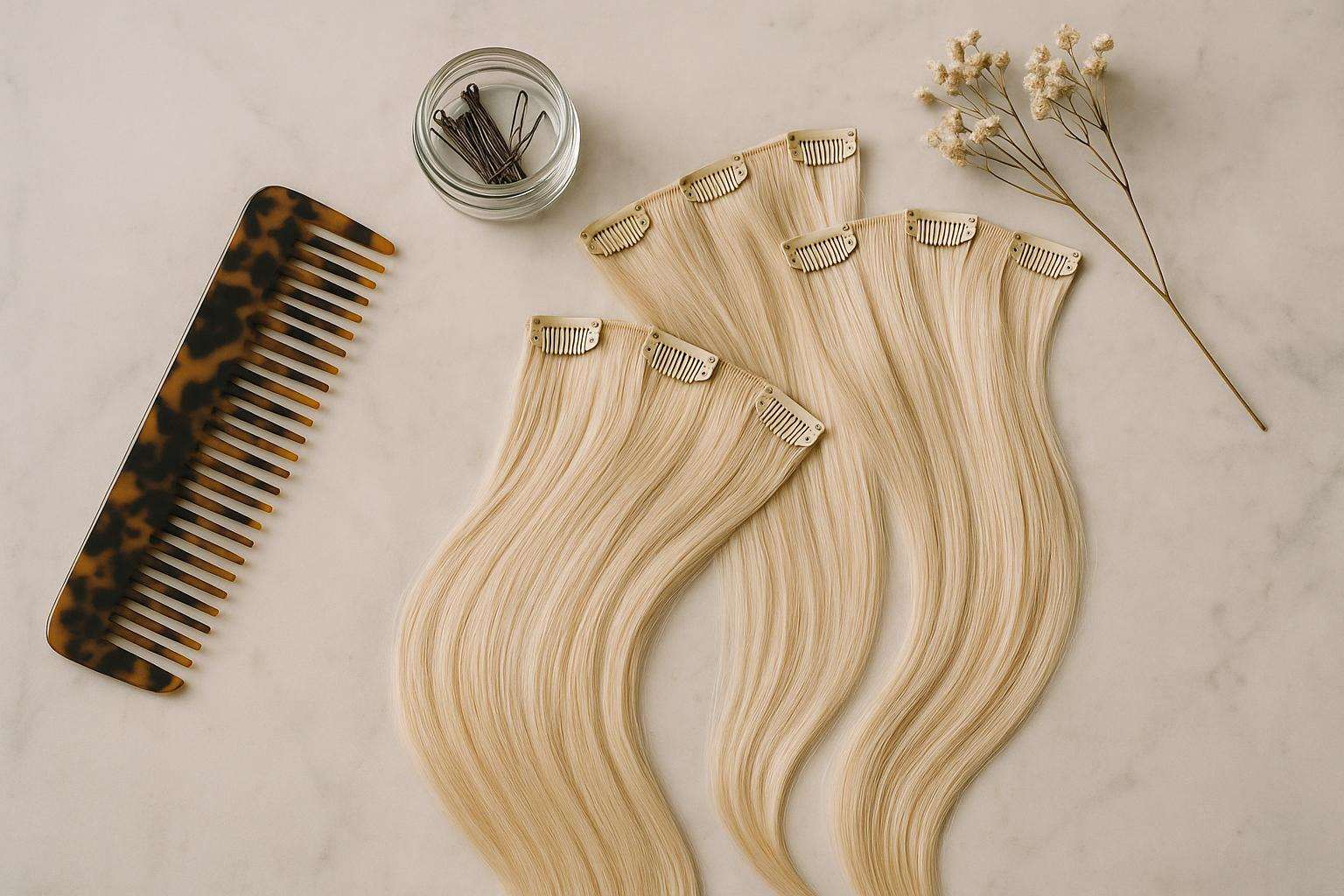
Bridal hair extensions add length or volume via clip-in wefts, tape-in strips, halo wire systems, or fusion bonds — each with different commitment levels, updo suitability, and installation timing. Match extensions to your settled post-color hair at least three months out, install semi-permanent types six to eight weeks before the wedding, and always bring them to your hair trial appointment.
Hair extensions have become one of the quiet essentials of modern bridal beauty. Not dramatic transformation — but the measured addition of density and length that allows a fine-haired bride to wear the voluminous chignon she has always wanted, or gives a bride with shoulder-length hair the sweep of a low, romantic braid. Used well, extensions are invisible. The question is which method delivers that invisibility for your particular style, your particular hair, and your particular wedding-day schedule.
What follows draws on guidance from The Knot's bridal beauty editors, specialist brands including HaloCouture and Donna Bella Hair, and salon sources including Prim Salons and The Collective ATX to give you the complete picture — method by method, timing step by step, and brand by honest brand.
What Are the Main Types of Bridal Hair Extensions?
Bridal stylists consistently organize extensions into four categories for wedding use. Each occupies a different point on the commitment spectrum — from something you put in yourself on the morning of the wedding to a method installed months before the day and worn through the honeymoon.
Clip-in extensions are individual wefts fitted with pressure-release clips that attach directly to sectioned natural hair. No adhesive, no professional installation, and — critically — zero damage to natural hair. They come out at the end of the evening, require no maintenance schedule, and can be styled, curled, and pinned exactly like natural hair once in place. The Knot's bridal beauty editors recommend clip-ins as the default starting point for brides who have never worn extensions before, precisely because the commitment is low and the flexibility is high.
Tape-in extensions are thin wefts pre-coated with a medical-grade adhesive strip. A stylist sandwiches a thin section of natural hair between two tape-in wefts and presses them together to form a flat bond that sits flush to the scalp. The low profile makes tape-ins the natural choice for sleek updos and chignons — any visible hardware would photograph poorly. Donna Bella Hair, which has supplied professional salons across North America since 2003, notes that their Signature Tape-In line uses 100% Remy human hair with the cuticle intact, and individual sets retail from approximately $90–$230. Tape-ins require a move-up appointment every four to eight weeks as natural hair grows.
Halo extensions use a single weft attached to a thin monofilament wire that rests on top of the head like a headband. Nothing attaches to the natural hair itself — the hair is simply brushed over the wire to conceal it. HaloCouture, the professional-only halo specialist, documents its Original Halo and Layered Halo being worn in bridal chignons, loose waves, and half-up styles. Sitting Pretty Halo Hair's Fine Halo sub-line is specifically designed for brides with thin or fragile hair; the brand carries a 4.9-star average across more than 2,500 customer reviews.
Fusion (keratin bond) extensions bond individual strands to natural hair using a keratin tip, offering the most natural movement and the longest wear — three to six months — but requiring the longest installation time and the highest total cost. They are the right choice for the bride who wants to grow into her wedding hair gradually and wear the result through an extended honeymoon.
How Does Each Attachment Method Affect Updo Feasibility?
The updo question is where attachment method matters most. Hairstylist guidance cited by The Knot is honest about this: not every updo benefits from extensions — particularly slick-backs and styles that rely on a client's natural curl texture. For the majority of brides with fine-to-medium hair, though, extensions are exactly what transforms a flat gathered bun into a photograph-ready style with the density to hold structure through a full reception.
Clip-ins for updos: Stylists typically position two to three clip-in wefts at the crown and nape before building the bun structure. The wefts add the bulk that anchors bobby pins and keeps the style lifted throughout the day. One limitation: clip-ins need enough natural hair density to hide the clips — fine-haired brides may find them difficult to fully conceal in a very tight chignon.
Tape-ins for updos: Because tape-in bonds sit flat and are distributed around the perimeter of the head, they vanish inside a gathered updo without requiring special placement strategy. Beauty Club London and Updos for I Dos specifically cite tape-ins as the preferred semi-permanent option for low buns and chignons. The flat bond also means the stylist is not working around visible hardware when building the structure of the style.
Halo for updos: Halos work best in down and half-up styles. The wire indentation can become visible at the hairline in very tight or sleek updos where there is insufficient natural hair coverage to conceal it. For loose braided updos and high buns with volume, a skilled stylist can position the wire so the gathered hair sits over it — but this requires advance practice, ideally at the hair trial.
| Method | Application | Updo Suitability | Wear Duration | Damage Risk | Typical Cost Range |
|---|---|---|---|---|---|
| Clip-in | DIY — press-release clips | Good (density matters); clips need concealment | Day-only; remove each evening | None | $150–$800 (no install fee) |
| Halo | DIY — wire rests on head | Best for down + half-up; careful in tight updos | Day-only; remove each evening | None | $150–$500 (no install fee) |
| Tape-in | Professional — flat adhesive bond | Excellent — flat bond invisible in updos | 4–8 weeks per move-up | Minimal with correct care | $300–$900 total (product + install) |
| Fusion / Keratin Bond | Professional — keratin tip bond | Excellent — natural movement; fully integrated | 3–6 months | Low-moderate if maintained | $800–$3,000+ total |
How Should a Bride Approach Color Matching?
Color matching is not a wedding-week errand — and it is the step most frequently rushed, with visible consequences in photography. The fundamental rule is that extensions must be matched to your final, settled hair color after any planned color services have been completed. Matching to pre-highlight or pre-gloss hair creates a discrepancy that becomes more pronounced once your natural color settles.
Prim Salons and The Collective ATX both place the initial extension consultation at three to four months before the wedding, with color services completed first. This gives enough time to reorder in a different shade if the first purchase does not blend correctly — and for clip-ins and halos, you will need several weeks to practice putting them in and styling over them before the hair trial.
For balayage or highlighted hair, look for brands that stock blended, rooted, or multitonal shades rather than flat solid colors. HaloCouture offers balayage, rooted, and prism color options in addition to solid shades. BELLAMI Hair's Silk Seam Clip-In line features its proprietary RootReplica™ Technology, which mimics the appearance of natural root growth at the bond line — a meaningful detail for brides whose natural hair has intentional root depth. Foxy Locks offers a free color-match consultation service, which is particularly useful when navigating highlighted or multitonal hair.
One practical rule from extension stylists: do not rely on product photography for a color match. Always order a physical swatch first, or use the brand's consultation service, before committing to a full set.
What Is the Right Installation Timing Before the Wedding?
For semi-permanent methods — tape-in, hand-tied, fusion — the installation window is six to eight weeks before the wedding. The Knot, Foxy Locks, and Christian Michael Hair Extensions all converge on two months as the minimum lead time. This window serves two purposes: it gives the bride time to live with the extensions and identify any comfort issues, and it allows one move-up appointment before the wedding day if needed.
The hair trial appointment should happen four to six weeks before the wedding, with the actual extensions already installed and thoroughly styled — or, for clip-ins and halos, brought in clean and fully dried. A trial conducted without the extensions present is of limited diagnostic value. Prim Salons notes that the trial session typically runs two to three hours when extensions are involved, and the stylist will record product usage and timing for the wedding-day schedule. Do not skip this step.
3–4 months out: complete color services; book extension consultation and color match. 6–8 weeks out: install semi-permanent extensions (tape-in or fusion). 4–6 weeks out: hair trial with extensions already in place. 2 weeks out: move-up appointment if needed for tape-ins. Wedding week: clip-ins and halos require no pre-appointment — put them in on the morning with a stylist or alone if practiced.
Which Extension Brands Do Bridal Stylists Actually Recommend?
Several brands appear consistently across editorial and salon sources consulted for this guide.
HaloCouture is sold exclusively through licensed professional stylists and carries a dedicated bridal page. Its flagship products are The Original Halo® and The Layered Halo® — the latter containing 50% more hair than the original, with two to three built-in gradual layers that eliminate the need for post-purchase trimming and blending. Extensions are finished with a protective keratin seal. La Sposa Studio and Cabello's Salon are among the authorized bridal salons listed on HaloCouture's salon locator.
BELLAMI Hair describes itself as the largest global hair extension brand and carries a dedicated bridal collection with a 15% bridal kit discount at time of publication. Its Silk Seam Clip-In line uses 100% Remy human hair and retails at approximately $190–$246 for 16-inch to 20-inch sets.
Luxy Hair offers both clip-in and halo formats in over 35 shades, with free stylist consultations via chat. Clip-ins retail at approximately $350–$500 depending on length and weight.
Donna Bella Hair has supplied professional stylists across North America since 2003. Its Signature Tape-In line uses medical-grade adhesive, is made from 100% Remy human hair with cuticle intact, and individual sets retail from approximately $90–$230.
Sitting Pretty Halo Hair specializes in halo-format extensions and offers a Fine Halo sub-line designed specifically for thin or fragile hair. The brand holds a 4.9-star average across more than 2,500 customer reviews.
Foxy Locks offers a free color-match service that is particularly well-suited to brides with balayage or highlighted hair. Both clip-in and tape-in options are available for brides who want one-day volume or longer honeymoon wear.
How Do Extensions Support Veil Security on the Wedding Day?
One underappreciated advantage of tape-in and clip-in extensions is the additional anchor point they provide for veil combs and headpieces. A veil comb pushed into a section of hair with extensions behind it has significantly more purchase than a comb in fine natural hair alone. The density of the weft beneath the natural hair surface gives the comb teeth something solid to grip, reducing the risk of the veil shifting during the ceremony or reception.
Bridal stylists who work regularly with extensions recommend positioning one or two clip-in wefts at the crown — the point where most brides secure their veil — before the stylist sets the rest of the style. For tape-in wearers, the benefit is built in: the bonds already distributed at the crown and nape provide exactly the density that makes veil placement more secure and more lasting.
Discuss this specifically with your stylist at the hair trial. Bring your actual veil — or the comb alone if the full veil is stored separately — and have the stylist test the placement with extensions in. A veil that slips twice during the trial will slip on the wedding day. Extensions often solve this problem quietly and completely.
Considered Counsel
Frequently asked
What type of hair extension is best for a bridal updo?
Tape-in extensions are the most recommended method for bridal updos. Because the bonds lie flat against the scalp and distribute evenly around the perimeter of the head, they disappear inside a gathered bun or chignon without requiring careful clip concealment. Bridal stylists at Beauty Club London and Updos for I Dos both cite tape-ins as the preferred semi-permanent option for low buns and chignons specifically for this reason. Clip-ins are a sound alternative for brides with enough natural hair density to hide the clips — two or three wefts placed at the crown and nape before the stylist builds the bun structure can dramatically increase the volume that anchors bobby pins and keeps the style lifted. Halo extensions are best reserved for down and half-up styles, where the wire is easily concealed, though HaloCouture documents halo wearers in high buns and braided updos when the wire is carefully positioned.
How far in advance should a bride get hair extensions for her wedding?
For semi-permanent methods — tape-in, hand-tied, or fusion — the standard industry timeline is installation six to eight weeks before the wedding. This window allows the bride to live with the extensions, identify any comfort or blending issues, and fit in one move-up appointment before the wedding day if needed. The Knot, Foxy Locks, and Christian Michael Hair Extensions all converge on two months as the minimum lead time. The color-match consultation, however, should happen earlier still — three to four months before the wedding, according to Prim Salons and The Collective ATX. Extensions must be matched to your final, settled hair color after any highlights or gloss services have been completed; matching to pre-treatment hair creates a visible discrepancy on the day. For clip-ins and halos, timing is more flexible, but acquiring them at least two months out leaves room to reorder in a different shade if the first purchase does not blend correctly.
What is the difference between clip-in and tape-in hair extensions for weddings?
Clip-in extensions are individual wefts fitted with pressure-release clips that attach directly to sectioned natural hair — no adhesive, no professional installation, and zero damage. They can be put in on the morning of the wedding and removed that evening. Tape-in extensions are thin wefts pre-coated with a medical-grade adhesive strip; a stylist sandwiches a thin section of natural hair between two tape-in wefts, pressing them flat against the scalp. Tape-ins require professional installation (typically 45–90 minutes) and a move-up appointment every four to eight weeks as the natural hair grows. The advantages of tape-ins for brides are a lower profile — the flat bond disappears under updos and photographs better in close-range shots — and the ability to wear them through the honeymoon and beyond. The advantage of clip-ins is zero commitment: no stylist, no maintenance schedule, and no recurring cost beyond the initial purchase.
Can you wear halo extensions in a bridal updo hairstyle?
Halo extensions can be worn in some updos, but with a practical caveat. A halo extension works by resting a single monofilament wire on top of the head like a headband, with natural hair brushed over it to conceal the wire. In high buns and loose braided updos, a skilled stylist can position the wire so that the gathered hair sits on top of it. HaloCouture's bridal styling gallery documents brides in high knots and braided updos wearing The Original Halo and The Layered Halo. The limitation is that the wire indentation can become visible at the hairline in very tight or slick chignons, where there is insufficient natural hair coverage to fully conceal it. Bridal stylists at Noelle Salon and editorial sources from the halo category consistently recommend halo extensions for down styles and half-up looks with face-framing layers as the most reliable placement. If your planned style is a tight low chignon or sleek French twist, tape-ins are the safer choice.
How do I color match hair extensions for my wedding?
Color matching bridal hair extensions requires two key sequencing rules. First, complete any planned color services on your natural hair — highlights, balayage, gloss, toner — before attempting to match extensions. Extensions must be matched to your final settled hair color, not to pre-treatment hair, otherwise the color will diverge as your natural hair responds to processing. Second, do not rely on screen photography for a match; order a physical color swatch or use a brand's color-match service. Foxy Locks offers a free color-match service specifically for brides navigating highlighted or balayaged hair. BELLAMI Hair's Silk Seam Clip-In line features RootReplica Technology that mimics the look of natural root growth at the bond line, which helps when your hair has visible roots. For balayage hair, look for brands that stock blended or rooted shades — HaloCouture offers balayage, rooted, and prism color options — rather than trying to match a single flat shade to a multitonal natural hair color.
How much do bridal hair extensions cost in 2026?
Extension costs vary significantly by method. Clip-in sets in 100% Remy human hair run approximately $150–$800 depending on length, weight, and brand — BELLAMI Hair's Silk Seam Clip-In 20-inch sets retail at $190–$246, while Luxy Hair clip-ins range from $350–$500. Halo extensions typically cost $150–$500 for the weft itself, with professional installation optional at $50–$150. Tape-in extensions run $200–$600 for the hair plus $100–$300 for professional installation, totaling $300–$900. Fusion or keratin bond extensions are the most expensive at $800–$3,000 or more when installation is included. Move-up appointments for tape-ins add $75–$200 per session at six-to-eight-week intervals. Clip-ins and halos, by contrast, carry zero recurring salon costs — with sulfate-free care and correct storage, both formats typically last six to twelve months, making the per-use cost modest when spread across the engagement period.
Which hair extension brands do bridal stylists recommend most?
Several brands appear consistently across bridal editorial and salon sources. HaloCouture is the most frequently cited professional-only halo brand, sold exclusively through licensed stylists and carrying a dedicated bridal page; its Layered Halo contains 50% more hair than the original with built-in graduated layers. BELLAMI Hair is the largest global extension brand and offers a bridal kit with a 15% discount. Donna Bella Hair has supplied professional stylists since 2003 and its Signature Tape-In line uses medical-grade adhesive with 100% Remy human hair. Luxy Hair offers over 35 shades in clip-in and halo formats with a free stylist consultation service. Sitting Pretty Halo Hair specializes in halos and carries a Fine Halo sub-line for thin or fragile hair, holding a 4.9-star average across over 2,500 customer reviews. Foxy Locks is noted for its free color-match service, which makes it particularly accessible for brides with highlighted or multitonal hair.