Bridal Beauty
Bridal Makeup: How to Get a Look That Lasts All Day
A wedding day runs 12–16 hours through ceremony light, flash photography, tears, and dancing. The makeup that survives all of it is built in layers — primer matched to your skin type, the right foundation technology, a triple-application of setting spray — then calibrated to your undertone.
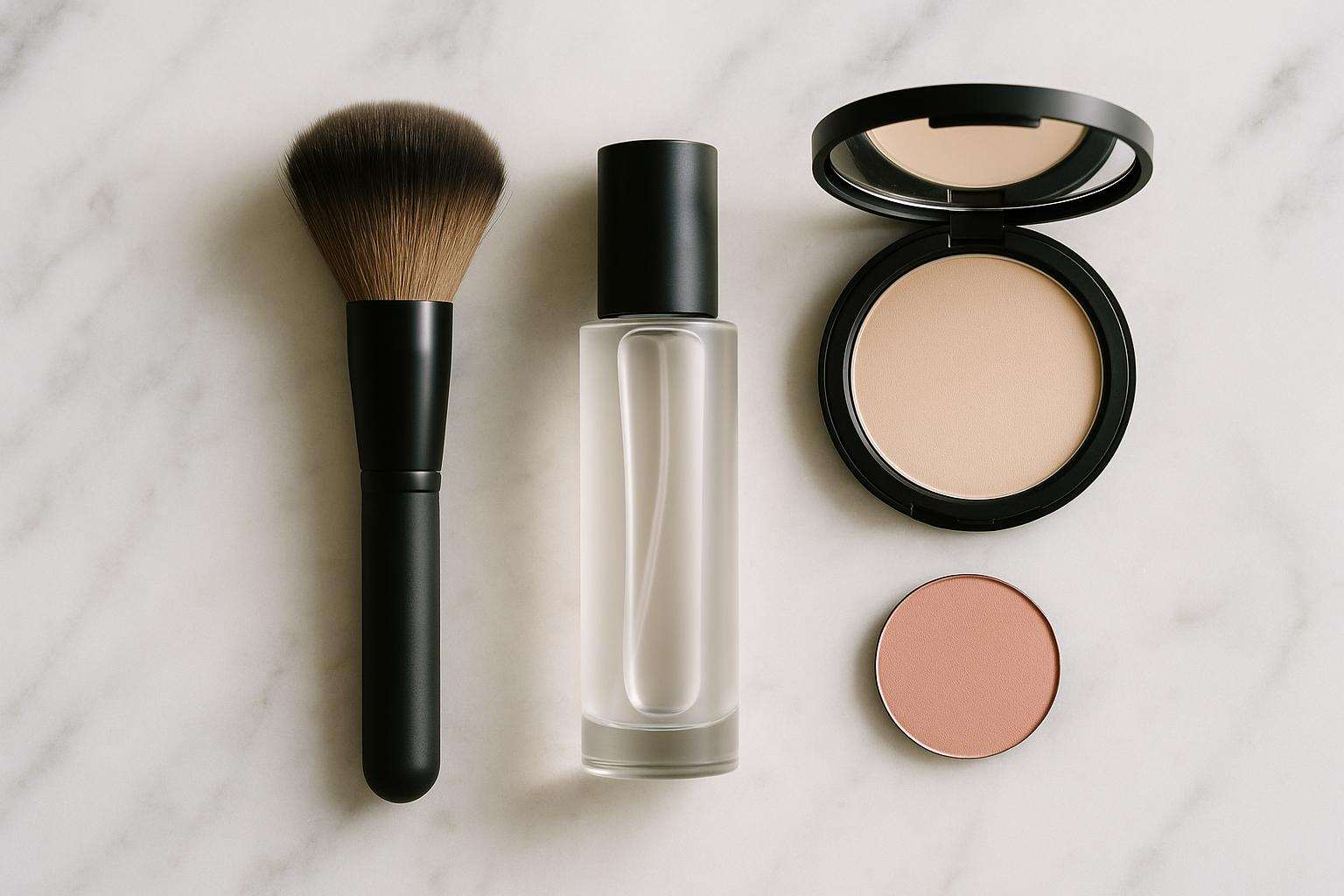
Long-wearing bridal makeup is a layered system, not a single product. Match your primer to your skin type, choose your foundation technology (HD, airbrush, or hybrid) based on skin condition and artist skill, apply setting spray in three stages, and calibrate your color palette to your undertone — in that order, six to twelve months of planning ahead.
A wedding day is not a typical workday. Between the ceremony, the portraits, cocktail hour, and the reception, most brides are in makeup for 12–16 hours — through outdoor light, indoor flash photography, dancing, hugs, and, frequently, tears. Standard formulas are not engineered for that. Bridal makeup built for the long haul requires the same methodical approach as any high-performance system: the right foundation, the right bonding agent, and the right sealant, each chosen for your specific skin type and climate. What follows is the complete layered system — grounded in guidance from working artists and real product testing — to get you through every hour of it.
Should You Use Primer for Wedding Day Makeup?
Primer is the highest-return investment in any long-wear bridal kit. It creates a bonding layer between skincare and foundation, extends wear by three to five hours in real-world conditions, blurs pores for high-definition photography, and either controls oil or counteracts dryness depending on the formula chosen. Even brides who skip primer 364 days a year should not skip it on their wedding.
One technical detail that catches brides off guard: standard SPF ingredients in moisturisers and tinted primers cause white flashback under professional camera flash. The mineral compounds that provide UV protection scatter light on camera, producing a ghostly pallor in photographs. The solution is to use a primer with no SPF — the Hourglass Veil Mineral Primer is specifically formulated SPF-free for this reason and is a go-to recommendation from professional bridal artists for any skin type.
| Skin Type | Recommended Primer | Why It Works | Where to Buy |
|---|---|---|---|
| Oily / Combination | Smashbox Photo Finish Primer | Silicone-based, mattifying; holds foundation up to 16 hrs; originally developed for television production | Sephora, Ulta Beauty |
| Dry / Sensitive | Laura Mercier Pure Canvas Primer | Hydrating formula; 91% of users report improved makeup wear in brand consumer testing; buildable for dry patches | lauramercier.com, Sephora |
| Dry / Sensitive (alt.) | Tatcha The Silk Canvas | Velvety, fragrance-light, minimal irritant potential; used widely by bridal artists for reactive skin types | Sephora, tatcha.com |
| All types (flash photography) | Hourglass Veil Mineral Primer | SPF-free by design — prevents white flashback under camera flash; shine-free, photo-ready base | Sephora, hourglasscosmetics.com |
| Hybrid (oily T-zone / dry cheeks) | Smashbox Photo Finish (T-zone) + Laura Mercier Pure Canvas (cheeks) | Dual-application technique addresses each zone independently; recommended by 614 Beauty for combination types | Sephora, Ulta Beauty |
What Is the Difference Between Airbrush and HD Foundation for a Wedding?
This is the most common technical question brides bring to their first artist consultation, and the answer depends on three factors: your skin type, your artist's skill set, and the look you want to achieve.
HD Foundation was developed for film and television, where ultra-high-resolution cameras exposed every imperfection. Micro-fine light-scattering pigments — quartz and silica microparticles — diffuse light away from pores and fine lines, producing a skin-like finish both in person and on camera. Applied with brushes and sponges, it is buildable and blendable. HD works for all skin types, including dry and sensitive, and is available in the widest shade ranges of any foundation category.
Airbrush Foundation is a silicone-based formula sprayed through a pneumatic gun at adjustable pressure. The result is a whisper-thin, uniformly diffused layer that is waterproof, sweat-resistant, and highly transfer-resistant — qualities that make it popular for long outdoor summer weddings. The limitation: airbrush requires a skilled, experienced operator. Inconsistent pressure or the wrong pressure setting produces patchiness. It is also less forgiving on dry skin because the silicone formula clings to dry patches rather than blending through them. Airbrush is almost always a surcharge — typically $75–$150 more in most US markets, and higher in New York, Los Angeles, or destination resort areas.
The hybrid approach: Most experienced bridal artists in 2026 apply a traditional concealer and HD-finish foundation first — using it for shade precision, buildable coverage, and flexibility — then airbrush over the top as a finishing and locking layer. This method is becoming the industry standard because it captures the shade-matching advantages of HD products alongside the transfer-resistance and longevity of airbrush. As a rule: hire an artist whose portfolio you admire, then defer to that artist's product recommendation rather than specifying a technique you have read about online. The artist's skill ultimately matters more than the tool.
What Setting Spray Is Best for a Wedding — and How Do You Apply It?
A setting spray acts as an invisible film across the finished face, locking foundation, concealer, blush, and eye makeup against sweat, tears, and humidity. The professional technique is not a single mist at the end of the application — it is a three-layer system applied at different stages of the makeup build:
- Layer 1: A light mist after primer but before foundation — improves adhesion and reduces foundation migration.
- Layer 2: A medium mist after foundation but before powder blush and bronzer — locks the base layer before adding colour.
- Layer 3: A full application after all makeup is complete — maximum transfer-resistance and the long-wear seal.
Technique matters as much as product: hold the spray 8–10 inches from the face, apply in an X-pattern and then a T-pattern, and allow 60 seconds to dry between each layer. Applying too close or too fast results in streaking; applying too far reduces efficacy.
| Product | Claimed Hold | Finish | Best For | Retailer |
|---|---|---|---|---|
| Urban Decay All Nighter | ~16 hours | Matte | Oily skin; outdoor and summer weddings; warm climates | Sephora, Ulta Beauty |
| MAC Fix+ Setting Spray | Up to 24 hours | Shine-control | Waterproof protection; all day and evening wear; emotionally charged ceremonies | maccosmetics.com, Sephora |
| Morphe Lifeproof Continuous Setting Mist | ~16 hours | Dewy / glass-skin | Dry or sensitive skin; alcohol-free; vitamin E and glycerin formula with ectoin | morphe.com, Ulta Beauty |
The Urban Decay All Nighter uses patented temperature-control technology designed to counteract heat-induced makeup breakdown — the reason it is the go-to for oily skin in warm climates. The MAC Fix+ is the waterproofing workhorse, popular among artists who anticipate emotional ceremonies. The Morphe Lifeproof is the dry-skin specialist: alcohol-free, so it will not strip moisture from the surface, with a glycerin base that maintains the dewy finish of a hydrating foundation.
How Do You Choose Bridal Makeup Colors for Your Skin Tone?
Undertone — not surface skin color — is the primary driver of flattering color selection. The fastest self-assessment: examine the veins on the inner wrist in natural daylight. Blue or purple veins signal a cool undertone; green veins signal warm; blue-green is neutral. No wrist check is infallible, so a professional trial with a skilled artist is the surest confirmation.
Fair and light skin (typically cool or pink undertones)
Foundation: pink- or beige-based formulas. Avoid yellow-based shades, which read muddy against pink undertones. Eyes: soft champagne, blush, shimmery ivory, or peach for a romantic day look; silver metallics, plum, or mauve for evening drama. Lips: naked pink, nude peach, or a soft true red. The 2025–2026 trend of blush draping — sweeping blush high onto the cheekbones toward the temples — reads particularly well on fair skin in coral and peach tones.
Medium and olive skin (typically neutral to warm undertones)
Foundation: yellow or golden-based formulas that amplify natural warmth without adding orange cast. Eyes: bronze, copper, and gold; jewel tones including emerald and sapphire are prominently trending for 2025–2026 bridal seasons according to QC Makeup Academy trend reporting. Lips: hot red, coral, or a rich mauve. Blush draping in watermelon or berry reads beautifully on medium skin at golden hour.
Deep and dark skin (typically golden, red, or neutral undertones)
Foundation: formulas with red, blue, or purple undertone bases — ashy or overly beige-toned foundations create a grey cast. Eyes: dramatic plum, burgundy, and gold for maximum contrast; richly pigmented formulas from NARS Cosmetics, particularly the Radiant Creamy Concealer and Light Reflecting Foundation, are consistently recommended for deeper skin tones. Lips: rich berries, deep red, and reddish-brown.
The four-season framework: Many professional artists now apply a seasonal color analysis — Spring, Summer, Autumn, Winter — that combines undertone with hair color and eye color into a cohesive, internally consistent palette. A Winter bride (cool undertones, dark or platinum hair, striking eye contrast) benefits from jewel tones, silver, and icy pinks. An Autumn bride (warm undertones, auburn or brunette hair) should lean into burnt orange, copper, and terracotta. This approach eliminates the product-by-product guesswork of building a bridal palette from scratch.
2025–2026 trend note: Blush draping in coral, watermelon, and berry — sweeping high on the cheekbones toward the temples — is appearing across all skin tones in editorial and real-wedding coverage. Soft diffused smokey eyes in chocolate brown and mauve are replacing harsh black as the bridal standard, reading more wearable in both ceremony and reception light.
What Should You Expect at a Bridal Makeup Trial?
The trial is the most important pre-wedding beauty appointment — not a luxury add-on, but the engineering test run for everything that happens on the day itself. Book your artist 6–12 months out for peak-season Saturday weddings; GlamSquad's booking data confirms that the most sought-after artists in major US markets are fully reserved a full year before June and September Saturdays. Schedule the trial session 1–3 months before the wedding: close enough that your skin, hair, and brows accurately reflect their wedding-day state; early enough to allow a follow-up if adjustments are needed.
What to bring to the trial:
- Clean, moisturized skin — no full foundation or SPF under the trial makeup.
- Five to ten inspiration images, drawn from the artist's own portfolio and editorial references.
- Your veil, headpiece, or hair accessories — these change proportion dramatically and must be seen with the makeup.
- A white or off-white top to approximate the dress neckline.
- Any planned pre-wedding treatments — lash extensions, brow tinting, self-tan — should already be tested before the trial. The artist needs to see your actual wedding-day canvas.
Most artists block two hours for a bridal trial. The session moves from skin prep through foundation, then eyes, then lips, with review at each stage. A trial that surfaces adjustments is a productive outcome — the only genuinely unsuccessful trial is one where the bride says everything is perfect and arrives on the wedding day with something she actually dislikes.
Trial cost: $150–$300 for makeup alone in most US markets, often credited toward the wedding-day fee. Airbrush upgrade: $75–$150 additional. Gratuity of 15–20% is standard. Artists such as Daniela Gozlan Bridal (Miami), Caitlyn Meyer Pro Team (Baltimore and Washington DC), Etoilly Artistry (Houston, Dallas, and Austin), and BetsyElisa Inc. (New York, The Knot Best of Zola Award 2025) represent the range of experienced professionals working across the country at this level.
What Are the Most Important Tips for Making Bridal Makeup Last All Day?
A checklist of professional practices — drawn from working bridal artists across the US — that separate makeup that holds for sixteen hours from makeup that needs emergency repair by cocktail hour:
- Waterproof everything at the eye. Eye primer under every shadow is non-negotiable. A flesh-toned waterproof pencil used as a base layer beneath shadow provides a secondary grip barrier and prevents fallout migration from creasing.
- Tap, never rub, concealer under the eyes. Rubbing generates heat and breaks down product; a light tapping motion with the ring finger deposits concealer without lifting what is already there. A single drop of mixing medium added to under-eye concealer increases longevity and prevents the dreaded mid-afternoon crease line.
- Use a translucent setting powder as a mid-layer, not a final layer. After foundation and concealer — before blush and bronzer — press (do not sweep) the Laura Mercier Translucent Loose Setting Powder into the skin. This batch-bonds the base layers together before color products are applied on top.
- Blot with paper, never powder, mid-day. Additional powder over hours of existing product layers cakily and reads as heavy in photography. Blotting papers absorb excess oil without adding product.
- Never introduce new products on the wedding day. Whatever performed well at the trial should be replicated exactly — same brands, same order, same technique. No substitutions, no "I thought I'd try this.”
- Healthy skin is the foundation of long-wear makeup. A consistent skincare routine — well-hydrated, well-rested skin — outperforms any product combination on a bride who has skipped sleep and moisture in the week before the wedding.
Considered Counsel
Frequently asked
How long does bridal makeup last without touch-ups?
Professionally applied bridal makeup, built with a primer, long-wear foundation, and setting spray, is designed to last 12–16 hours with minimal intervention. The critical variables are skin type, climate, and technique. Oily skin in a warm outdoor setting is the hardest condition; a mattifying primer such as the Smashbox Photo Finish, a transfer-resistant foundation, and Urban Decay All Nighter setting spray applied in three layers extend wear to 12–14 hours in that environment. The only mid-day maintenance most brides need is a single pass of blotting paper on the T-zone. Powdering over existing makeup layers up rather than refreshing, so artists advise against it. Waterproof eye products are non-negotiable: they are the most emotionally stressed area of the face and the most photographed. A good trial run, in the same climate conditions as the wedding, is the only reliable way to confirm your specific formula holds for the full day.
What is the difference between airbrush and HD foundation for a wedding?
HD foundation uses micro-fine light-scattering pigments — typically quartz and silica microparticles — applied with brushes and sponges to produce buildable, skin-like coverage that reads naturally on ultra-high-resolution cameras. Airbrush foundation is a silicone-based formula sprayed through a pneumatic gun in a whisper-thin, uniformly diffused layer; the result is waterproof, sweat-resistant, and highly transfer-resistant, which is why it became popular for long outdoor weddings. HD is more forgiving on dry or sensitive skin and comes in wider shade ranges. Airbrush is less forgiving on dry skin and requires an experienced operator — pressure inconsistencies produce patchiness. The industry is moving toward a hybrid approach: HD foundation and concealer first, airbrush applied over the top to lock and refine. Airbrush is typically priced at a $75–$150 surcharge in most US markets, and higher in New York or Los Angeles.
What setting spray is best for an outdoor summer wedding?
For outdoor summer weddings — the harshest environment for bridal makeup — makeup artists consistently reach for Urban Decay All Nighter Setting Spray. Its patented temperature-control technology was designed to counteract heat-induced breakdown, and its microfine mist applies in an even, non-streaking film. Applied in three layers — after primer, over foundation, and after all makeup is complete — it achieves up to 16 hours of wear on oily and combination skin in warm climates. The All Nighter is available at Sephora and Ulta Beauty. For brides with dry skin getting married outdoors in summer, the Morphe Lifeproof Continuous Setting Mist is a better fit: it is alcohol-free, contains vitamin E and glycerin, and will not cling to dry patches the way alcohol-based sprays do. Both options should be held 8–10 inches from the face and applied in an X-pattern then a T-pattern for even coverage.
When should you book a bridal makeup trial?
Book the makeup artist as early as 6–12 months before a peak-season Saturday wedding — top bridal artists in major markets are routinely fully booked within that window. GlamSquad's booking data confirms that the most in-demand artists are secured a full year in advance for June and September Saturdays. The trial session itself should be scheduled 1–3 months before the wedding: close enough that your skin condition, hair length, and brow shape accurately reflect what they will be on the day, but early enough to allow a follow-up if adjustments are needed. Bring clean moisturized skin, your veil or headpiece, a white or off-white top, and five to ten inspiration images drawn from the artist's own portfolio. If you plan to have lash extensions, brow tinting, or a spray tan, test those before the trial — the artist needs to see and work with your actual wedding-day canvas, not an approximation of it.
How do I choose bridal makeup colors for my skin tone?
Undertone — not surface skin color — is the primary driver of color selection. The fastest method: examine the veins on the inner wrist in natural light. Blue or purple veins indicate a cool undertone; green veins indicate warm; blue-green is neutral. For cool or fair skin, pink-based foundations, champagne or silver eye looks, and nude-pink or soft red lips are most flattering. For medium and olive skin with neutral-to-warm undertones, yellow or golden-based foundations, bronze or copper eyes, and hot red or coral lips read most naturally. For deeper skin tones with golden, red, or neutral bases, choose foundations with red, blue, or purple undertones — never ashy — pair with dramatic plum or gold eyeshadow, and lean into rich berry or deep red lips. Professionally, many artists now use a four-season color analysis framework that layers undertone with hair color and eye color to build a fully cohesive palette recommendation rather than selecting each product individually.
Should I use primer for wedding day makeup?
Yes — primer is one of the highest-return investments in a long-wear bridal kit. Even brides who skip it every other day of the year should not skip it on their wedding. Primer creates a bonding layer between skincare and foundation, extends wear by 3–5 hours in real-world testing, blurs pores for high-definition flash photography, and controls excess oil or counteracts dryness depending on the formula chosen. The key is matching primer to skin type: a mattifying silicone primer such as Smashbox Photo Finish for oily or combination skin; a hydrating formula such as Laura Mercier Pure Canvas Primer for dry or sensitive skin; the Hourglass Veil Mineral Primer for all types when SPF is a concern — standard SPF ingredients cause white flashback under professional camera flash, and the Veil Mineral Primer is SPF-free. A primer adds 5–10 minutes to the application time and is worth every one of them when the photographs are being reviewed the following week.
How much does a bridal makeup artist cost in the US?
Bridal makeup pricing in 2026 spans a wide range depending on market, experience level, and services. Trial appointments — the most important pre-wedding beauty session — typically cost $150–$300 for makeup alone, and many artists credit the trial fee toward the wedding-day total. Wedding-day makeup itself ranges from $150–$250 at the entry level in smaller markets, $250–$450 at the mid-tier, and $500–$1,000 or more for top-tier artists in New York, Los Angeles, or destination markets. An airbrush upgrade adds $75–$150 in most markets. Hair combined with makeup packages, which many artists offer, typically run $400–$800 in mid-tier markets and $700–$1,500 or more for luxury bookings. Gratuity of 15–20% is standard and always appreciated, though not mandatory. Artists based in New York — such as Hung Vanngo, whose clients include Selena Gomez and Gwyneth Paltrow — represent the top tier; regional artists at firms like Caitlyn Meyer Pro Team in Baltimore or Etoilly Artistry in Houston offer comparable craft at lower price points.