Bridal Beauty
Wedding Hair: Choosing a Style That Holds All Day
From the low chignon that dances through a June reception to the braided updo that laughs at August humidity, the right wedding hairstyle is the one that suits your face, your veil, and the hours ahead — not simply the image saved to your Pinterest board.
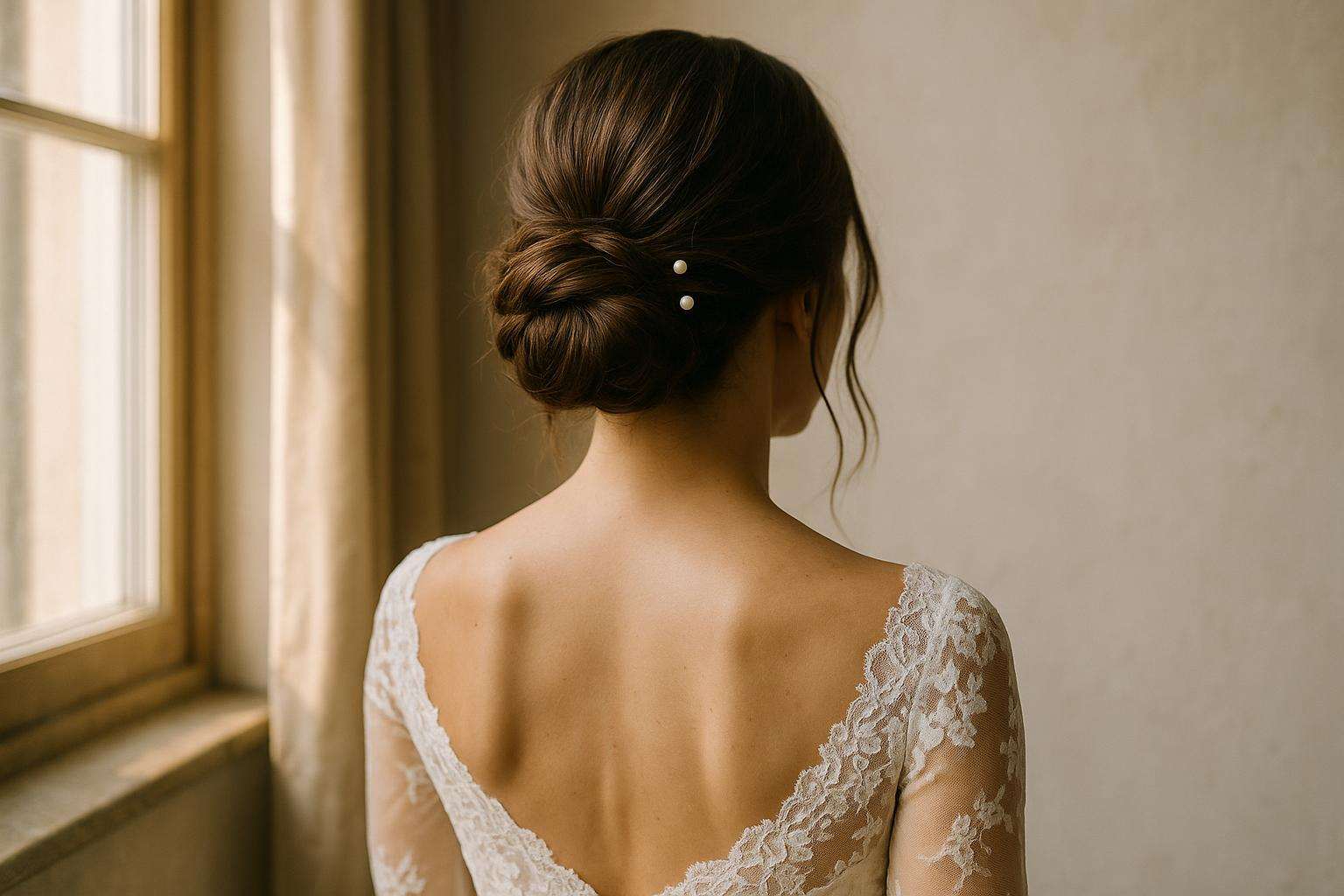
The best wedding hairstyle is decided by three factors — your venue's conditions, your veil's weight, and your face shape — in that order. Braided updos and low chignons hold longest in heat and humidity; half-up styles are the most universally flattering; loose waves are beautiful in controlled indoor settings but require the most maintenance through a long reception.
Every bride has saved an image of a hairstyle she loves. The challenge is that the image does not carry information about whether the bride in the photograph was inside an air-conditioned ballroom or outside in August, whether her hair was colour-treated or virgin, or whether her veil weighed three ounces or three pounds. The decision that looks effortless in a single photograph requires rather more consideration in real life — and the consequences of getting it wrong arrive precisely when you cannot do anything about them: in the middle of a six-hour reception.
This guide draws on guidance from Beauty Brigade LLC, Izabella Bordignon London, Lee Graves Salon, SA Hair Salon, The Knot, and WeddingWire to give you a complete decision framework — from style vocabulary and face-shape matching through longevity comparison, veil placement, product guidance, real cost benchmarks, and the trial-and-booking timeline — so that on the morning of your wedding, the only thing left to decide is who carries your bag.
What Are the Main Wedding Hairstyle Categories — and Which Is Right for You?
The Chignon
The chignon is a low, twisted knot or coil secured at the nape of the neck. Derived from the French term for the nape, it is the bridal updo with the longest pedigree and the most consistent longevity record. The structural key, according to professional hairdresser Matt Newman, is a mid-height ponytail base — neither too high nor too low — which provides the foundation that keeps the chignon anchored through a full day of dancing. Pearl pins, floral combs, or a few loose face-framing tendrils personalise the silhouette without compromising its hold.
The chignon suits oval, heart, and square face shapes particularly well. On a heart-shaped face, the low placement balances a wider forehead by adding visual weight at the nape; on a square face, the softness of the knot counterpoints the jawline's angularity. For round faces, a chignon placed very low can shorten the vertical line of the face — a half-up style or a slightly elevated chignon is more flattering in this case.
The French Twist
The French twist sweeps all hair to the back and rolls it upward into a smooth vertical column, pinned flat against the head. It reads as architectural and formally elegant — the natural choice for ballrooms, grand hotels, and traditional indoor ceremonies — but can feel over-structured for beach or bohemian celebrations. Stylists recommend applying a texturizing spray or a pomade with hold before rolling the twist so that the hair seats securely into the pins; with proper product and sufficient pins, a French twist can hold from ceremony through last dance without intervention.
Braided Updos
Braided updos combine the structural security of an updo with the textural interest of a braid. Variations include the crown braid (a French braid wrapping from front to back in a halo — bohemian, ideal for outdoor summer weddings); the fishtail braid updo (two-strand interlacing that reads intricate but is achievable in a single appointment); the waterfall braid (a partial French braid where lower sections cascade freely — romantic and ideal with floral accessories); and the inverted French braid bun (braid begins at the nape, travels upward into a secured bun — classic and polished). Braids resist frizz better than smooth styles because the interlocking structure physically limits expansion as humidity rises; after setting, individual braid sections can be pinched and pulled slightly wider to add texture without loosening the hold.
Half-Up, Half-Down
The half-up style is the most widely searched bridal hair category, and for good reason: it combines a secured upper section (twisted, braided, or pinned into a small chignon) with flowing hair at the back, which means it photographs well from every angle, opens the face during vows, and works across all hair lengths and textures. The Knot identifies it as the most universally requested bridal look in 2026. A common contemporary evolution is a small low chignon at the crown paired with loose waves below — balancing structure with movement in a way that suits both formal and relaxed weddings.
Loose Waves and Down Styles
Romantic loose waves — achieved with a large-barrel curling iron or wand, diffused with fingers — suit beach ceremonies, garden weddings, and bohemian aesthetics. They are also the highest-risk style outdoors: humidity, wind, and body heat affect loose hair significantly more than any secured style. Beauty Brigade LLC puts it plainly: “the chances of your hair staying in beautiful shape when it's down is much lower than when it's up” in outdoor or humid conditions. For brides committed to wearing hair down, the best strategy is to work with the natural texture rather than against it, using a salt spray to enhance what the hair already does and sealing with a humidity-resistant hairspray.
Which Hairstyle Holds Longest — and Does Your Venue Change the Answer?
A bridal hairstyle must perform for a minimum of six to eight hours through ceremony, formal photographs, cocktail hour, and reception — often including heat, wind, dancing, and sustained physical contact. The table below compares the five major style categories across four venue conditions.
| Style | Ballroom / Indoor | Outdoor / Garden | Beach / Coastal | Hot Summer / Humid |
|---|---|---|---|---|
| Low Chignon | Excellent | Excellent | Good | Excellent |
| French Twist | Excellent | Good | Fair — needs strong hold spray | Good |
| Braided Updo | Excellent | Excellent | Excellent | Excellent |
| Half-Up, Half-Down | Excellent | Good | Good | Good |
| Loose Waves / Down | Good | Fair | Fair to Poor | Fair to Poor |
Updos and braids win decisively in high humidity because they lift hair entirely off the neck and shoulders, eliminating contact with the two primary sources of frizz collapse: ambient moisture and skin heat. Nearlywed Magazine similarly notes that braids are one of the most reliable humid-climate choices because the interlocked structure resists expansion as atmospheric moisture increases.
How Does Veil Placement Affect Which Hairstyle You Should Choose?
Veil weight and attachment point are non-negotiable considerations that should be decided before the hair trial, not after. The veil's comb must anchor to something: a low chignon or pinned bun provides the most secure structural foundation for heavier veils — chapel-length or cathedral-length styles — because the mass of the knot gives the comb multiple points of grip. A half-up style can support a lighter blusher or elbow veil but may require additional pins to hold a heavier piece through a ceremony. Loose down styles anchor veils with the fewest secure points, which means cathedral-length veils can shift, slide, or require repeated adjustment.
Izabella Bordignon London, a specialist London-based bridal hair stylist, is explicit on this point: the actual veil and comb must be brought to the hair trial — not a substitute or a placeholder — so that the stylist can physically test placement and adjust the style to accommodate the accessory's real weight and dimensions. The relationship between a cathedral veil resting over a structured chignon, for example, is impossible to evaluate with a piece of fabric from the linen cupboard.
Two additional veil-related considerations: blusher veils worn over the face need a secure front comb anchor — which means the top of the half-up section or a pinned crown piece. Cathedral veils swept over a chignon require the knot to sit low enough that the veil's fall does not lift or displace the style as it drapes. Both are testable only at the trial.
What Products Do Bridal Hairstylists Actually Use to Make Hair Last?
Professional bridal hairstylists layer products in a defined sequence: a texturizing base, a working spray, and a finishing product. Anti-frizz serums are applied last, over the completed style. The table below covers the specific products most consistently cited by bridal hair specialists, including those available through Sephora and professional distributors nationwide.
| Product | Brand | Stage | What It Does |
|---|---|---|---|
| Moroccanoil Treatment | Moroccanoil | Prep | Argan-oil serum; frizz control and shine base before heat styling |
| No. 9 Bond Protector Serum | Olaplex | Prep | Heat protection, frizz reduction before updo tool work; sold at Sephora |
| Dry Texturizing Spray | Oribe | Build | Volume without deposit; lightweight grip for updo structure |
| Triple Take 32 Extreme High-Hold Hairspray | Redken | Hold | 24-hour control, humidity resistance; ideal for braids and complex styles |
| Luminous Hairspray Strong | Moroccanoil | Hold | Argan-oil infused hold with flexibility and humidity block |
| Elnett Satin Extra Strong Hold | L'Oréal | Hold | Weightless hold that brushes out cleanly; good for soft curls |
| Glimmer Shine Finishing Spray | Moroccanoil | Finish | Photograph-ready reflective finish; not a hold spray — applied last |
For updos in humid climates, the sequence matters: texturizing base first, then medium-hold working spray during building, then a finishing spray once the style is set and pinned. Anti-frizz serums (argan or marula oil) are applied as the very last step, smoothed over the surface of the completed style to tame flyaways and add luminous sheen without disturbing the structure beneath.
When Should You Book Your Bridal Stylist — and What Does the Trial Involve?
Book a bridal hairstylist eight to ten months before the wedding for peak-season Saturdays (April through June and September through November). Mobile bridal beauty platform Glamsquad — operating in fifteen or more U.S. cities, with bridal-certified stylists averaging seven years of bridal experience and over 12,000 bridal services completed — recommends early booking because experienced stylists fill peak dates well in advance. Their trial includes veil and accessory placement; a 50% non-refundable deposit secures the date.
Schedule the hair trial two to three months before the wedding — after the dress is finalised but with enough runway to adjust the style, add colour services, or source hair extensions if needed. Lee Graves Salon advises waiting until both the dress and accessories are confirmed before booking the trial, because neckline, back detail, and veil weight all directly influence style direction.
The trial itself runs sixty to ninety minutes and covers a full consultation, complete styling, and a plan for the wedding-day timeline, including how long each stage will take and which products worked best. SA Hair Salon recommends bringing: inspiration photos (both liked and disliked examples); photos of the dress showing neckline and back; the actual veil, comb, and accessories; any planned extensions; and one trusted companion for honest feedback.
One counterintuitive detail that nearly every bridal stylist notes: wash your hair the night before the trial — not the morning of. Day-two hair holds bobby pins, backcombing, and grip products significantly better than freshly washed strands. Heavy conditioners and scalp oils make hair slippery, and slippery hair cannot hold pins. This is equally true for the wedding morning itself.
What Does a Wedding Hairstyle Cost in 2026?
According to data from The Knot and WeddingWire, the national price ranges for bridal hair services in the United States in 2026 are as follows:
Simple blowout: $150–$250. Half-up style: $200–$350. Classic updo or chignon: $300–$450. Intricate braided style: $400–$600. Hair trial: $50–$150 (sometimes included in a wedding-day package). Travel or destination fee: $50 flat rate, or $0.50 per mile beyond the stylist’s service radius. Extended stylist hours for touch-ups during reception: $75–$150 per hour. Gratuity: 15–25% of the total bill, presented in a sealed envelope to the lead stylist at the conclusion of service.
A note on comparison shopping: the headline service cost is only one number. Ask every stylist you consult about their travel policy, whether the trial is included or invoiced separately, what their cancellation and rescheduling terms are, and whether they bring an assistant for wedding parties of four or more. Studio Bride, an award-winning bridal hair and makeup agency with locations in Jacksonville, FL and St. Louis, MO (a Knot Hall of Fame recipient), includes these details in every initial consultation — the approach worth replicating when evaluating any stylist.
When communicating your vision at the trial, share: your wedding aesthetic (formal ballroom, rustic barn, beach bohemian); your dress neckline and back detail; your veil length and attachment point; any past chemical services or heat damage that could affect how the style holds; and any hair concerns or insecurities — thin hair, short layers, cowlicks — so the stylist can plan for structural solutions in advance. After the trial, provide written feedback on any changes before the wedding day; stylists see many brides and verbal notes from weeks prior are easily lost in the schedule.
Considered Counsel
Frequently asked
Which wedding hairstyle holds up best in hot and humid weather?
Braided updos and low chignons are the most reliable wedding hairstyles for hot, humid conditions. Both styles lift hair entirely off the neck and shoulders, removing the two primary triggers of frizz and collapse — heat from the skin and contact with sweat. Braids have a particular structural advantage: the interlocking technique physically resists frizz expansion as atmospheric moisture increases. Beauty Brigade LLC notes directly that 'the chances of your hair staying in beautiful shape when it's down is much lower than when it's up' in outdoor or humid venues. For brides who insist on wearing hair down in summer heat, stylists recommend embracing the natural texture with a salt spray and sealing with a humidity-resistant finishing spray such as Redken Triple Take 32 or Moroccanoil Luminous Hairspray Strong, rather than fighting the weather with heavy wax or gel.
What is the difference between a chignon and a French twist for a wedding?
A chignon is a low, twisted knot or coil secured at the nape of the neck — its defining quality is its placement and its smooth, rounded shape. A French twist sweeps all the hair to the back of the head and rolls it upward into a smooth vertical column pinned flat against the skull, creating a more architectural, structured silhouette than the rounded chignon. Both are updos and both hold well all day; the chignon reads as softer and more romantic, while the French twist reads as more formal and graphic. The chignon is versatile across ballrooms, gardens, and barns; the French twist is most at home in formal indoor settings such as a grand church or historic hotel ballroom. For longevity, stylists recommend a pomade or texturizing spray base before rolling a French twist so the hair seats firmly into the pins.
What should I bring to a bridal hair trial?
Bring four things to a bridal hair trial, without exception: clear photos of the dress (showing the neckline, back detail, and fabric), your actual veil and comb if you have chosen them, any hair extensions you plan to wear on the day, and a selection of both liked and disliked inspiration images — showing your stylist what you do not want is as valuable as showing what you love. SA Hair Salon and Izabella Bordignon London both emphasise that the stylist must physically secure your real veil during the trial to confirm placement, because a cathedral veil resting over a chignon requires structural support that can only be tested in person. Bring one trusted companion for honest feedback; avoid large groups, which generate conflicting advice and decision fatigue.
How far in advance should I book a bridal hairstylist?
Book a bridal hairstylist eight to ten months before your wedding date if you are marrying on a peak-season Saturday — April through June or September through November are the two busiest windows, and experienced stylists at sought-after agencies including Studio Bride and Glamsquad fill those dates early. For a mid-week or off-peak date, four to six months is generally sufficient. Schedule the hair trial two to three months before the wedding: after the dress and accessories are confirmed, but with enough runway to add colour services, source extensions, or refine the style based on trial feedback. Lee Graves Salon recommends waiting until both the dress and veil are finalised before booking the trial appointment, because neckline, back detail, and veil weight all directly influence the style direction.
What wedding hairstyles work best for fine or thin hair?
Fine or thin hair holds an updo or half-up style better than loose waves, because the structure of pins, backcombing, and secured sections distributes and fills visual volume rather than exposing it. A low chignon or braided updo works particularly well: the stylist can use a root crimper and backcombing mesh at the crown to build a fuller silhouette before rolling the style. Braided updos are especially effective because the interlocking structure adds visual mass and the braid's width can be pulled gently after setting to appear thicker. If you are committed to loose waves with fine hair, hair extensions clipped in at mid-length add weight and density; Glamsquad stylists include extension consultation as part of their bridal service. Day-two unwashed hair — styled the evening before wash day — holds grip products and bobby pins significantly better than freshly washed strands.
What products do bridal hairstylists use to make hair last all day?
The professional product stack most commonly used on wedding days layers three steps: a texturizing base, a working hold spray, and a finishing spray. Moroccanoil Treatment (argan oil serum) is applied first as a frizz-control and shine prep. Olaplex No. 9 Bond Protector Serum provides heat protection before any tool work. During styling, Oribe Dry Texturizing Spray adds grip and volume without deposit. Hold is locked with either Redken Triple Take 32 Extreme High-Hold Hairspray (24-hour control, humidity resistant — ideal for braids and intricate styles) or Moroccanoil Luminous Hairspray Strong (argan-oil shine with flexible hold). The final layer is a finishing spray — Moroccanoil Glimmer Shine Finishing Spray for photograph-ready reflective luminosity, or L'Oréal Elnett Satin Extra Strong Hold for loose curls that must brush out cleanly later. These products are stocked at Sephora and professional salon suppliers nationwide.
How do I choose between an updo, half-up, and down wedding hairstyle?
The most reliable framework considers three variables in order: your venue's conditions, your veil's weight and placement, and your face shape. For outdoor, humid, or summer weddings, an updo or braided updo is the practical first choice — it holds longer with less intervention. For a cathedral or royal veil, an updo is structurally essential: the veil's comb needs a secure chignon or pinned foundation to anchor its weight through a full ceremony. For face shape, the half-up style is the most universally flattering option — it opens the face at the temples while the flowing lower section adds softness. Loose waves are a beautiful choice in controlled indoor settings but require the most product and the highest tolerance for touch-ups. At your trial, test the style through a full two-hour session — dancing, embracing, the outdoors — before committing.