Designers & Trends
Azazie Wedding Dress Review: Custom-Sizing & At-Home Try-On
The honest DTC assessment every bride needs before ordering — free custom sizing mechanics, the $15 at-home try-on programme, fabric quality, real price comparisons, and the alteration reality you should budget for.
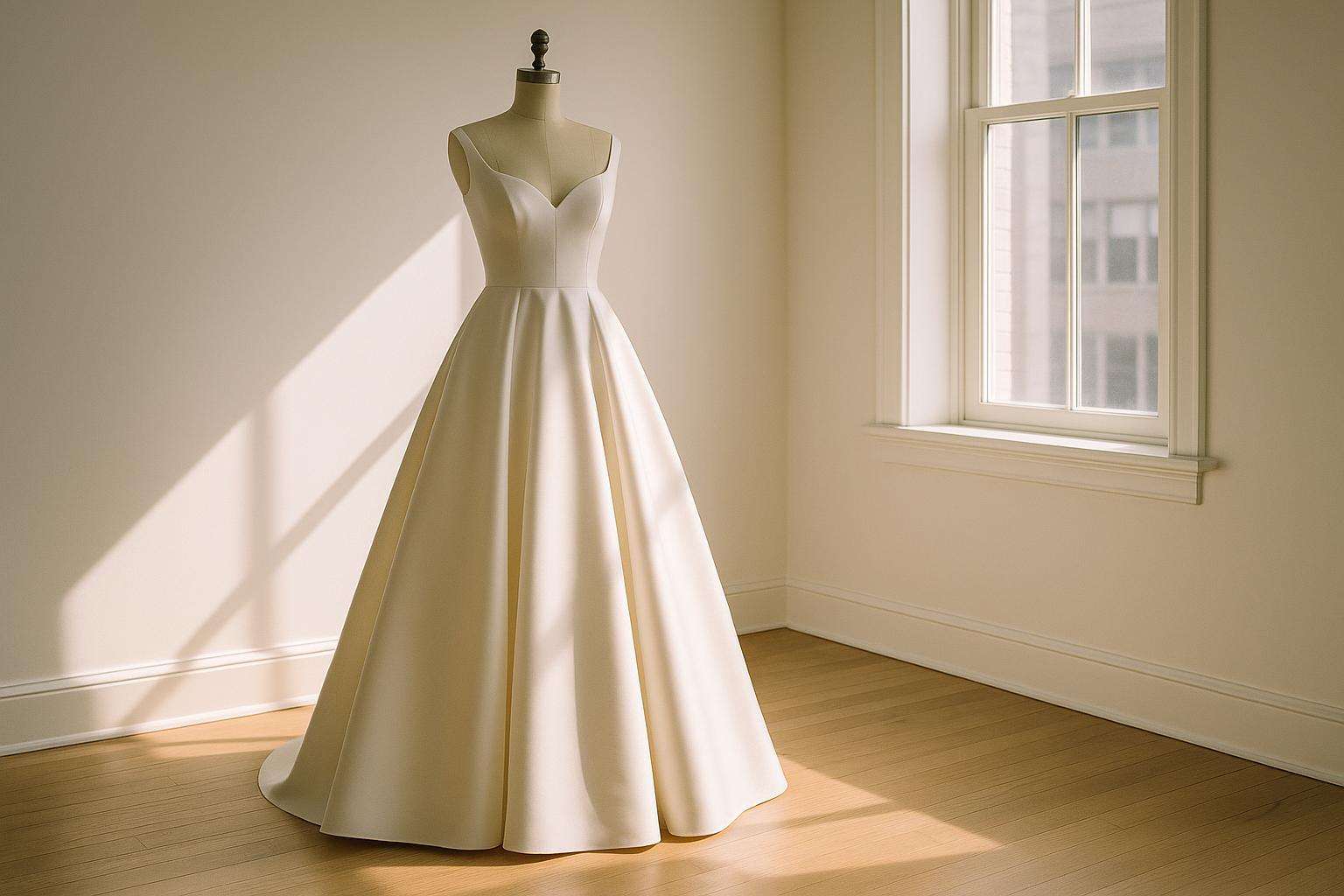
Azazie is a Los Angeles-designed DTC bridal brand founded in 2014 that makes wedding gowns to order — from $199 to $1,400, in sizes 0–30 — with free custom sizing from five body measurements and a $15 at-home sample programme. It is a strong value proposition for budget-conscious brides, provided they understand two honest caveats: custom sizing is not bespoke tailoring, and most brides will still need $70 to $200 in alterations after delivery.
What is Azazie, and how does the made-to-order model work?
Azazie was founded in 2014 by CEO Charles Zhong with a specific mission: eliminate boutique overhead and pass the savings directly to brides. Every gown is cut and hand-sewn after an order is placed — a true made-to-order supply chain that the company credits for its lower price points and reduced textile waste. The brand is headquartered in San Jose, California, with design centred in Los Angeles. As of 2024, Azazie reported revenue estimates up to $250 million, and Retail TouchPoints noted the brand was selling as many as 5,000 dresses a day at its peak — a scale that no traditional boutique network could match.
The catalogue spans over 500 styles in more than 80 colours, sized 0 to 30. Wedding gowns start at $199 and top out around $1,400 for heavily embellished designs; the most commonly purchased tier runs $250 to $500. In April 2024, Azazie opened its first physical showroom — Azazie Studio, a 3,000-square-foot space at 185 North Robertson Boulevard, Beverly Hills — split between a bridal and bridesmaid section and Azazie Atelier, an elevated evening-wear sub-line. The Studio was designed partly to bridge the online brand with an in-person appointment experience for brides who want to feel a silhouette before committing.
Is Azazie custom sizing truly made-to-measure?
This is the most important question any bride should ask before ordering — and the answer is: meaningfully better than standard sizing, but not equivalent to bespoke tailoring.
Azazie's custom sizing uses five core measurements: bust, waist, hips, hollow-to-floor, and height. These inputs adjust pattern grading so that neckline placement, waistline position, and hemline length correspond more closely to the specific customer's proportions. Custom sizing carries no additional charge and does not extend the standard 8-to-12-week production timeline — a genuine differentiator at this price point.
However, a full couture house or specialist alterations atelier typically takes twelve or more measurements, including strap length, shoulder slope, and upper-bust circumference. Azazie acknowledges in its own support documentation that five measurements is materially fewer than true bespoke. The practical consequence: strap length is not measured, so Azazie deliberately errs long, making strap shortening one of the most consistently reported post-delivery alterations. Brides who fall between standard sizes, or who are notably taller or shorter than the brand's baseline height of approximately 5'7", will see the clearest benefit from custom sizing. Select floor-length styles are also offered in Petite (12.7 cm shorter) and Tall (12.7 cm longer) variants for additional refinement.
Critical caveat: custom-sized dresses are non-returnable for any reason, including wedding cancellations. This makes the at-home try-on programme not merely convenient, but strategically essential before placing a custom-sized order.
How does the Azazie at-home try-on programme work in practice?
Azazie's At-Home Try-On Programme allows brides to select up to six sample dresses at a time — bridal gowns priced at $15 each, bridesmaid and mother-of-the-bride samples at $10 each. Shipping in both directions is covered by Azazie, and samples arrive in signature bridal packaging: a satin garment bag, protective layer, hanger, care guide, and a pre-labelled return bag already enclosed.
Over 200 wedding gown styles are available as try-on samples, covering atelier, boho, satin ballgown, and modern minimal silhouettes. The standard keep window is seven days from delivery, with a three-day extension available on request. One popular style frequently available for try-on is the Azazie Celestia ($399) — an A-line in diamond white matte satin with a strapless sweetheart neckline, available for home try-on at $15.
The programme functions as both a product test and a social event substitute: Azazie markets the experience as a private try-on party where friends and family can participate in the decision without boutique appointment pressure. The brand's virtual showroom feature also allows brides to share shortlisted styles online for remote feedback before committing to an order.
One practical note: try-on samples may not correspond to your ordered custom size, which means the fit experience at home is an approximation of silhouette and fabric — not a preview of how your specific custom-sized gown will drape. This is a meaningful distinction worth understanding before the seven-day window closes.
What fabrics does Azazie use, and how is the quality for the price?
Azazie's bridal line uses three primary fabric categories — chiffon, satin, and lace — each suited to different aesthetics and ceremony conditions.
Chiffon is the lightest and most breathable option, favoured for outdoor, beach, and summer weddings. It flows well in photographs and conceals structural seams cleanly, but it is sheer (requiring lining), prone to snagging on jewellery or rough surfaces, and wrinkles after prolonged sitting. Azazie's chiffon bridesmaid dresses are priced from approximately $79 to $135.
Satin at Azazie's price point is polyester or acetate-based rather than silk, offering a smooth, glossy finish that photographs with a soft liquid shine and holds its shape well across the day. It is heavier, less breathable, and reveals body lines and wrinkles more readily — better suited to formal indoor ceremonies in cooler months. Reviewer consensus on Trustpilot and WeddingWire describes the feel as “expensive for the price,” though a consistent minority note the material looks thinner than product photography implies.
Lace is applied over lining at Azazie, adding textural dimension and romantic character. Lace-accented styles require specialist dry cleaning to protect motifs and any beading. The Celestia ($399) demonstrates how effective lace detailing can be at Azazie's price tier: an A-line in diamond white matte satin with a strapless sweetheart neckline that reads as considerably more expensive than its tag suggests in photographs.
| Fabric | Finish | Best Wedding Setting | Key Trade-off |
|---|---|---|---|
| Chiffon | Lightweight, sheer, flowing | Outdoor, beach, summer, destination | Sheer (needs lining); snags and wrinkles with wear |
| Satin (polyester) | Smooth, glossy, structured | Formal indoor, ballroom, autumn/winter | Less breathable; reveals body lines; not silk |
| Lace overlay | Textured, romantic, detailed | Church, estate, traditional ceremony | Requires specialist dry cleaning; adds cost to care |
| Matte satin | Soft, non-reflective, modern | Contemporary venue, civil ceremony, city rooftop | Shows dust and fingerprints more readily |
Overall reviewer consensus across WeddingWire, The Knot marketplace, and Trustpilot positions Azazie's fabric quality as strong for its price tier — the honest comparison is with BHLDN and David's Bridal at similar price points, not with boutique-exclusive labels such as Vera Wang, Pronovias, or Maggie Sottero, which begin at $1,600 and use higher-grade base materials as standard.
What alterations will I need after receiving an Azazie wedding dress?
Budget for alterations even when ordering custom sizing. Azazie's five-measurement grading system cannot accommodate all proportional variables, and the brand's own planning guidance acknowledges this. The most consistently reported post-delivery alterations include:
- Strap shortening — the most frequent alteration; Azazie cuts straps long by default to avoid cutting too short for any proportions.
- Hemming — especially for shorter brides, even in the petite sizing variant.
- Bodice adjustments — taking in or letting out side seams, and cup adjustments to match the bra size or built-in cup preference.
- Bustle addition — for gowns with trains; bustles are not included and must be added by a seamstress after delivery.
Alteration costs reported by customers range from roughly $70 to $200 depending on the scope of work and local seamstress rates. Azazie offers a limited alteration reimbursement of $20 to $75 on eligible custom-sized styles — a partial credit, not full coverage, and it does not apply to standard-size orders (which are eligible for returns instead).
Planning guidance: order at least five to six months before the wedding to allow 8 to 12 weeks of production followed by 6 to 8 weeks for two or three alteration appointments. Brides who order later than this risk being unable to schedule a competent seamstress in the final weeks before the wedding.
How does Azazie compare to boutique bridal shopping?
The honest comparison requires holding two things in mind at once: significant cost savings on one side, and a meaningfully different shopping experience on the other.
The average U.S. boutique wedding dress costs approximately $2,100, per The Knot's 2026 Real Weddings Study of nearly 10,474 couples — plus a further $300 to $600 in alterations. Azazie's $250 to $500 typical price, with free custom sizing, compresses the overall cost considerably. For brides on strict budgets, or brides who already know their preferred silhouette, that compression is genuinely compelling.
Boutique appointments at salons such as Kleinfeld Bridal in New York, or authorised stockists of Maggie Sottero and Pronovias, provide 60 to 90 minutes of in-person styling: a trained consultant assessing proportion and silhouette, real fabric felt in the hand, and a preview of how the exact gown drapes on the specific body. That tactile, expert-guided experience cannot be replicated at home, even with a well-run try-on party.
The hybrid approach Azazie itself recommends — visit a boutique to determine which silhouettes flatter you and which fabrics appeal, then order your preferred style online — is the most strategically sound route for brides who are uncertain about silhouette. It sequences the expert input before the non-returnable custom order, rather than after.
| Dimension | Azazie | Traditional Boutique (mid-range) |
|---|---|---|
| Gown price range | $199–$1,400 (most $250–$500) | $1,500–$3,500+ (mid-to-high) |
| National average spend | ~$350 (typical order) | ~$2,100 (The Knot, 2026) |
| Sizing range | 0–30, free custom sizing | Often samples in sizes 8–12 only |
| Alteration cost (typical) | $70–$200 + partial reimbursement | $300–$600 typical |
| Lead time | 8–12 weeks production | 4–6 months from order to pickup |
| Try-on method | $15 at-home sample programme | In-store appointments, no charge |
| Stylist guidance | Virtual / remote only | In-person trained consultant |
| Fabric base | Polyester satin / acetate | Varies; silk, crepe, high-grade lace |
| Returns policy | Standard sizes returnable; custom non-returnable | Most boutique gowns non-returnable once ordered |
Azazie is the right choice for brides who know their silhouette, are comfortable with an at-home fitting process, and are prepared to budget $70 to $200 for alterations on top of the dress price. It is not the right choice for brides who need in-person guidance to find their style, or who are ordering in the final two to three months before the wedding. Used strategically — try-on programme first, custom sizing second, local seamstress budgeted third — it delivers compelling quality for the price tier.
Considered Counsel
Frequently asked
Is Azazie custom sizing truly made-to-measure?
Azazie's custom sizing adjusts pattern grading across five body measurements — bust, waist, hips, hollow-to-floor, and height — which produces a meaningfully better fit than standard sizing for many brides, but falls short of true bespoke tailoring. A full couture house or specialist atelier takes twelve or more measurements, including strap length and shoulder slope. Azazie deliberately errs on the side of longer straps and slightly fuller bodices to avoid cutting too short, which means strap shortening and minor bodice adjustments remain the most commonly needed post-delivery alterations. Custom-sized orders are non-returnable, so ordering the try-on sample first is strongly advised for brides who are unsure. For those who fall between standard sizes or differ significantly from the brand's 5'7" baseline height, custom sizing still offers a demonstrable improvement over off-the-rack at this price point.
How does the Azazie at-home try-on programme work?
Azazie's At-Home Try-On Programme allows brides to select up to six sample dresses at a time — bridal gowns at $15 each, bridesmaid and mother-of-the-bride samples at $10 each. Shipping in both directions is covered by Azazie. Samples arrive in signature bridal packaging — a satin garment bag, protective layer, hanger, care guide — with a pre-labelled return bag already enclosed. The standard keep window is seven days from delivery, with a three-day extension available on request. Over 200 wedding gown styles are available as try-on samples, covering atelier, boho, satin ballgown, and modern minimal silhouettes. Azazie markets the experience as a private try-on party, and brides can share shortlisted styles through the brand's virtual showroom for remote feedback from family and friends before committing.
What alterations will I need after receiving an Azazie wedding dress?
Budget for alterations even when ordering custom sizing. The most commonly needed post-delivery adjustments are strap shortening (Azazie cuts straps long by default), hemming (especially for petite brides even in the petite sizing variant), bodice side-seam adjustments, cup adjustments, and bustle addition for trained gowns. Alteration costs reported by brides range from roughly $70 to $200 depending on scope and local seamstress rates. Azazie offers a limited alteration reimbursement of $20 to $75 on eligible custom-sized styles — applicable to custom-sized orders only, not standard sizes. To allow sufficient time, order at least five to six months before the wedding: allow 8 to 12 weeks for production, then 6 to 8 weeks across two or three fitting appointments for alterations.
How does Azazie compare to buying a wedding dress at a traditional boutique?
The average boutique wedding dress costs approximately $2,100 in 2026, per The Knot's Real Weddings Study of nearly 10,474 couples — plus $300 to $600 in alterations. Most Azazie bridal gowns land in the $250 to $500 range, with free custom sizing partially substituting for boutique fitting services. The practical trade-off is experiential: boutique appointments at salons such as Kleinfeld Bridal in New York provide 60 to 90 minutes of in-person styling, structured consultant feedback, and the opportunity to feel the exact fabric and silhouette on the body. Azazie's try-on programme approximates this at home in sample dresses that may not match the buyer's custom size. The hybrid strategy Azazie itself recommends — try silhouettes in-store first, then order online — is the most pragmatic approach for brides who are silhouette-uncertain.
What fabrics does Azazie use and how is the quality?
Azazie's bridal line uses three primary fabric categories: chiffon, satin, and lace. Chiffon is the lightest and most breathable, suited to outdoor and summer weddings; it flows well in photographs but is sheer, requiring lining, and wrinkles after prolonged sitting. Satin at Azazie's price point is polyester or acetate-based rather than silk, offering a smooth, glossy finish that photographs with a soft shine and holds its shape well — reviewers on WeddingWire and Trustpilot describe the feel as 'expensive for the price,' though some note material feels thinner than product photography suggests. Lace is applied over lining for textural dimension and requires specialist dry cleaning to protect motifs and beading. Overall reviewer consensus across WeddingWire, The Knot marketplace, and Trustpilot positions Azazie's fabric quality as strong for its price tier, with isolated complaints about thin chiffon sections.
Can I return an Azazie wedding dress if it does not fit?
Return eligibility depends entirely on whether the order is standard or custom-sized. Standard-sized Azazie dresses are eligible for return under the brand's standard returns policy. Custom-sized dresses are explicitly non-returnable for any reason — including wedding cancellations — because they are cut and sewn to a specific set of measurements and cannot be restocked. This makes it especially important to use the at-home try-on programme before placing a custom-sized order, to confirm silhouette, neckline, and fabric preferences. If fit issues arise on a custom-sized order, the alteration reimbursement of $20 to $75 on eligible styles partially offsets the cost of a local seamstress, but it does not cover all alteration scenarios. Brides should read the return policy carefully on the product page before ordering.
How much does an Azazie wedding dress cost compared to other online and in-store options?
Azazie bridal gowns start at $199 and top out at approximately $1,400 for heavily embellished designs, with the most commonly purchased tier running $250 to $500. That positions Azazie significantly below the $2,100 national average for boutique gowns tracked by The Knot in 2026, and below online competitors: BHLDN (Anthropologie's bridal line) prices gowns from approximately $200 to $1,200 in a comparable DTC format, while David's Bridal's refreshed online catalogue starts below $300. At the opposite extreme, boutique-exclusive designers such as Vera Wang, Pronovias, and Maggie Sottero begin at $1,600 and ascend to $5,000 and beyond. Azazie's free custom sizing and $15 try-on programme are differentiators not matched at most comparable price points, which meaningfully shifts the value calculation for brides willing to invest in alterations post-delivery.