Designers & Trends
BHLDN Review: Anthropologie's Bridal Line, Assessed
Aesthetic, price tier, online-vs-showroom experience, sizing inclusivity, and how BHLDN stacks up against traditional salons — an honest, grounded assessment for the modern bride.
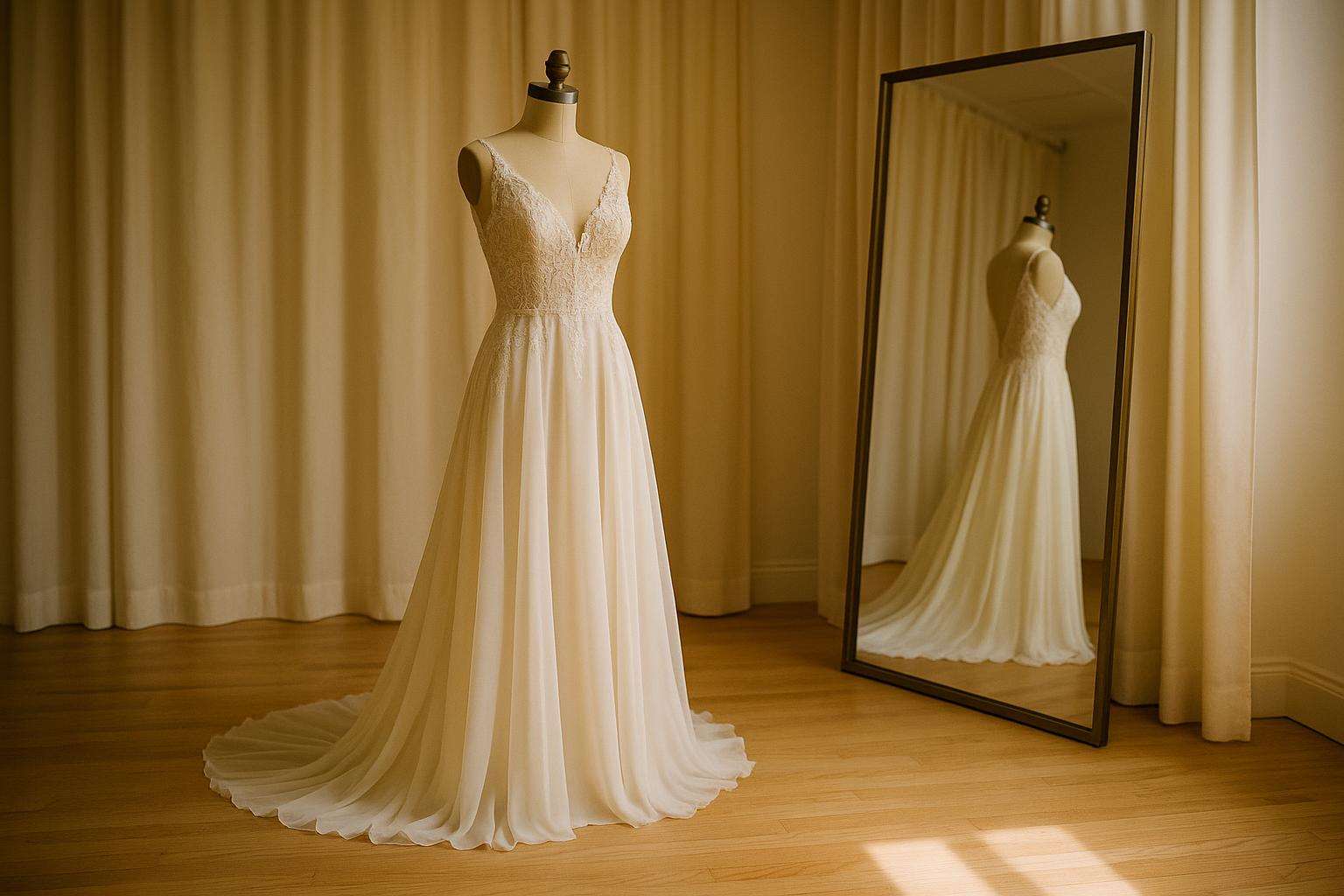
BHLDN is Anthropologie's bridal label — gowns from roughly $300 to $3,000, a returnable ready-to-ship model, designer collaborations with Jenny Yoo and Watters, and sizing up to 26W with no plus upcharge. It sits in a clear lane: more curated than David's Bridal, more accessible than Kleinfeld Bridal, and built for the bride who wants an editorial aesthetic without a 6-month wait or an irrevocable salon commitment.
BHLDN — pronounced "beholden," launched in 2011 as Anthropologie's bridal vertical and now trading as Anthropologie Weddings — is one of the most distinctive bridal propositions in the U.S. market. It is not a traditional bridal salon, not a fast-fashion retailer, and not a luxury couture house. It is something more specific: a fashion-forward, price-transparent, returnable bridal destination with a romantic and bohemian aesthetic at its core.
This review draws on documented brand information, published editorial assessments, and real bride community reports to give you an honest, grounded read on whether BHLDN is the right match for your wedding — and where its real limitations lie.
What Is BHLDN's Aesthetic, and Which Bride Does It Serve?
BHLDN's visual identity is unmistakable: flowing silhouettes, delicate Chantilly lace overlays, hand-beaded embellishments, bias cuts that nod to 1930s glamour, and Art Deco-inflected beading inspired by the 1920s. The brand's own segmentation uses categories like "boho bride" and "romantic bride," and the aesthetic across its catalog is consistent — soft, ethereal, and unstructured.
The BHLDN bride tends to be planning a garden ceremony, vineyard wedding, beach elopement, or intimate destination event. The label excels for brides who want a distinctive, editorial look — not a standard strapless ballgown that could have come from any bridal chain — but who don't want to spend two years saving toward a couture appointment. As one editorial reviewer at A Practical Wedding put it after visiting a BHLDN salon: "In all of my years in the wedding industry, I've never been at a shop where I could easily try on short wedding dresses, wedding separates, wedding gowns, wedding jumpsuits, and non-white wedding dresses" at a single location — the breadth and design perspective is genuinely unusual for its price tier.
The one honest caveat: if your vision is a heavily boned ballgown or a sharply structured corseted silhouette, BHLDN's selection runs thin. The brand leans into drape and fabric quality, not architectural construction. Brides seeking that specific geometry should look toward boutique-channel labels like Allure Bridals or Maggie Sottero instead.
How Much Does BHLDN Cost — and Is the Quality Worth It?
The BHLDN catalog runs from approximately $300 to $3,000, with the densest portion of the in-house line sitting between $800 and $2,500. Entry styles begin around $228–$300; mid-range in-house gowns cluster at $500–$1,200; designer collaboration pieces occupy the upper band. For reference, The Knot's 2025 Attire & Fashion Study benchmarks the national average U.S. wedding dress spend at $2,000 — placing much of the BHLDN catalog at or below the national average.
In-house design is led by Maria Korovilas, and the catalog is supplemented by exclusive designer collaborations including Jenny Yoo (a collection designed exclusively for Anthropologie Weddings, not available through Jenny Yoo's own retail), Watters ($1,200–$3,500 range at BHLDN), Nouvelle Amsale ($2,500 and above), Marchesa Notte, Sachin & Babi, Tadashi Shoji, Needle & Thread, and ML Monique Lhuillier. The multi-designer model means construction quality varies considerably across the catalog — a $400 chiffon A-line and a $2,800 Watters gown occupy very different tiers.
Most BHLDN gowns at entry and mid-range price points use polyester or poly-blend fabrics — a characteristic shared by all sub-$1,500 bridal gowns, including competing mid-tier labels sold through traditional salons. The surface details — lace, beading, appliqués — are consistently praised by reviewers as appearing more expensive than the price suggests. The gap relative to higher-end boutique-channel gowns shows primarily in internal structure: boning and underpinning on a $900 BHLDN gown will not match the corsetry architecture of a $1,400 Maggie Sottero purchased at Kleinfeld Bridal. That trade-off is precisely the point of the BHLDN proposition — surface quality and aesthetic at a fraction of the boutique price, with the freedom to return it if it is not right.
One meaningful practical advantage: BHLDN's seasonal sale events (Black Friday, Cyber Monday, post-Christmas, spring/summer clearance) regularly deliver 30–50% reductions. Real brides have documented purchasing $1,500 gowns for $300 during these windows. No plus-size upcharge is applied — a policy BHLDN formalized at its extended sizing launch in 2020.
How Does the BHLDN In-Store Experience Compare to a Traditional Bridal Salon?
The in-store experience is one of BHLDN's genuine differentiators. Bridal sections sit within Anthropologie & Co. stores but are physically separated from the main retail floor — private dressing rooms with real doors and full-length interior mirrors, a dedicated stylist for your appointment, and champagne at most locations. Appointments run approximately one hour and allow brides to try around 7–8 gowns.
The atmosphere is low-pressure in a meaningful, structural way: there are no commission-based sales consultants, no "say yes to the dress" theatre, and no obligation. All prices are displayed openly — a significant contrast to traditional salons where pricing is often withheld until a bride is emotionally committed to a style. Confirmed U.S. locations include New York City (195 Broadway and the Upper East Side), Los Angeles (10250 Santa Monica Blvd), Newport Beach (Fashion Island), and Chicago, among approximately 22 total national locations. Virtual styling appointments are also available.
The critical structural difference from a traditional bridal salon is reversibility. At a conventional salon — whether a multi-designer boutique carrying Maggie Sottero and Allure Bridals, or a destination institution like Kleinfeld Bridal in New York — gowns are typically special-ordered to your measurements with no-refund policies and 6–9 month lead times. At BHLDN, standard delivery runs 5–7 business days with a 30-day full-refund return window. That changes the psychology of the decision: you can try a gown in your own home, with your own shoes, and return it if it is not right.
The trade-off is that BHLDN does not offer in-house alterations. You will need to source your own seamstress and should budget $300–$600 for standard alterations depending on style complexity. Allow a minimum of two weeks before the wedding for bridal alterations; more lead time is strongly recommended for styles with boned bodices, which require multiple fittings.
What Are BHLDN's Sizing Options — and How Inclusive Is the Range?
BHLDN's bridal sizing opens at size 0 (US) and extends to 26W across approximately half of wedding dress styles, with some made-to-order styles reaching size 30. The extended plus range launched in August 2020, simultaneously across bhldn.com and 10 store locations, with each gown fitted on a true plus-size fit model who evaluates movement across standing, sitting, and dancing before production. "Every neckline, sleeve shape, waist drop, and detail in the collection was designed with the Plus customer in mind," the brand stated at launch.
BHLDN's sizing also runs closer to street sizing rather than traditional bridal sizing, which normally runs small — making it easier for brides to order with reasonable confidence online. For plus-size brides, however, the available range above size 26 in standard stock is limited; brides needing consistent size 28–30 availability will find Azazie's custom-sizing-on-every-style model more inclusive.
How Does BHLDN Compare to Its Main Competitors?
| Retailer | Price Range | Max Size | Returns Accepted? | Lead Time | Best For |
|---|---|---|---|---|---|
| BHLDN / Anthropologie Weddings | $300–$3,000 | 26W (some styles to 30) | Yes — 30 days | 5–7 business days (standard) | Boho-romantic aesthetic; curated designer access; returnable flexibility |
| David's Bridal | $100–$2,500+ | 30W | Yes (limited window) | Days to weeks | Lowest price floor; widest in-store footprint; extended sizing |
| Azazie | $199–$1,119 | 30 (custom, no upcharge) | Yes — at-home try-on program | 4–8 weeks custom; standard in-stock faster | Custom sizing on every style; maximum sizing inclusivity; lowest floor |
| Maggie Sottero (via Kleinfeld Bridal etc.) | $1,200–$2,400 | Varies by stockist | No — special-order, no returns | 4–6 months | Structured silhouettes; traditional salon experience; wider style range |
| Allure Bridals (via boutiques) | $1,000–$2,500 | Varies by stockist | No — special-order, no returns | 4–6 months | Ball gowns; traditional construction; Disney Fairy Tale Weddings collab |
The comparison reveals a clear positioning: BHLDN is the choice for a bride who wants design curation and aesthetic identity beyond a basic chain, without committing to a months-long irreversible salon order or spending above the national dress average. Its weakness relative to David's Bridal and Azazie is sizing above size 26 and lowest-price-floor access. Its weakness relative to boutique salon brands is internal construction depth on structured styles.
Who Should — and Shouldn't — Buy from BHLDN?
BHLDN is the right match if you: are planning a boho, garden, vineyard, elopement, or destination ceremony; wear sizes 0–26W (standard or near-standard); have a dress budget of roughly $500–$2,000 and want a returnable option; value design identity and editorial aesthetics over traditional formality; or want the option to shop both online and in-person without a high-pressure commitment.
BHLDN is probably not your first stop if you: need consistent access to size 28–30 (Azazie is more reliably inclusive); want a heavily structured ballgown or sharply boned corset silhouette (boutique salon labels like Allure Bridals or Kleinfeld's multi-designer selection serve this better); are prioritising the absolute lowest possible price (David's Bridal and Azazie both reach further down); or want in-house alterations included in the salon experience.
For resale value: BHLDN gowns list consistently on Nearly Newlywed and Stillwhite at 40–60% of original purchase price — competitive with other mid-market bridal labels and a reasonable return given the lower original outlay. Pre-owned BHLDN gowns are also a legitimate shopping route for brides on tighter budgets: because BHLDN gowns are built on fabric and lace quality rather than internal corsetry, they hold their condition well in resale.
BHLDN earned its place in the modern bridal market not by competing with the traditional salon experience, but by offering something genuinely different: an editorial aesthetic, honest pricing, and a returnable model that eliminates the irreversible risk standard elsewhere in the industry. For the right bride, that combination is exactly what the category needed.
Considered Counsel
Frequently asked
What is BHLDN and is it part of Anthropologie?
BHLDN (pronounced 'beholden') is the bridal vertical of Anthropologie, itself part of the URBN group alongside Urban Outfitters and Free People. Launched in 2011, it operates under the 'Anthropologie Weddings' banner on the main Anthropologie website, though the BHLDN name persists on in-store labels and the pre-owned resale market. The brand functions as a full-service bridal ecosystem — wedding gowns, bridesmaid dresses, accessories, lingerie, and shoes — available through Anthropologie's e-commerce platform and roughly 22 bridal locations across the United States. Its in-house design is led by Maria Korovilas, supplemented by exclusive designer collaborations with labels including Jenny Yoo, Watters, Nouvelle Amsale, and Marchesa Notte.
How much do BHLDN wedding dresses cost in 2026?
The BHLDN catalog spans approximately $300 to $3,000, with the most densely populated tier sitting between $800 and $2,500. Entry-level styles begin around $228–$300 for simpler silhouettes; mid-range in-house gowns cluster at $500–$1,200; designer-collaboration pieces by labels such as Watters ($1,200–$3,500) and Nouvelle Amsale ($2,500 and above) sit at the upper end. For context, The Knot's 2025 Attire & Fashion Study benchmarks the national average wedding dress spend at $2,000 — meaning a substantial portion of the BHLDN in-house catalog falls at or below the U.S. average. Sale events (Black Friday, Cyber Monday, post-Christmas clearance) have historically produced reductions of 30–50%, with documented cases of $1,500 gowns selling for $300 during peak promotion windows.
What sizes does BHLDN carry for wedding dresses?
BHLDN's standard bridal size range opens at size 0 (US) and extends to 26W across roughly half of wedding dress styles; some made-to-order and specialty styles reach size 30. The extended plus range launched in August 2020 across bhldn.com and 10 store locations simultaneously, with each gown fitted on a true plus-size fit model who evaluates movement across standing, sitting, and dancing before the style enters production. Critically, BHLDN does not charge a plus-size upcharge — a policy formalized at the 2020 launch. On the bridesmaid side the catalog is more expansive, with many styles available up to size 30 as standard stock. For alteration planning, BHLDN advises ordering by the largest measurement and sizing up when between sizes, as taking a gown in is easier than letting it out.
What is the BHLDN return policy?
BHLDN's standard return window is 30 days from delivery for a full refund to the original payment method. Items must be unworn, unwashed, unaltered, with all tags attached and free of stains, pet hair, or floor debris; gowns returned in damaged or altered condition may incur a $75 restocking fee. Important exceptions: items with prices ending in $.99 are final sale and cannot be returned. Made-to-order and designer trunk show gowns carry a 50% restocking fee if cancelled or returned. In-store purchases must be returned to a physical store location; most online orders include a prepaid return shipping label. Refund processing takes approximately 2–3 weeks from receipt, with funds appearing on the original payment method within one billing cycle.
How does the BHLDN in-store appointment experience compare to a traditional salon?
BHLDN bridal sections exist within Anthropologie & Co. stores but are physically separated from the main retail floor, often behind dedicated walls with private dressing rooms featuring real doors and full-length mirrors inside — a meaningful step up from the curtained changing areas common in fast-fashion bridal environments. Styling appointments run approximately one hour, allowing brides to try around 7–8 gowns, and champagne is offered at most locations. The atmosphere is deliberately low-pressure, with no commission-based sales dynamic. The critical difference from a traditional salon is transparency: all prices are clearly displayed, there is no obligation or high-pressure close, and gowns ship to your home and can be returned — eliminating the irreversible commitment inherent in a traditional made-to-order salon purchase. Confirmed U.S. locations include New York City, Los Angeles (10250 Santa Monica Blvd), Newport Beach (Fashion Island), and Chicago, among approximately 22 total.
How does BHLDN compare to David's Bridal, Azazie, and traditional salon designers like Maggie Sottero?
Against David's Bridal ($100–$2,500+, the largest national chain), BHLDN offers stronger aesthetic curation and a more editorial identity but a narrower selection at the very lowest price tier; from $400 upward BHLDN's quality and design differentiation are clearly competitive. Against Azazie ($199–$1,119, custom sizing to size 30 at no upcharge), BHLDN wins on designer depth and brand prestige but Azazie is more inclusive for plus-size brides needing above size 26 and offers a lower price floor. Against Maggie Sottero ($1,200–$2,400 at retailers like Kleinfeld Bridal) and Allure Bridals ($1,000–$2,500), both sold through traditional boutiques with no-return policies, BHLDN gowns at comparable surface quality cost substantially less and remain returnable — though the internal boning and construction in those boutique-channel gowns is generally more sculpting.