Designers & Trends
Grace Loves Lace Review: Boho Luxury Worth the Hype?
An honest look at what Grace Loves Lace actually delivers — the signature stretch lace, boneless construction, zone-based sizing, ordering process, and whether the price is justified for a U.S. bride.
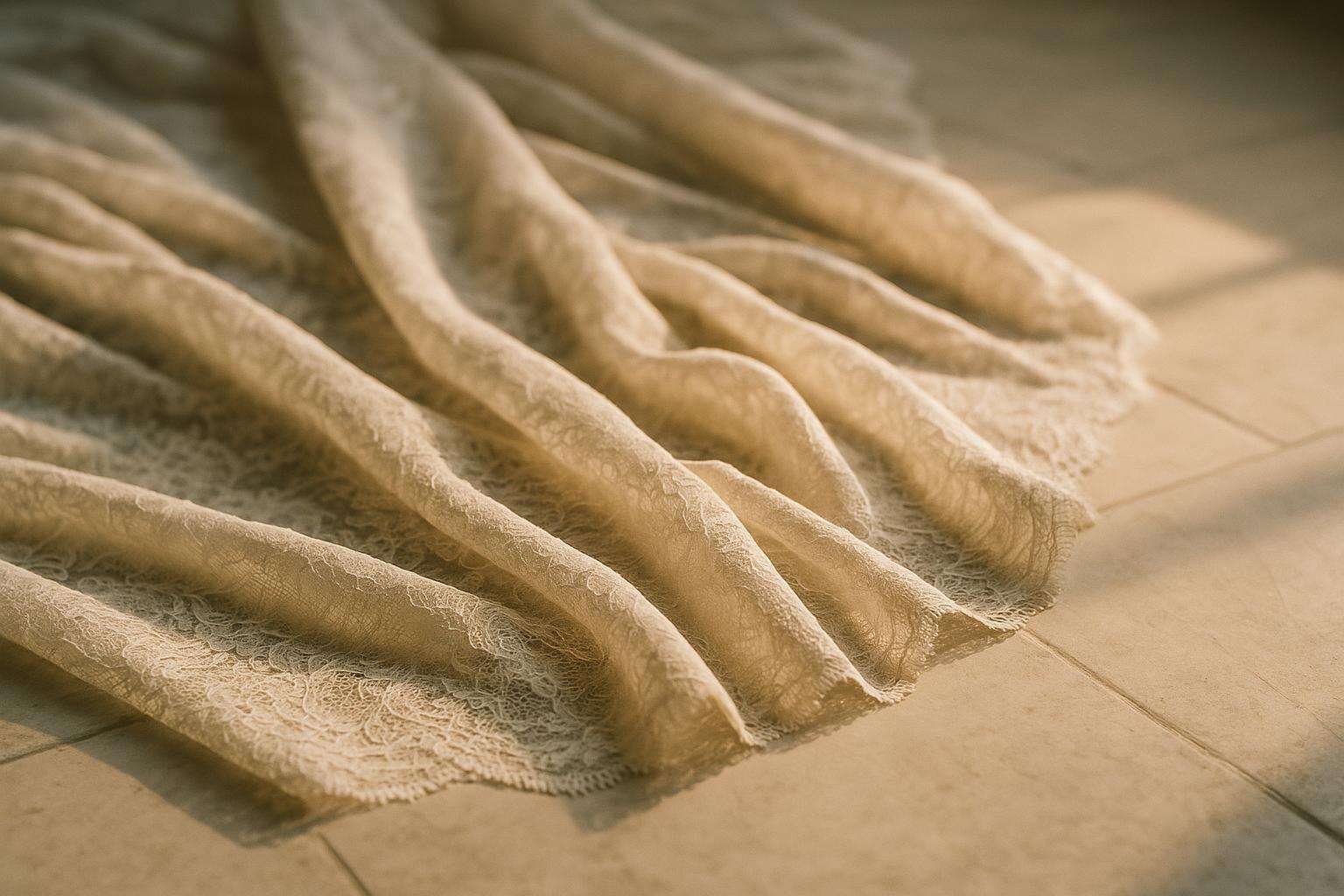
Grace Loves Lace is an Australian bridal brand ($1,200–$4,400) founded in 2011 on boneless construction, proprietary stretch lace, and zone-based sizing — a direct counter to traditional structured bridal. It is worth serious consideration for any bride whose vision is fluid, minimalist, and comfort-led; it is the wrong choice for a bride seeking corseted structure or heavy embellishment.
Founded in 2011 by Megan Ziems in Burleigh Heads, Queensland, Grace Loves Lace arrived at a moment when mainstream bridal was overwhelmingly structured, corseted, and crystal-encrusted. The brand's founding argument — that a wedding dress should feel like a second skin rather than an architectural cage — was not a mainstream position at the time. Fifteen years and 26 boutiques across four countries later, it has become one of the defining aesthetic positions in contemporary bridal. Fashionista has described Grace Loves Lace as the largest independent bridal brand in the world. That scale invites an honest question: does the quality still justify the reputation, and what should a U.S. bride actually expect at each stage of the process?
What Is Grace Loves Lace Known For, and Is the Aesthetic Distinctive?
The visual identity of Grace Loves Lace is unusually coherent for a brand of its size. Across every collection — A Love Story, The Founder Edit, Golden Girl, La Crème, Bombshell, Viva, and the December 2025 arrivals — the grammar is consistent: fluid silhouettes, proprietary stretch laces, low or open backs, minimal internal structure, and a colour palette anchored in ivory, off-white, and champagne rather than bright white.
What distinguishes the brand from traditional bridal designers is not merely the aesthetic but the structural philosophy behind it. Grace Loves Lace gowns are built without boning, without zip closures, and without the internal scaffolding that most bridal architecture depends on. Where a conventional corsetted bodice shapes the body by compressing it, a Grace Loves Lace gown relies entirely on fabric engineering — custom stretch laces and crepes developed in-house that contour through elasticity and weight rather than rigidity. The result is a gown that photographs with a languid, editorial quality and feels — by the consistent account of brides who have worn one — genuinely comfortable throughout a long wedding day.
The December 2025 collection introduced a meaningful evolution: four new styles cut in an 'almost white' off-white crepe designed to flatter every complexion, including the Vittoria — a basque-waist silhouette featuring the brand's new 'flexi-boning' system. This is a flexible support element that offers mild sculpting without the rigidity of traditional boning, and it signals that the brand is incrementally expanding its structural range without abandoning its core philosophy. Head designer Rosie has described it as the label's answer to the bride who loves the Grace Loves Lace feel but wants a slightly more defined waist.
The aesthetic sits closest to what the industry now calls 'minimalist boho' — closer to Parisian ready-to-wear or Scandinavian bridal than to the maximalist boho of macramé and fringe. Brides who are drawn to All Who Wander's graphic botanical laces or Rue De Seine's destination-desert romance may find Grace Loves Lace quieter than they expected. Brides who find traditional bridal too stiff, too heavy, or too impersonal often find the brand to be precisely what they were looking for without knowing it existed.
How Much Do Grace Loves Lace Wedding Dresses Cost, and Is the Price Justified?
Grace Loves Lace gowns retail from approximately $1,200 to $4,400 USD, with the majority of catalog styles clustering between $1,800 and $3,500. This places the brand firmly in the accessible-luxury tier of bridal — meaningfully below couture houses and well above mass-market chains. To understand what that tier means in practice, a comparison is instructive.
| Brand / Retailer | Typical Price Range | Production Model | Structural Approach | Best For |
|---|---|---|---|---|
| Grace Loves Lace | $1,200–$4,400 | Made to Order / Customised; Australian atelier | Boneless; proprietary stretch lace; zone sizing | Minimalist boho; comfort-priority bride |
| BHLDN (Anthropologie) | $278–$3,597 | Mass-produced; online + flagship stores | Light boning on some styles; varied by label | Budget-conscious boho; wide size range |
| All Who Wander (via True Society Bridal) | $1,599–$3,655 | Made to Order; distributed via Essense Designs | Structured and unstructured options | Graphic botanical lace; 1970s boho silhouettes |
| Kleinfeld Bridal (multi-label) | $1,500–$12,000+ | Multi-label retailer; in-store appointment | Varies by designer; full spectrum available | Comparing multiple designers in one visit |
| Vera Wang | $2,500–$20,000+ | Atelier and licensed tiers; White by Vera Wang lower | Heavily structured couture options; some soft styles | Architectural drama; luxury statement gowns |
The price-to-value case for Grace Loves Lace rests on three factors that do not always come together at this price point. First, the laces are proprietary — developed in-house and sourced globally over years of supplier relationships, including the GRS-certified Lumi lace made from 96% recycled materials. You are not buying off-the-shelf fabric finished into a dress. Second, the zone-based customised ordering system, if used correctly, substantially reduces or eliminates the need for major alterations — a saving of $300–$800 that conventional bridal sizing almost always requires. Third, every gown is hand-checked four times before it leaves the production facility in Queensland.
The honest caveat: the price is only justified if the aesthetic is right for you. A bride who wants structured corseting, traditional ballgown volume, heavy beading, or cathedral-weight fabric will find neither value nor satisfaction here. For that bride, labels like Maggie Sottero (mid-market structured), Pronovias (continental couture construction), or the upper Kleinfeld portfolio are the appropriate comparison set. Grace Loves Lace does not try to be all things — and that clarity is itself a mark of a brand with genuine identity.
A practical note: the brand operates a Last Chance Sale section on its website carrying discontinued styles at reduced prices. For brides who find a retired style that suits them, this can represent meaningful savings within the same quality tier.
How Does Grace Loves Lace Sizing Work — and Is It Inclusive in Practice?
Sizing is the area where Grace Loves Lace most clearly diverges from traditional bridal retail, and it is worth understanding the model in detail before booking an appointment.
The brand offers three ordering pathways. Ready to Wear is produced to a standard dress size and dispatched within three to five business days — best suited to brides with a longer runway or those buying a discontinued sale style. Made to Order Standard is produced to the bride's standard dress size and a shoulder-to-floor height of 155 cm; turnaround is approximately five months. Made to Order Customised is the most flexible option: the gown is built to four independent body-zone measurements (bust, underbust, waist, and hips), each assessed separately. A bride who measures XL in the bust, L in the underbust, XL at the waist, and M at the hips receives a gown constructed to those four zone specifications rather than a single averaged size.
This is not a made-to-measure system in the couture sense — the brand is explicit that the stretch properties of its fabrics make precise millimetre tailoring unnecessary. But it is substantially more nuanced than the traditional bridal approach of purchasing a size up and altering down. In practice, most brides who use the Customised pathway report minimal alteration requirements beyond hemming to their specific height — a meaningful time and cost saving compared with conventional bridal.
Measurement updates are accepted up to six months before the wedding date, which the brand calls the 'lock-in date,' accommodating body changes through the engagement period. Grace Loves Lace has publicly committed to inclusive and comfortable appointments for transgender and non-binary customers, with staff training across all boutiques. This is stated policy, not merely aspiration, and it represents a more explicit inclusion commitment than most bridal labels at this tier.
Where Can U.S. Brides Try Grace Loves Lace, and What Is the Appointment Like?
Grace Loves Lace operates nine U.S. boutiques: New York City (51 Warren St, TriBeCa), Los Angeles (Venice), San Francisco (406 Jackson St), Philadelphia (1719 Chestnut St), Minneapolis (224 Washington Ave N), Dallas, Houston, Washington D.C., and Atlanta. Each appointment is 60 minutes in a private suite with a dedicated stylist, complimentary drinks on arrival, and the option to try up to five gowns. The full collection is available exclusively at Grace Loves Lace boutiques — authorised stockists carry only a curated edit.
The private-suite model is worth noting specifically. Unlike multi-label salons where appointments share floor space, a Grace Loves Lace appointment is genuinely one-on-one in a closed room. This matters for brides who find the traditional bridal-salon atmosphere overwhelming, particularly if they are coming with a small party or prefer to experience gowns quietly rather than under an audience. WeddingWire reviews of the New York and Los Angeles boutiques consistently mention the unhurried, pressure-free quality of the appointment as a differentiator.
For brides outside the nine U.S. cities, virtual appointments are available free of charge via Zoom, Teams, or FaceTime, coordinated across time zones with a stylist from any of the brand's 26 global boutiques. Sessions run 60 minutes; the stylist showcases three to five gowns, walks through fabric behaviour and fit, and covers construction details in close-up. Brides are asked to pre-select favourite styles from the website's collections page before the call. The limitation is real: fabric weight, drape, and stretch do not translate fully to a screen. For a bride who is genuinely uncertain about whether the aesthetic suits her, a trip to the nearest boutique — even if it requires travel — will save time and money over ordering blind.
What Is the Ordering and Delivery Process for U.S. Brides?
All Made to Order gowns are produced at the brand's Burleigh Heads, Queensland, Australia facility, with select ethical offshore production partners. Standard Made to Order production is approximately five months; Customised is approximately six months, with the gown dispatching six to eight weeks before the wedding date. A Priority Made to Order option is available at an additional fee, dispatching two to four weeks before the wedding.
International shipping to the U.S. is via UPS Express or DHL, with a transit time of three to ten business days. All U.S. orders ship Delivered Duty Paid (DDP) — there are no customs duties or surprise import fees charged at delivery, a meaningful practical advantage over brands that ship DAP and leave the bride to manage customs clearance.
The practical planning timeline for a U.S. bride ordering a Customised gown: begin the process at least six months before the wedding, eight months if the schedule permits. That accounts for five to six months of production, one potential measurement revision, three to ten days of international transit, and at least one local fitting appointment for hemming. Brides who discover Grace Loves Lace with less than six months to the wedding should ask about Priority Made to Order availability or consider the Ready to Wear range, which dispatches within days.
Is Grace Loves Lace a Sustainable Brand — or Is the Marketing Ahead of the Reality?
Sustainability claims in bridal are easy to make and difficult to verify. Grace Loves Lace's credentials are more substantive than most. Their flagship innovation is Lumi — a proprietary lace developed over two years in collaboration with their primary fabric supplier, GRS-certified (Global Recycled Standard) and made from 96% recycled materials. Beyond that headline: 67% of fabrics used across collections are OEKO-TEX certified, along with 71% of notions (buttons and button loops) and 50% of trim, all certified free from harmful chemicals. The workforce is over 94% female, with 93% of leadership roles held by women, including founder and Creative Director Megan Ziems and CEO Wade Ziems.
The honest framing: these are meaningful credentials compared to the industry average, particularly for a brand at scale rather than a small artisan atelier. 'Ethical manufacturing' in the bridal industry is not a binary — no label of 26-boutique scale sources everything locally — and brides for whom supply-chain transparency is a genuine priority will find more granular information on the brand's Our Purpose page. What Grace Loves Lace offers is verifiable third-party certification on materials, not merely marketing language — and that is a meaningfully higher bar than most competitors at the same price point.
The Verdict: Who Should Buy Grace Loves Lace?
Grace Loves Lace is a brand with an unusually clear identity — which means it is also a brand that is the wrong choice for a significant proportion of brides, and that is not a criticism. The stretch-lace, boneless, fluid-silhouette aesthetic is coherent and beautiful, but it requires a bride who is genuinely drawn to it. Brides who are seduced by the Instagram imagery but secretly want structure, volume, or sparkle often find the gowns feel underwhelming in person — too quiet, too minimal, not 'bridal' enough by the measure they actually carry.
The bride for whom Grace Loves Lace tends to deliver an outstanding experience is one who prioritises comfort without sacrificing elegance, who prefers the dress to feel like a natural extension of how she dresses rather than a costume, and whose venue or ceremony style suits fluid movement — outdoor settings, garden ceremonies, beach weddings, and intimate civil venues all play beautifully to the brand's strengths. The zone-based sizing system, the private boutique appointment model, and the DDP international shipping are all genuine operational advantages that make the process smoother than the typical bridal journey.
At $1,800–$3,500 for the core range, the brand sits at a price point that requires a considered budget decision. For a bride whose aesthetic is aligned, it is a strong investment in quality, fit, and a purchase experience that most bridal retailers cannot match at the same tier.
Considered Counsel
Frequently asked
Is Grace Loves Lace worth the price compared to other bridal brands?
Grace Loves Lace occupies the accessible-luxury tier — roughly $1,800–$3,500 for the majority of styles, with entry points around $1,200 and a ceiling near $4,400. That positions it meaningfully below true couture houses (Vera Wang, Monique Lhuillier) and above mass-market chains (David's Bridal, BHLDN's lower tier). The value proposition rests on three things: proprietary in-house laces developed over years of fabric sourcing, the zone-based customised ordering system that removes the need for major alterations in most cases, and ethical atelier production in Burleigh Heads, Queensland, with quality checks at four production stages. For a bride whose aesthetic aligns with the brand's fluid, boneless minimalism, the price-to-quality ratio is strong. For a bride who wants structured corseting or heavy embellishment, other labels serve that brief better.
How does Grace Loves Lace sizing work — and is it truly inclusive?
Grace Loves Lace uses a zone-based model rather than traditional bridal sizing (which typically requires buying up and altering down). Three pathways exist: Ready to Wear (standard dress size, dispatched within three to five business days), Made to Order Standard (standard size at a 155 cm shoulder-to-floor height), and Made to Order Customised — the brand's most flexible option, built to four body-zone measurements (bust, underbust, waist, hips) independently. A bride measuring XL in the bust but M in the hips orders a gown built to those exact four specifications. The brand also allows measurement updates up to six months before the wedding date to account for body changes. Grace Loves Lace has publicly committed to inclusive appointments for transgender and non-binary customers, with trained staff at all boutiques.
How long does Grace Loves Lace take to make and deliver a dress to the U.S.?
Made to Order Standard production is approximately five months; Made to Order Customised is approximately six months, dispatching six to eight weeks before the wedding date. A Priority Made to Order option is available at an additional fee, dispatching two to four weeks before the wedding. From the Australian production facility, gowns ship via UPS Express or DHL with a transit time of three to ten business days. All U.S. orders are shipped Delivered Duty Paid (DDP), meaning no customs duties or surprise fees at delivery. The practical planning rule: U.S. brides ordering a customised gown should begin the process at least six months before the wedding — eight is more comfortable — to allow for production, any measurement revisions, international transit, and at least one local fitting.
Where can U.S. brides try on Grace Loves Lace gowns?
Grace Loves Lace operates dedicated U.S. boutiques in New York City (51 Warren St, TriBeCa), Los Angeles (Venice), San Francisco (406 Jackson St), Philadelphia (1719 Chestnut St), Minneapolis (224 Washington Ave N), Dallas, Houston, Washington D.C., and Atlanta. Appointments are 60 minutes, conducted in a private suite with a personal stylist, with complimentary drinks and the option to try up to five gowns. The full collection is exclusive to Grace Loves Lace boutiques — authorised stockists carry only a curated selection. For brides outside these cities, free virtual appointments (60 minutes via Zoom, Teams, or FaceTime) are available across all 26 global boutiques. Brides attending virtually are asked to pre-select favourite styles from the collections page before the call.
What collections and dress styles does Grace Loves Lace currently offer?
Active mid-2026 collections include A Love Story, December 2025, The Founder Edit, Golden Girl, La Crème, Bombshell, and Viva. The December 2025 collection introduced four new styles: Vittoria (a basque-waist gown with flexi-boning, the brand's first foray into structured support), Lauren, Juliette, and James — all cut in an 'almost white' off-white crepe designed to flatter every complexion. Green Wedding Shoes highlighted the Nathalia Dress (free-spirited lace patterning), the Mila Dress (off-the-shoulder crepe mermaid), and the Sienna Dress (sheer lace overlay, fitted silhouette) as top performers in 2024. A Last Chance Sale section carries discontinued styles at reduced prices.
Is Grace Loves Lace a sustainable or ethical bridal brand?
The brand makes substantive claims and backs most with third-party certification. Their Lumi lace is GRS-certified and made from 96% recycled materials, developed over two years of collaboration with the primary fabric supplier. Sixty-seven per cent of fabrics are OEKO-TEX certified (free from harmful chemicals), along with 71% of notions and 50% of trim. Every gown is hand-checked four times before packing. The production team is over 94% female, with 93% of leadership roles held by women. Fashionista has described the brand as the largest independent bridal label in the world — a designation Grace Loves Lace uses in its own marketing. These credentials are meaningful compared to the industry average, though 'ethical' manufacturing is not a binary; brides for whom supply-chain transparency is a priority will find more information on the brand's Our Purpose page.
How does Grace Loves Lace compare to BHLDN or Kleinfeld for a boho wedding dress?
The three serve overlapping aesthetics at different price points and with different experiences. BHLDN offers the widest boho selection at accessible prices ($278–$3,597), with broad size ranges and an e-commerce-first model — but the gowns are mass-produced, and the label selection changes seasonally. Kleinfeld Bridal (New York) is an institution for in-person styling, stocks multiple labels including boho-adjacent designers, and offers a full alterations suite under one roof — but it is a multi-label retailer, not a specialist. Grace Loves Lace is the inverse: a single brand with a tightly defined aesthetic, proprietary fabrics, and a boutique experience built entirely around its own gowns. If the specific Grace Loves Lace look — boneless stretch lace, fluid silhouettes, minimal structure — resonates, no other retailer replicates it. If you want to compare multiple designers in one appointment, Kleinfeld or an authorised All Who Wander boutique like True Society Bridal may serve you better.