Designers & Trends
Pronovias Wedding Dresses: Spain's Ready-to-Wear Bridal House
From a Barcelona lace shop founded in 1922 to a global bridal group spanning three price tiers and 105 countries, Pronovias built the modern bridal industry's calendar — and its convertible gowns, Mikado signatures, and Atelier haute couture still define what European bridal looks like in 2026.
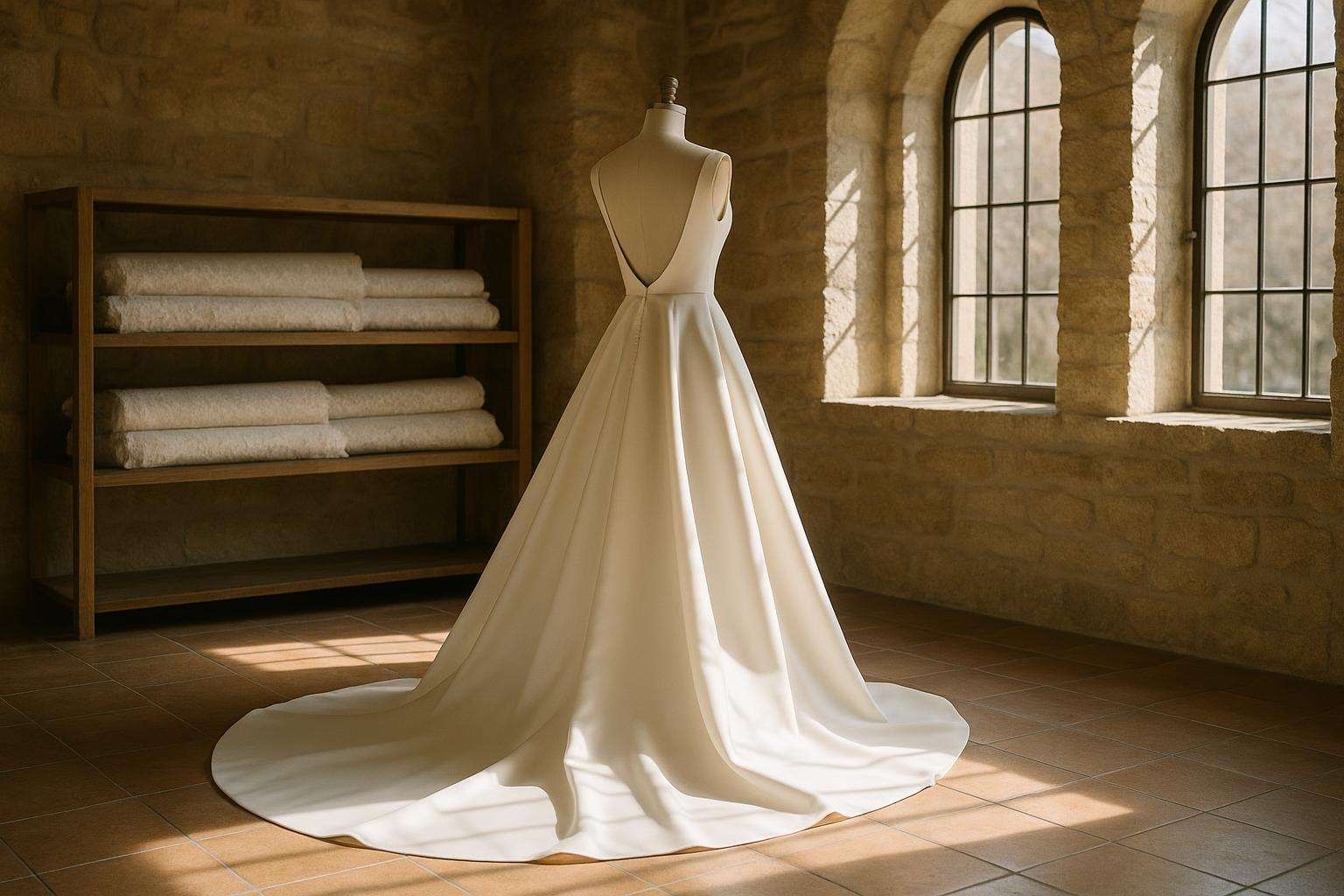
Pronovias is a Barcelona bridal house founded in 1922 that invented the modern dedicated bridal fashion show and today sells wedding dresses across three tiers — main line from $1,890, Privée from $2,600, and handmade Atelier from $3,790 — through more than 4,000 stockists in 105 countries, with convertible detachable designs and Mikado fabric as its defining signatures.
What is the story behind the Pronovias brand?
Few bridal brands can claim to have literally invented a cornerstone of the modern wedding industry, but Pronovias has a credible case. The house traces its origin to 1922, when the Palatchi Bienveniste family opened a specialty textile store called El Suizo on Paseo de Gracia in Barcelona — the city's most prestigious shopping boulevard — dealing in lace, embroidery, and high-end fabrics. Barcelona's high society brides commissioned hand-made wedding dresses from its stock, giving the family its first foothold in bridal.
Four decades later, Alberto Palatchi Ribera inherited the business and made the decisive pivot: in 1964 the shop was renamed Pronovias — Spanish for "for the bride" — and launched Spain's first prêt-à-porter bridal collection, bringing structured, fashion-forward gowns to a wider audience at a time when most brides in Spain still relied on local dressmakers. Four years after that, in 1968, Pronovias staged what is widely credited as one of the world's first dedicated bridal fashion shows. The concept of presenting a complete seasonal bridal collection on a runway — now standard practice from Barcelona to New York — originated here.
International expansion followed the playbook of the era's best European fashion houses: Germany, France, the UK, and Italy through the 1980s, then the Americas and Asia through the 1990s. By 2017, the Palatchi family sold 90% of the company to British private equity firm BC Partners for an estimated $550 to $655 million; in early 2023, a consortium led by Bain Capital and MV Credit completed a further acquisition. Today the Pronovias Group encompasses the parent bridal brand plus Vera Wang Bride, St. Patrick, White One, Nicole Milano, and Ladybird, operating roughly 100 owned stores and more than 4,000 points of sale across more than 105 countries.
The brand's global footprint is significant, but its creative identity remains Spanish: design direction, Atelier production, and the brand's definitive aesthetic vocabulary all originate in Barcelona.
What is the Pronovias aesthetic — and what makes a gown recognizably Pronovias?
Walk through enough bridal showrooms and you develop an eye for the house. A Pronovias gown has a specific register: romantic without being saccharine, European in its restraint, structured without being stiff. The silhouettes favor clean lines and precision tailoring over elaborate decoration — embellishment tends to appear as deliberate punctuation (a beaded bodice against a plain Mikado skirt, a lace overlay on a structured crepe base) rather than overall coverage.
Mikado is the house's most iconic material and the fastest way to identify a Pronovias gown. Technically a dense satin-weave fabric, Mikado weighs 200 to 350 grams per square meter — roughly double standard bridal satin — and delivers a soft, noble sheen on the face with a clean matte reverse. That weight is structural: it allows fitted bodices, A-line skirts, and ballgown bell shapes to hold their geometry throughout a full wedding day without collapsing or wrinkling in the way that lighter fabrics do. The house's Mayon gown, pairing a Mikado bodice with layered tulle, is a textbook example of how Pronovias uses the fabric's weight to create contrast between structure and volume.
Alongside Mikado, the house works in Chantilly lace (fine, bobbin-ground floral net), Guipure lace (heavier, re-embroidered cord lace with three-dimensional relief), organza, crepe, and tulle. European laces — often of Belgian or French provenance — are layered over calm Mikado or crepe bases so the lace pattern reads clearly rather than competing with a busy foundation. The Atelier 2026 "Ballet Bloom" collection layers airy organza over jacquard and satin over crepe, with tulle silhouettes evoking a classical tutu — a direction that illustrates the house's willingness to be quietly avant-garde within the bridal context.
Construction details that recur across the collections: bespoke inner corset boning, hand-applied 3D floral appliqués, functional architectural structures within the bodice, and — on couture pieces — handmade beading that serves as both decoration and structural reinforcement.
What are Pronovias's three collection tiers and what does each one cost?
Understanding the Pronovias price architecture before your appointment prevents the common frustration of falling in love with a gown that sits in the wrong tier for your budget. The three lines are meaningfully distinct in construction, customization, and experience — not just in price.
| Collection | Entry Price (US) | Typical Range | Construction | Availability |
|---|---|---|---|---|
| Pronovias (main) | ~$1,890 | $1,890–$3,000 | Ready-to-order; factory-produced; limited alteration options | 4,000+ global stockists; online boutique finder |
| Pronovias Privée | ~$2,600 | $2,600–$6,300+ | Mid-luxury; sculpted/architectural; detachable convertible elements | Select authorized boutiques; appointment recommended |
| Atelier Pronovias | ~$3,790 | $3,790–$6,000+ | Made-to-measure; up to 120 hours handwork; El Prat de Llobregat atelier | Pronovias boutiques + select authorized retailers; appointment required |
The main Pronovias collection encompasses approximately 395 styles per season across mermaid lace, A-line tulle and lace, halter, and princess silhouettes. It is the broadest range and the most widely available, making it the right starting point for brides who want a Spanish luxury gown without a made-to-measure lead time and price. Alterations are not included in the purchase price; all Pronovias boutiques maintain in-house alteration workshops staffed by the brand's own team, which is a genuine advantage over buying from a multi-brand department store or chain.
Pronovias Privée is the collection that most clearly expresses the house's ambition in 2026. The ocean-inspired 2026 Privée release features sculptural corsets, shimmering beadwork, embroidered Chantilly lace panels, and architectural Mikado in expanded color offerings. Its signature is the convertible construction: detachable skirts, removable overlay sleeves, and separable overskirts that let a bride wear two or three distinct looks from a single gown — a practical luxury that resonates with brides planning both a formal ceremony and a more relaxed reception. According to Kleinfeld Again's editorial on the Privée line, the detachable elements are engineered to be seamlessly reattached and removed without visible closures.
Atelier Pronovias is the house's genuine haute couture tier. Each piece is made to the client's measurements by a team of more than 50 craftspeople at the El Prat de Llobregat facility in greater Barcelona, with up to 120 hours of artisan labor per gown. Customization options — neckline depth, train length, sleeve configuration, color adjustments — begin at an additional $500 above the base gown price. The Atelier produces approximately 36 to 40 designs per season; pieces are available only through appointment at Pronovias-owned boutiques and a small number of select authorized retailers.
What are Pronovias's convertible and detachable design signatures?
The detachable-element gown has become one of the dominant talking points in bridal for the past several seasons, and Pronovias has been at the center of that conversation. The logic is straightforward and practical: a bride who wants a structured, formal silhouette for a religious ceremony and a lighter, shorter look for the reception does not have to buy two gowns or carry a change of clothes in a garment bag.
Pronovias has built detachable architecture into both the Privée and Atelier lines. Common configurations include:
- Detachable overskirts — a full-volume ballgown or A-line overlay that removes to reveal a fitted or tea-length skirt beneath
- Removable sleeves — long or three-quarter sleeves that attach at the shoulder or upper arm via invisible hooks, allowing a transformation from covered to sleeveless between ceremony and reception
- Separable trains — cathedral or chapel trains that detach at the waist, converting a formal silhouette into a more practical floor-length gown for the dancing portion of the evening
- Overlay bodice pieces — lace or tulle bolero-style additions that create a more covered look for a religious ceremony and remove for reception photos
The engineering behind Pronovias's convertible pieces is worth understanding before you book an appointment: the attachment points are typically internal hooks-and-eyes or snaps, designed to be operated by the bride or a bridesmaid without tools. When trying a convertible gown, ask the boutique consultant to walk you through the full transformation so you can assess how quickly and cleanly the change can be made under real-world conditions.
Where can you buy a Pronovias wedding dress in the United States?
Pronovias operates dedicated company-owned boutiques across the United States, providing the most complete access to all three collection tiers and the in-house alteration workshop:
- New York City — 45 E 58th St, New York, NY 10022 (primary U.S. flagship; 8,720 sq ft including 4,630 sq ft of selling floor; dedicated veil gallery and headpiece playground; hosted the exclusive North American debut of the 2025 Atelier and Vera Wang Bride x Pronovias collections)
- Los Angeles, CA
- Miami, FL (Miracle Mile)
- Houston, TX (Galleria Mall)
- Austin, TX (The Domain)
- Boston, MA (Copley Mall)
Beyond company stores, Kleinfeld Bridal in New York City is one of the most prominent authorized U.S. multi-designer retailers for the brand, carrying the main Pronovias line, Atelier Pronovias, White One, St. Patrick, and Nicole Milano. Park Avenue Bridals is another authorized U.S. stockist with access to the 2026 collection. For the complete global boutique directory, the boutique finder at pronovias.com covers all 3,800-plus points of sale searchable by city and country.
A practical note on pre-owned: Kleinfeld Again — Kleinfeld's dedicated pre-owned and sample platform — carries Pronovias sample-sale and pre-owned pieces at significantly reduced prices, which is a legitimate route for brides who want the house's aesthetic at a lower entry point. Samples are typically available in the boutique's standard sizes and may require more extensive alteration than an off-the-rack new purchase.
How does Pronovias compare to other Spanish and international bridal houses?
Pronovias occupies a specific and defensible position in the bridal market that is distinct from both its Spanish and its international peers. Understanding the competitive landscape helps clarify whether the house is the right fit for you.
Among Spanish houses, Rosa Clará (also Barcelona-based, founded 1995) operates at a similar price tier with a comparable European romantic aesthetic, but leans more heavily into ivory and blush palettes and architectural necklines. Pronovias has broader global distribution and the Atelier tier; Rosa Clará has a more cohesive mono-brand identity. Jesús Peiró (Valencia) specializes in Mikado and crepe minimalism at higher Atelier-tier prices and is considerably less widely distributed.
In the broader international market, Maggie Sottero is the most comparable in terms of price range and distribution depth (main line from around $1,000 to $4,000 at authorized boutiques across North America), though Maggie Sottero operates as a three-label group (Sottero and Midgley, Rebecca Ingram) rather than a single house. The aesthetic is decidedly more American romantic versus Pronovias's European structure. At the entry luxury tier, Essense of Australia overlaps with Pronovias's main line in price and boutique distribution, with a strong bias toward lace and lighter fabrics versus Pronovias's Mikado-forward identity.
The honest summary: if your reference images are structured, European, classically romantic, and you want the confidence of a century-old house with genuine haute couture credentials — and you are willing to plan nine to twelve months out to access Atelier — Pronovias is a near-singular option at its price point.
Considered Counsel
Frequently asked
What is the price range for a Pronovias wedding dress in the US?
Pronovias operates a three-tier price architecture in the U.S. market. The main Pronovias ready-to-order line starts at approximately $1,890 and runs to around $3,000 depending on silhouette and fabric. Pronovias Privée — the mid-luxury tier featuring sculpted corsets, embroidered Chantilly, and architectural Mikado with detachable elements — is priced from approximately $2,600 to $6,300 and above. Atelier Pronovias, the genuine made-to-measure haute couture tier handmade in El Prat de Llobregat, begins at roughly $3,790, with customization options (neckline, train length, sleeve configuration, color) available from $500 upward. Alterations are not included in any tier's purchase price, but all Pronovias boutiques maintain an in-house workshop staffed by the brand's own seamstresses. Budget for at least two to three alteration fittings when planning your total spend.
What is the difference between Pronovias and Atelier Pronovias?
The main Pronovias line is a large-volume ready-to-order collection released annually in hundreds of styles. Brides choose from existing designs, and modification options are limited to in-boutique alterations — hemming, taking in or letting out, bustle additions. It is premium bridal at a broadly accessible price and is available through 4,000+ global points of sale. Atelier Pronovias is the house's genuine haute couture offering: roughly 36 to 40 designs per season, every piece made to the client's measurements by a team of more than 50 craftspeople in Barcelona, with up to 120 hours of handwork per gown. The entry price is approximately $3,790 versus $1,890 for the main line, and the materials — finest silks, duchesse satin, silk chiffon, exclusive European laces — are not shared with the main collection. Atelier requires an appointment at an authorized boutique and typically needs to be ordered nine to twelve months before the wedding date.
Where can I try on a Pronovias wedding dress in the United States?
Pronovias operates its own dedicated boutiques in New York City (45 E 58th St — the primary U.S. flagship, with over 4,600 sq ft of selling floor, a dedicated veil gallery, and headpiece playground), Los Angeles, Miami (Miracle Mile), Houston (Galleria Mall), Austin (The Domain), and Boston (Copley Mall). Beyond company-owned stores, Kleinfeld Bridal in New York City is one of the most prominent authorized U.S. retailers, carrying the main Pronovias line, Atelier Pronovias, White One, St. Patrick, and Nicole Milano. Park Avenue Bridals is another authorized U.S. stockist carrying the 2026 collection. The full boutique finder at pronovias.com/stores covers all 3,800-plus global points of sale by location.
What fabrics does Pronovias use in its wedding gowns?
The house is recognized for a consistent fabric vocabulary spanning Mikado, duchess satin, Chantilly lace, Guipure lace, organza, crepe, and tulle. Mikado is the single most iconic Pronovias material: a dense satin-weave fabric weighing 200 to 350 grams per square meter — roughly double standard bridal satin — that delivers a soft, noble sheen on the face with a matte reverse. Its weight allows structured silhouettes such as fitted bodices and ballgown skirts to hold their shape without collapsing, while resisting wrinkle across a full wedding day. Lace is applied in two traditions: Chantilly (fine, bobbin-ground floral net) and Guipure (heavier, re-embroidered cord lace with three-dimensional relief). Pronovias sources European laces, often of Belgian or French provenance, and layers them over calm Mikado or crepe bases so the lace reads clearly against a restrained foundation.
What is Pronovias Privée and how does it differ from the main collection?
Pronovias Privée is the house's mid-luxury tier, sitting between the main ready-to-order collection and the fully made-to-measure Atelier line. In terms of design language, Privée gowns are more sculptural and architecturally complex than main-line pieces: the 2026 Privée collection, described by the brand as ocean-inspired, features sculpted corsets, shimmering beadwork, embroidered Chantilly lace, and structural Mikado silhouettes. The collection's signature feature is its convertible construction — detachable skirts, removable sleeves, and overlay pieces that allow a bride to wear two or three distinct looks from one gown, transitioning from ceremony to reception. Price-wise, Privée begins at approximately $2,600 and can reach $6,300 or more for highly embellished pieces. Unlike the Atelier tier, Privée gowns are not made to individual measurements, but they occupy a more exclusive production run than the main line.
How long does it take to make an Atelier Pronovias dress?
Each Atelier Pronovias gown is handmade by a team of more than 50 craftspeople — predominantly women — in a purpose-built facility at Polígono Industrial Mas Mateu in El Prat de Llobregat, just outside Barcelona. Artisans spend approximately 80 hours on pattern construction and 160 hours on machine sewing per piece, with the total production time for a single handcrafted gown reaching up to 120 hours from cutting through finishing. The Atelier team produces approximately 36 to 40 designs per season across a six-month labor-intensive process. For brides, the practical implication is lead time: Pronovias recommends ordering nine to twelve months before the wedding date to allow production and a full alteration schedule. Rush orders may be accommodated at select boutiques but should be confirmed directly at the point of appointment booking.
Is Pronovias considered a luxury bridal brand?
Pronovias occupies a nuanced position in the bridal market. The main collection — starting at approximately $1,890 — is premium rather than true luxury: beautifully constructed, widely distributed through more than 4,000 global stockists, and well-suited to brides who want a European bridal aesthetic without a bespoke price tag. Atelier Pronovias is genuinely luxury by any credible definition: made-to-measure, up to 120 hours of artisan labor per gown, finest European fabrics, starting at $3,790, and available only through appointment at select authorized locations. Pronovias Group's ownership of Vera Wang Bride further signals its position in the luxury segment. The honest summary is that the brand operates a luxury-to-accessible spectrum: you can enter the Pronovias world at a premium but attainable price and scale into true haute couture within the same house.