Dress Shopping
Wedding Dress Shopping Timeline: A Month-by-Month Countdown
The 12-to-18 month framework every bride needs: production lead times by designer tier, order cut-off dates, sample-sale windows, rush-order rules, and a step-by-step alteration schedule — focused entirely on the gown, not whole-wedding logistics.
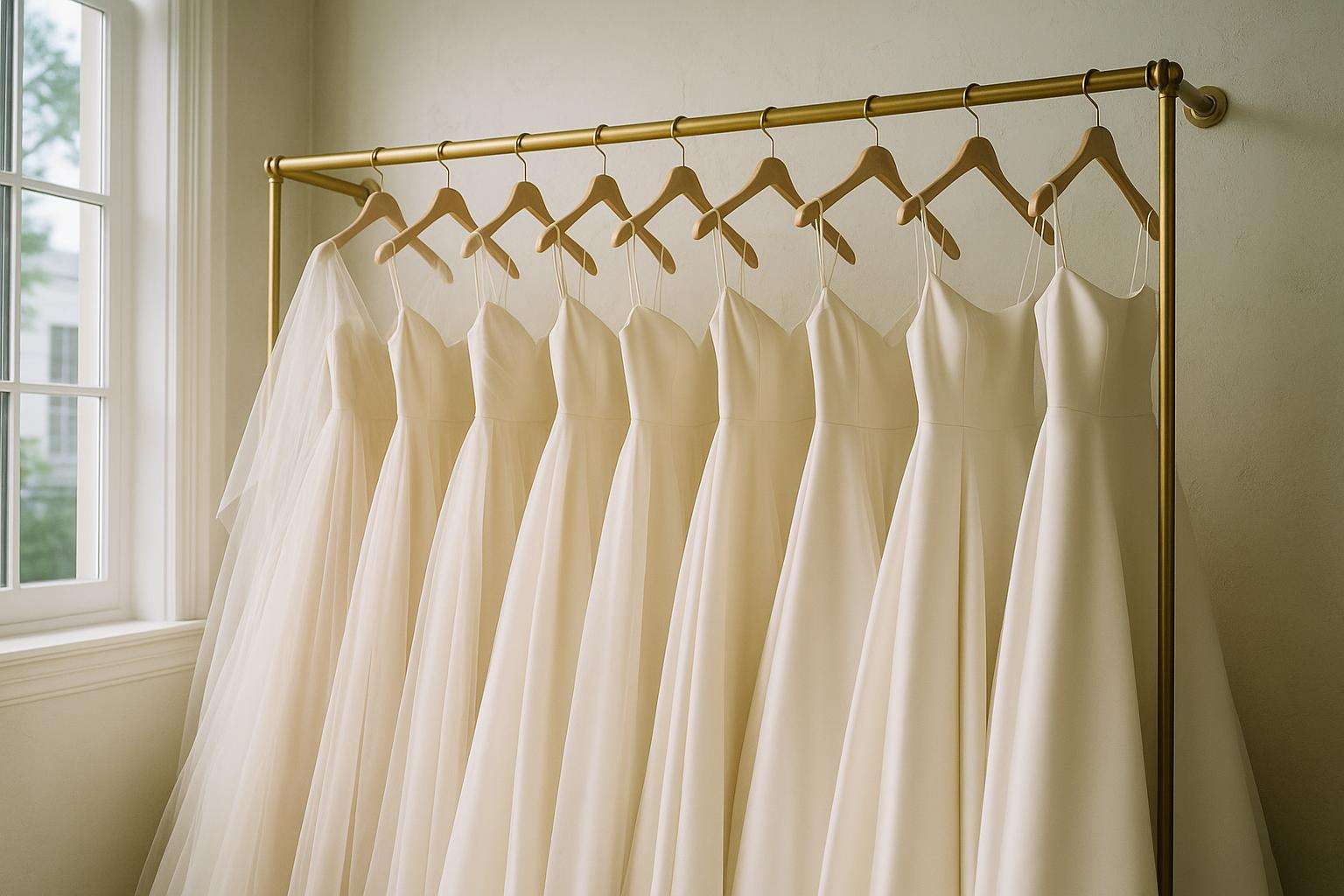
Most brides should begin shopping 12–18 months before their wedding and place a final gown order no later than 8–9 months out — this window covers made-to-order production (4–12 months depending on designer tier), dress delivery, and the 8–10 week alteration schedule that every bespoke gown requires. Designer tier is the single biggest driver of how early you must act: budget off-the-rack styles are same-day, while luxury couture requires up to a full year of production time alone.
The wedding dress has its own timeline logic, separate from every other vendor booking. Caterers, photographers, and venues can often be confirmed six months out with minimal consequence. The dress cannot: a made-to-order gown from a mid-range designer needs 4–6 months of production time before it ever arrives at the salon, and a further 8–10 weeks of alterations before it is ready to wear. Collapse that window and you are paying rush fees, accepting limited size options, or compromising on the gown altogether.
The framework below organizes the dress journey into five phases, with concrete month-by-month checkpoints, designer-tier lead time data, sample-sale windows, and the alteration benchmarks that bridal consultants at salons from Kleinfeld Bridal in New York City to Fifi's Bridal in Chicago apply in practice.
What Does the Full Wedding Dress Shopping Timeline Look Like?
The dress journey spans five distinct phases. The table below maps each phase to a time window and the primary action required. Everything that follows expands on these phases with tier-specific detail.
| Phase | Months Before Wedding | Key Action | Who It Applies To |
|---|---|---|---|
| 1 — Research & inspiration | 18–12 months | Build a style file; set a realistic budget including alterations ($400–$800) | All tiers; mandatory for couture |
| 2 — Active boutique shopping | 12–9 months | Book 2–3 appointments; attend trunk shows; narrow to a final choice | All tiers; mid-range and above |
| 3 — Order placement | 9–8 months | Place the order; sign contract; pay deposit | Made-to-order designers |
| 4 — Dress arrival & accessories | 5–4 months | Confirm delivery; inspect the gown; purchase shoes and undergarments for fittings | All |
| 5 — Alterations | 3–0 months | Complete 2–4 fittings; final pickup 1–2 weeks before the wedding | All made-to-order gowns |
How Long Does It Take to Make a Wedding Dress, by Designer Tier?
Production lead time is the number most brides underestimate. The designer tier chosen determines not just cost but the minimum runway required before a wedding date. Here is what each tier realistically demands.
Budget tier ($200–$1,000): Brands including Azazie, Lulus, and The Dress Outlet carry ready-to-ship styles in standardized sizes. Off-the-rack orders ship in days to two weeks. Azazie also offers made-to-measure in this price band, which adds 2–4 weeks. No meaningful production lead time. This tier is the lifeline for brides with under four months until their wedding.
Mid-range tier ($800–$3,000): Designers including Maggie Sottero, Allure Bridals, Morilee, and Stella York (sister label to Essense of Australia) produce made-to-order at volume. Standard production is 4–6 months from the order date. Stella York offers a paid rush-cut with delivery in 10–12 weeks. Maggie Sottero has reported availability in as few as 9 weeks for certain priority styles, though fees and style selection are limited. BHLDN (Anthropologie’s bridal division) ships many styles within 2–6 weeks from its ready-to-ship inventory, with custom-order styles requiring 4–5 months.
High-end designer tier ($3,500–$10,000+): Labels such as Pronovias, Monique Lhuillier, and the Vera Wang Bride collection — now produced and retailed by David’s Bridal beginning spring 2026, with pricing from under $500 to approximately $2,299 — carry production times of 6–9 months. The David’s Bridal vertical integration of the Vera Wang Bride line is specifically designed to compress lead times at more accessible price points, but the archival styles at $1,699–$2,299 still require the standard window.
Luxury couture tier ($10,000–$25,000+): Fully custom atelier gowns — such as those from Vera Wang HAUTE, a separate and independently operated business whose clients have included Ariana Grande, Hailey Bieber, and Kim Kardashian — require 9–12 months of production time alone. At this tier, the 18-month start is not a recommendation; it is a requirement. Shopping 12 months out leaves almost no margin if a style decision takes longer than expected or if production runs long.
The Knot’s 2026 Real Weddings Study, which surveyed 10,474 U.S. couples married in 2025, found the national average wedding dress spend is approximately $2,100 — placing most brides squarely in the mid-range to high-end tier and within a 6–9 month production window. Mid-Atlantic brides averaged $2,200; brides planning international destination weddings averaged $2,900.
When Should I Start Shopping at Each Stage of the 12-Month Countdown?
Months 18–13 — Research phase. Gather inspiration via Pinterest boards, designer lookbooks, and bridal magazine editorials. Set a budget that explicitly includes alterations (nationally averaging $150–$600, broken down as hemming $150–$400, bodice adjustment $100–$200, bustle addition $75–$175) and accessories (veil, shoes, jewelry). One practical note for 2026: tariff pressures on imported gowns have pushed some designer prices up approximately 20%, meaning a gown formerly priced at $2,000 may now retail closer to $2,400. Build in a 15–20% buffer above your target price.
Months 12–9 — Active shopping phase. Book boutique appointments. Most respected salons, including Kleinfeld Bridal, require advance booking and recommend visiting no more than 2–3 boutiques to avoid decision fatigue. This window is also the prime season for trunk shows — limited-weekend events where a designer sends a broader collection to an authorized retail partner. Monique Lhuillier, for example, hosts scheduled trunk shows at boutiques including L’elite Bridal in Boston, Massachusetts; Ultimate Bride in Chicago, Illinois; and Collections by MJ in Denver, Colorado. Trunk shows offer access to styles not normally stocked in-store and often include the option to meet a brand representative for a customization consultation.
Months 9–8 — Order placement. This is the non-negotiable window for mid-range and high-end made-to-order gowns. Ordering later is possible with rush options but carries cost and selection penalties. Sign your boutique contract, pay the required deposit (typically 50%), and confirm the estimated delivery window in writing.
Months 6–5 — Dress arrival. The boutique will contact you when the gown arrives. Schedule a try-on appointment promptly to inspect for any damage incurred during shipping. This is also the moment to purchase your wedding shoes at their actual heel height and any specialized undergarments — both are essential for accurate alteration measurements at the first fitting.
Months 4–3 — Begin alterations (see the dedicated section below). Finalize accessory selections: veil length, jewelry, and headpiece should all be confirmed before the first fitting so the seamstress can account for them in the hem length and overall silhouette decisions.
When Are Bridal Sample Sales Held, and Is a Sample Sale Gown Right for Me?
Bridal boutiques rotate inventory twice a year, timed to the industry’s seasonal collection cycle. Designer collections debut at bridal market in April and October, so boutiques receive fresh floor samples in July–August and January–February and simultaneously sell off their existing floor samples at reduced prices.
The peak sample sale windows are:
- January: The largest clearance window after the holiday season; deepest selection of discounted floor samples.
- June–July: Mid-year turnover ahead of fall collections arriving in August.
- November (“White Friday”): Some boutiques hold sample events timed to Black Friday, particularly in major metropolitan markets.
- December: Designer-direct sample sales; Monique Lhuillier’s annual Los Angeles event (held in Vernon, California) offered gowns from its Platinum, Signature, and Bliss collections at 40–90%+ off retail in December 2025, with prices ranging from $25 to $3,000 on a first-come, first-served basis.
According to Poppy Bridal’s sample sale guide, discounts at bridal sample sales range from 20% to 70% off retail, with some boutiques discounting floor samples as deeply as 90%. The critical caveat: sample sale dresses are sold as-is, in the size and condition available on the floor. Factor in alteration costs before concluding that a steep discount makes financial sense — a gown purchased at 20% off that requires $800 in alterations may not outperform a fresh order at full price.
What Are the Rush Order Cut-Offs for a Wedding Dress?
Brides with fewer than six months until their wedding still have well-defined options, though cost and selection narrow significantly at each threshold:
- 4–6 months out: Rush programs are available at most mid-range designers. Stella York (Essense of Australia) delivers in 10–12 weeks via paid rush-cut. Maggie Sottero can fulfill certain styles in as few as 9 weeks. Rush premiums are typically 20–30% above the gown’s retail price, or a flat fee of $100–$300.
- 3–4 months out: Fewer designer options remain available. The most reliable route is a boutique with strong ready-to-ship inventory — BHLDN ships most styles within 2–6 weeks. Azazie’s made-to-measure service adds 2–4 weeks to standard shipping.
- Under 3 months out: Off-the-rack purchase is the most reliable path. David’s Bridal carries a wide selection of in-store inventory from its own labels and the Vera Wang Bride line that can be purchased and altered in the same visit. Lulus ships bridal-adjacent styles in 3–5 business days.
- Absolute minimum: Fifi’s Bridal and other multi-label boutiques advise a 4–5 month minimum from first appointment to wedding day when combining any rush production option with the required alteration schedule. Below 4 months, the alteration window compresses to the point where a single dress emergency (damage, late delivery) has no recovery time.
How Does the Alteration Schedule Nest into the Dress Timeline?
Alterations are not optional for made-to-order gowns — they are structural. Most designers produce gowns to the bride’s largest measurement per their size chart, then the seamstress tailors the excess fabric away to achieve a precise fit. This means every made-to-order gown will require at least one, and typically two to four, alteration appointments.
Standard three-fitting sequence:
- First fitting (8–10 weeks before the wedding): Major structural work — setting the hem at the correct height in your actual wedding shoes, adjusting the bodice, repositioning straps or sleeves, and planning the bustle configuration. This is the longest appointment: 1–2 hours is standard.
- Second fitting (4–6 weeks out): Try on with wedding shoes and undergarments (a non-negotiable at this stage); fine-tuning adjustments based on the first session. The seamstress checks that the hem is correct at the exact heel height you will wear and refines the bodice further.
- Final fitting (2–3 weeks before the wedding): Confirm the hem, practice the bustle mechanism with your maid of honor, final zip check, and steam if needed. The gown typically goes home with the bride within 1–2 weeks of the wedding.
Total alteration time is 6–10 weeks, according to Belle Amour Bridal and confirmed by Hallak Cleaners, a specialist in New York City wedding dress alterations and preservation. In peak bridal season — March through June and September through November — the best seamstresses at top boutiques book out 10–12 weeks in advance. The practical implication: schedule your first alteration appointment before your dress arrives at the boutique, not after.
Alteration costs nationally average $150–$600 for standard work, with complex fabrics — lace, silk charmeuse, hand-beaded bodices, multi-layer chiffon — adding both time and cost to the estimate. Budget for alterations at the time of your gown purchase and treat the alteration allotment as a non-negotiable line item, not an afterthought.
One final note on sequencing: the gown timeline does not operate in isolation from the rest of the wedding calendar, but it does have a harder set of deadlines than almost anything else the bride books. A florist can often confirm six months out; a photographer four months out. The dress — at the mid-range and above — needs to be ordered before both. Start here first.
Considered Counsel
Frequently asked
How many months in advance should I buy my wedding dress?
The standard recommendation from bridal industry professionals is 9–12 months before your wedding date for mid-range made-to-order gowns, and 12–18 months for high-end or luxury couture designers. Kleinfeld Bridal, one of the largest bridal retailers in the United States, specifies the 9–12 month window on its website, citing the time required to source fabric, produce the gown, ship it, and then complete 8–12 weeks of alterations. Brides pursuing labels like Vera Wang HAUTE or fully custom atelier gowns should begin shopping at the 18-month mark, as production alone can take 9–12 months. The earlier you shop, the more access you have to trunk shows, special orders, and sample appointments at the best boutiques.
How long does it take to make a wedding dress to order?
Production lead time varies significantly by designer tier. Budget-tier brands such as Azazie and Lulus offer off-the-rack styles with no production wait. Mid-range made-to-order designers — including Maggie Sottero, Allure Bridals, Morilee, and Essense of Australia's Stella York label — typically require 4–6 months from order placement, with some priority styles available in as few as 9 weeks on a rush designation. High-end labels like Pronovias and Monique Lhuillier carry 6–9 month lead times. Luxury couture houses such as Vera Wang HAUTE, which produces fully custom atelier gowns, require 9–12 months of production time alone. These windows do not include the 8–10 weeks of alterations that follow delivery.
When are bridal sample sales held each year?
Bridal boutiques hold two major sample sales per year, timed to the industry's seasonal collection cycle. New designer collections debut at bridal market in April and October, so boutiques receive fresh inventory in July–August and January–February and simultaneously clear floor samples. The largest sample sale windows are January (peak post-holiday clearance), June–July (mid-year turnover), and November (some boutiques hold 'White Friday' events mirroring Black Friday). Monique Lhuillier's annual Los Angeles sample sale — held in December in Vernon, California — offered gowns from its Platinum, Signature, and Bliss collections at 40–90%+ off retail in 2025. Discounts at bridal sample sales range from 20% to 70% off, with some boutiques discounting as deeply as 90%.
What is the rush order cut-off for a wedding dress?
Most bridal designers offer expedited production for an additional fee, but cut-off timelines vary by house. Stella York (sister label to Essense of Australia) offers a paid rush-cut with delivery in 10–12 weeks. Maggie Sottero reports some styles available in as few as 9 weeks on a rush designation, with fees and availability style-dependent. Industry-wide, rush orders typically carry a premium of 20–30% above the standard gown price, or a flat fee of $100–$300. The absolute minimum recommended timeline — combining rush production and compressed alterations — is 4–5 months from first appointment to wedding day. For weddings under 4 months away, same-day off-the-rack purchase from retailers such as David's Bridal or Azazie is often the most reliable option.
How many fittings does a wedding dress need before the wedding?
Most brides require two to four fittings over an 8–10 week period before their wedding. The standard sequence: a first fitting 8–10 weeks before the wedding for major structural work (hem, bodice, straps, bustle planning); a second fitting 4–6 weeks out with actual wedding shoes and undergarments for fine-tuning adjustments; and a final fitting 2–3 weeks before the wedding for the hem check, bustle test, and final zip confirmation. Boutiques including Belle Amour Bridal and Hallak Cleaners in New York cite 6–8 weeks as standard alteration time. Brides marrying in peak season (March–June and September–November) should book alteration appointments before their dress even arrives at the boutique.
What is the difference in lead time between designer tiers for wedding gowns?
Designer tier is the single biggest variable in how early a bride must shop. Budget retailers like Azazie and Lulus carry off-the-rack inventory — no production lead time required. Mid-range made-to-order designers (Maggie Sottero, Allure Bridals, Morilee, Stella York) require 4–6 months standard, with rush options in 9–12 weeks at added cost. High-end labels including Pronovias, Monique Lhuillier, and Vera Wang Bride (now produced by David's Bridal) carry 6–9 month lead times. Luxury couture houses such as Vera Wang HAUTE require 9–12 months of production time alone. In practice, this means a bride set on a couture gown must begin shopping at 18 months out, while a bride happy with an off-the-rack mid-range style can comfortably order at 6 months.
When should I start wedding dress shopping if my wedding is in 12 months?
If your wedding is 12 months away, start the active shopping process immediately — booking boutique appointments in the next 4–8 weeks. At 12 months out you are within the ideal ordering window for most mid-range and high-end made-to-order designers, but at the outer edge for luxury couture. Spend months 12–9 attending 2–3 boutique appointments (including trunk shows where possible), and place your order no later than month 9. Your dress will typically arrive 5–6 months before the wedding, leaving ample time for the 2–3 fittings and 8–10 week alteration window. If you are considering a designer with a 6–9 month production time, ordering at month 12 is technically feasible but leaves very little margin for delays.