The Bride's Circle
Bridal Party Dress Codes Explained: Black Tie to Cocktail
What black tie, formal, cocktail, and casual actually mean for bridesmaids, the MOH, and every member of the wedding party — with real retailer options, price anchors, and shopping timelines for each formality tier.
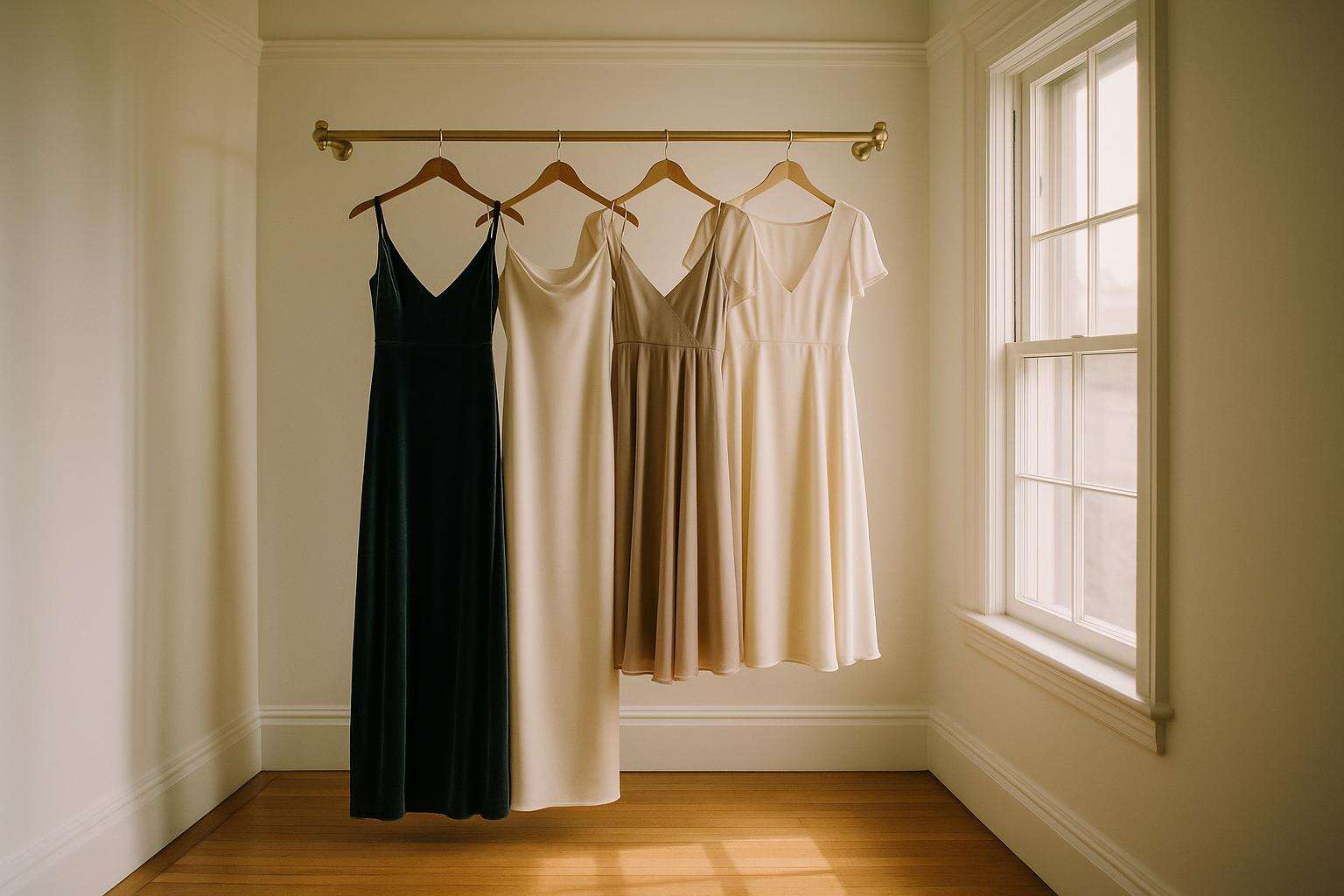
The bridal party dress code is the couple's formality shorthand: black tie means floor-length gowns, formal allows dressy midi in elevated fabrics, cocktail opens the full hemline range in party-ready fabrics, and semi-formal through casual progressively relax both structure and fabric expectations. Understanding exactly what each code demands for bridesmaids — not just guests — determines fabric, hemline, shopping timeline, and how the MOH differentiates within the party.
A wedding dress code printed on an invitation tells guests what to wear. For the bridal party, it carries additional weight: it governs whether bridesmaids shop for floor-length satin gowns or midi crepe dresses, whether the MOH differentiates by shade or silhouette, and whether you need six months or eight months of lead time. This guide decodes the five most common dress codes from the bridal party's perspective — not the guest's — with real options from Azazie, Jenny Yoo, Birdy Grey, Bella Bridesmaids, and David's Bridal at every formality tier. The same formality choice also determines how you'll want to coordinate the groomsmen's look so both sides of the aisle read as a cohesive pair.
What does black tie mean for bridesmaids?
Black tie is the most demanding formality code, and for the bridal party it carries a harder constraint than it does for guests: floor-length gowns are non-negotiable. According to The Knot's black-tie attire guide, satin, velvet, silk charmeuse, beaded mesh, and heavily lined chiffon are the fabrics that read correctly at this level. Hemline deviations — high-low cuts, significant side slits, tea-length styles — undercut the code's intent even when the fabric is luxe.
The range of genuine options for bridesmaids at the black-tie tier is broader than many brides expect:
- Azazie: 598-plus black-tie bridesmaid styles starting at $99 (e.g., the Azazie Bondi at $99 with 974-plus reviews), with free custom sizing and an at-home try-on program.
- Jenny Yoo Collection: made-to-order floor-length gowns in satin, velvet, and tulle, ranging from $500 to $600. The brand offers 30-plus colorways and 10 fabric options — built for mix-and-match parties that want designer-level cohesion.
- Bella Bridesmaids: a network of 50-plus franchise bridal salons across the U.S. that carry Jenny Yoo, Sachin & Babi, and other designer bridesmaid lines suited to black-tie formality.
- Dessy Group (including Alfred Sung and After Six lines): specialty fabrics across 150-plus colors, distributed through authorized boutiques at $175 to $300 — the mid-tier option for black-tie bridesmaid parties that want boutique quality without full designer pricing.
For the MOH at a black-tie wedding, differentiation happens within the floor-length constraint: a shade shift (dusty rose while bridesmaids wear blush), a fabric upgrade (velvet while the party wears chiffon satin), or a silhouette detail such as a subtle train. She never breaks hemline parity — that would fracture the visual picture entirely.
How does formal attire differ from black tie for the bridal party?
Formal attire sits one step below black tie and gives the bridal party modest but meaningful flexibility. Floor-length remains the safest and most common choice; however, dressy cocktail-length pieces in genuinely elevated fabrics — beaded mesh, structured jacquard, heavy lace — are permitted. The critical distinction is that fabric outranks hemline at the formal tier: a knee-length dress in cotton or jersey reads too casual, while the same length in beaded chiffon or satin reads appropriately. The Park Savoy Estate notes that formal attire works for both daytime and evening weddings without sacrificing sophistication.
In practice, many couples hosting a formal wedding still mandate floor-length for the ceremony (where hemline uniformity is visible in photographs) and allow midi for the reception if the party is doing a dress change. If there is no explicit instruction, bridesmaids at a formal wedding should default to floor-length or midi in a structured, elevated fabric and confirm with the bride before ordering.
What should bridesmaids wear to a cocktail attire wedding?
Cocktail attire is the most common dress code for American weddings and the one that produces the most questions. For the bridal party, cocktail means hemline flexibility — knee, midi, and tea-length all work — but fabric must still read party-ready. The code-compliant fabric list includes silk satin, silk chiffon, jacquard, velvet, crepe, and beaded embellishment. Printed polyester, jersey, and unstructured cotton fall short even at the correct hemline.
Within cocktail, the couple may specify a sub-type that narrows the range further:
- Elevated cocktail: midi hem, classic palette (black, navy, burgundy), closer to formal in spirit. The Knot and The Park Savoy Estate both describe this as the most commonly intended version.
- Evening cocktail: solid dark fabrics — satin, velvet — no bold prints, appropriate for evening ceremony and reception starts.
- Casual cocktail: brighter colors and prints welcome; polished but relaxed. Garden venues and daytime receptions frequently pair with this sub-type.
For 2025 and 2026 bridal parties, midi hemlines have overtaken knee-length as the dominant cocktail-attire silhouette. Designers Khaite, Jason Wu, and Ralph Lauren are driving the shift, with soft pastel midi silhouettes — powder pink, buttercup yellow, pale whisper blue — as the defining aesthetic. Birdy Grey carries accessible versions of this look starting at $89, and Azazie offers cocktail-length options across 600-plus silhouettes and 90-plus colors from $69.
How does semi-formal differ from cocktail for bridesmaids?
Semi-formal and cocktail are often used interchangeably on invitations, but they sit at slightly different points on the formality spectrum. Semi-formal reads as elevated work wear — polished and structured without reaching gala territory. Cocktail leans further toward party-ready and requires a more deliberately festive fabric or embellishment choice.
For bridesmaids, the practical difference is small but worth knowing:
- Semi-formal: silk or satin midi, wrap dress, sleek A-line in crepe or chiffon. Matte fabrics and clean lines are appropriate; sequins and heavy beading are more than the code requires.
- Cocktail: the full range above, plus beaded embellishment, velvet, lace, and more graphic silhouettes (strapless, off-shoulder, open back).
Joy's 2025–2026 semi-formal guide confirms that knee-length cocktail dresses in silk, satin, or lace — plus sleek midi silhouettes — are the most common semi-formal choices for bridal parties. The mix-and-match approach (same fabric and color, varied silhouettes) functions equally well at both tiers, and it remains the dominant 2026 trend regardless of the specific formality code.
What does garden party dress code mean for the bridal party?
Garden party attire is semi-formal with a deliberately romantic, organic character. Green Wedding Shoes describes it as “more elevated than casual wear, but more relaxed than cocktail attire, suited to outdoor settings.” For the bridal party, this code is an invitation to explore the softer end of the bridesmaid wardrobe: floral burnout chiffon, embroidered tulle, flowing tiered skirts, off-shoulder ruffles. The silhouettes that would feel too whimsical for a semi-formal ballroom event are exactly right here.
Jenny Yoo's purpose-built garden collection includes:
- Drew: enchanted floral tulle, full skirt, available in blush and ivory tones.
- Reina: Ophelia embroidery with detachable swag sleeves — a versatile style that transitions from ceremony to reception.
- Salma: printed chiffon with an off-shoulder ruffle, the most relaxed silhouette in the collection.
Practical footwear matters at garden party weddings: block heels, wedges, or flat sandals replace stilettos that sink in grass. Bridesmaids should be briefed on terrain before they commit to a heel height, particularly for outdoor ceremonies on lawns or gravel paths.
What attire is right for a casual wedding bridal party?
Casual dress code for a bridal party does not mean everyday clothes — it means relaxed and wedding-appropriate. The guidance from Inside Weddings and The Knot is consistent: aim one notch above your everyday style. For bridesmaids, this translates to flowing chiffon midi dresses, satin slip styles, floral sundresses, or knee-length A-line dresses in lightweight fabrics. Flat sandals, block-heeled mules, or low wedges replace heels for comfort on beach or outdoor terrain.
Azazie's floral burnout chiffon and summer-weight slip styles, Birdy Grey's airy pastel palette (starting at $89), and David's Bridal's casual-tier bridesmaid collection — many styles under $100 — all serve the casual code without looking underdressed for a wedding ceremony.
Dress code at a glance: what each formality tier means for the bridal party
| Dress Code | Hemline | Required Fabrics | Lead Time | Real Retailer Options |
|---|---|---|---|---|
| Black Tie | Floor-length only | Satin, velvet, silk charmeuse, beaded mesh, lined chiffon | 7–8 months | Azazie ($99+), Jenny Yoo ($500–$600), Dessy Group ($175–$300) |
| Formal | Floor-length or dressy midi | Beaded mesh, structured jacquard, satin, heavy lace | 6–8 months | Azazie ($69+), Dessy Group ($175–$300), Jenny Yoo ($500–$600) |
| Cocktail | Knee, midi, or tea-length | Silk chiffon, satin, velvet, jacquard, crepe | 6–7 months | Azazie ($69+), Birdy Grey ($89+), Bella Bridesmaids (designer range) |
| Semi-Formal | Knee, midi, or tea-length | Crepe, chiffon, satin (matte finishes); muted embellishment | 5–7 months | Birdy Grey ($89+), Azazie ($69+), Kennedy Blue ($99–$150) |
| Garden Party | Midi, maxi, or tea-length | Chiffon, organza, embroidered tulle, floral prints | 5–7 months | Jenny Yoo (Drew, Reina, Salma), Azazie floral collection |
| Casual | Knee, midi, or tea-length | Lightweight chiffon, satin slip, floral cotton or rayon | 4–6 months (ready-to-ship available) | Birdy Grey ($89+), David's Bridal (under $100), Azazie ($69+) |
How do you match the MOH's look to each dress code?
Across every formality tier, the MOH's differentiation rule is the same: she is elevated within the code, never above it. According to a 2025 survey cited by Brides.com, 55% of couples now choose active MOH differentiation as intentional visual design. Bella Bridesmaids advises four reliable differentiation strategies that work at every formality level:
- Shade shift: bridesmaids in sage, MOH in hunter green; bridesmaids in blush, MOH in dusty rose. Works at every code from black tie to casual.
- Silhouette swap: bridesmaids in A-line, MOH in a fitted column or sheath — same length, different cut. Best suited to cocktail through black-tie tiers where multiple silhouette options exist in the same fabric.
- Fabric or texture upgrade: bridesmaids in chiffon, MOH in satin or velvet; or the same silhouette with a subtle sequin or lace overlay. Particularly effective at semi-formal and cocktail codes.
- Accessories only: identical gowns throughout the party, MOH distinguished by different jewelry, a floral sash, or a different shoe. The lowest-risk approach when the bride wants maximum visual uniformity.
The one hard constraint: the MOH's hemline must match the party's hemline. A knee-length cocktail dress for the MOH while the bridesmaids wear floor-length gowns breaks the visual picture at ceremony level, regardless of how beautiful the individual pieces are.
What is the ordering timeline for each dress code tier?
Made-to-order bridesmaid dresses from Azazie, Jenny Yoo, and Dessy Group require three to four months of production time. Adding alteration time — typically four to six weeks — means that six to eight months of lead time is the standard across all tiers. What varies by formality code is the availability of faster-track options:
- Black tie and formal: almost always made-to-order given the fabric and construction requirements. Eight months is the safe start point for peak-season weddings. Bella Bridesmaids advises placing all orders in one transaction through an authorized boutique to ensure dye-lot consistency across floor-length gowns.
- Cocktail and semi-formal: more ready-to-ship options exist. Birdy Grey's ready-to-ship inventory and David's Bridal's in-store selection can compress the timeline for brides who are closer to their date. Kennedy Blue ships semi-formal bridesmaid dresses from $99 within a shorter production window.
- Garden party and casual: the greatest access to ready-to-ship options. David's Bridal carries casual bridesmaid styles under $100 available immediately in a broad size range; Azazie and Birdy Grey both carry floral and lightweight styles in their ready-to-ship category.
The invariant rule across all tiers: every dress in the party — regardless of style, size, or silhouette — must be ordered in a single transaction to guarantee they come from the same dye lot. Color can vary between production batches, and even a subtle difference is visible under venue lighting and in photographs.
It does not matter whether the party is ordering $99 floor-length satin gowns or $89 floral chiffon minis — all dresses must be ordered in one batch. Bella Bridesmaids and David's Bridal both cite dye-lot mismatches as the single most common and entirely preventable bridesmaid ordering error. Even in a mix-and-match party with varied silhouettes, every order goes in at the same time.
Considered Counsel
Frequently asked
What does black tie mean for bridesmaids?
Black tie for bridesmaids means floor-length gowns — full stop. Unlike wedding guests, who may occasionally get away with a very elevated knee-length dress at a black-tie affair, the bridal party is held to the stricter standard: floor-length satin, velvet, silk charmeuse, or heavily lined chiffon. Hemline deviations — high-low cuts, significant slits, tea-length styles — undercut the code's intent even in luxe fabrics. Azazie's black-tie bridesmaid collection lists more than 598 floor-length styles starting at $99, with free custom sizing. At the designer level, Jenny Yoo's made-to-order gowns run $500 to $600 and are available in satin, tulle, and velvet across 30-plus colorways. The MOH typically wears the same length but is distinguished by shade, silhouette detail, or fabric upgrade — not a shorter hem.
What is the difference between formal and black tie for a bridesmaid?
Black tie demands floor-length for the bridal party. Formal attire — one step below black tie — allows the couple some discretion: floor-length gowns remain the safest choice, but dressy cocktail-length (midi or knee) in an elevated fabric such as beaded mesh, structured jacquard, or lace is acceptable. The critical distinction is fabric over hemline: a knee-length dress in heavy matte jersey reads too casual for formal, while the same hemline in a beaded column reads appropriately. The Park Savoy Estate notes that formal attire works equally well for daytime and evening weddings without sacrificing sophistication. For the bridal party, couples hosting a formal wedding commonly mandate floor-length regardless — especially for ceremony photographs where hemline uniformity is visible — but may allow midi for the reception if there is a dress change.
What do bridesmaids wear to a cocktail attire wedding?
Cocktail attire for bridesmaids calls for knee-length, midi, or tea-length dresses in elevated fabrics: silk satin, silk chiffon, jacquard, crepe, or velvet. The hemline is flexible but the fabric must read party-ready — cotton, jersey, and printed polyester fall short of the code's intent even at the right length. Bella Bridesmaids and Azazie both carry extensive cocktail-length bridesmaid collections in crepe and chiffon starting under $150. For 2025 and 2026 weddings, midi hemlines have overtaken knee-length as the dominant cocktail-attire silhouette for bridal parties, with designers Khaite, Jason Wu, and Ralph Lauren championing soft pastel midi silhouettes in powder pink, buttercup yellow, and pale whisper blue. The couple may specify a cocktail-length dress even for a cocktail code wedding, or allow individual bridesmaid input on hemline within the color and fabric parameters they set.
How is garden party attire different from semi-formal for a bridal party?
Garden party attire and semi-formal overlap in hemline range — both allow midi and tea-length — but diverge sharply in fabric and silhouette character. Semi-formal is polished and structured (crepe, satin, sleek midi silhouettes); garden party tilts romantic and organic (chiffon, organza, linen, floral prints, flowing tiered skirts, ruffles). For the bridal party, a garden party code is the invitation to explore floral burnout chiffon, embroidered tulle, and off-shoulder ruffle styles — the very silhouettes that would feel too whimsical for a semi-formal event. Jenny Yoo's Drew (enchanted floral tulle), Reina (Ophelia embroidery with detachable swag sleeves), and Salma (printed chiffon, off-shoulder ruffle) are purpose-built for garden ceremony bridal parties, offering cohesive mix-and-match options across 30-plus colors and 10 fabric families. Block heels or wedges replace stilettos as the practical footwear standard.
How much lead time does the bridal party need to order dresses based on dress code?
Lead time is consistent regardless of dress code: six to eight months before the wedding for made-to-order bridesmaid dresses, with peak-season weddings requiring the full eight months. This timeline covers three to four months of production plus four to six weeks for alterations. What shifts by dress code is not the timeline but the complexity of the shopping process: black-tie bridesmaids are almost always ordering made-to-order or designer gowns (Azazie, Jenny Yoo, Dessy) that require the full production window, while cocktail or semi-formal parties have broader access to ready-to-ship options from Birdy Grey (from $89) or David's Bridal (many styles under $100) that compress the timeline. Birdy Grey's founder Grace Lee advises a minimum of five to six months in all cases to allow adequate selection and alteration time. The single invariant rule: all dresses are ordered in one transaction to guarantee dye-lot consistency.
Can the MOH wear a different dress code than the other bridesmaids?
The MOH wears the same dress code as the rest of the bridal party — she is not elevated to a different formality tier. What distinguishes her is a deliberate differentiation within that tier: a shade shift (dusty rose while bridesmaids wear blush), a silhouette upgrade (a column gown while others wear A-lines), a fabric change (satin while the party wears chiffon), or accessories alone (identical gowns, different jewelry or shoes). According to a 2025 survey cited by Brides.com, 55% of couples now choose active MOH differentiation as intentional visual design. The key constraint is that her look must read as elevated within the same story — not as a different event. A floor-length velvet MOH gown at a black-tie wedding while the bridesmaids wear floor-length satin works; a knee-length cocktail dress for the MOH while bridesmaids wear floor-length gowns breaks the visual picture entirely.
What is casual attire for a bridal party?
Casual dress code for a bridal party does not mean everyday clothes — it means relaxed but wedding-appropriate. Flowing chiffon midi dresses, floral sundresses, satin slip styles, and knee-length A-line dresses in lightweight fabrics are all appropriate. Denim, t-shirts, and flip-flops are not. The guidance from Inside Weddings and The Knot is to aim one notch above everyday style; for the bridal party, this means treating the invitation to be casual as permission for lighthearted colors and prints, not a relaxation of fabric standards. Birdy Grey's airy pastels and floral prints, Azazie's floral burnout chiffon, and David's Bridal's casual-tier bridesmaid styles starting under $100 all serve this code well. Flat sandals, block-heeled mules, or low wedges replace heels for comfort on grass or beach terrain.