The Bride's Circle
Bridesmaid Dress Budget: Costs & Who Pays
Price tiers from $69 to $260+, the etiquette of who picks up the tab, how to have an honest budget conversation with your party, and whether renting ever makes financial sense — everything scoped to bridesmaid attire only.
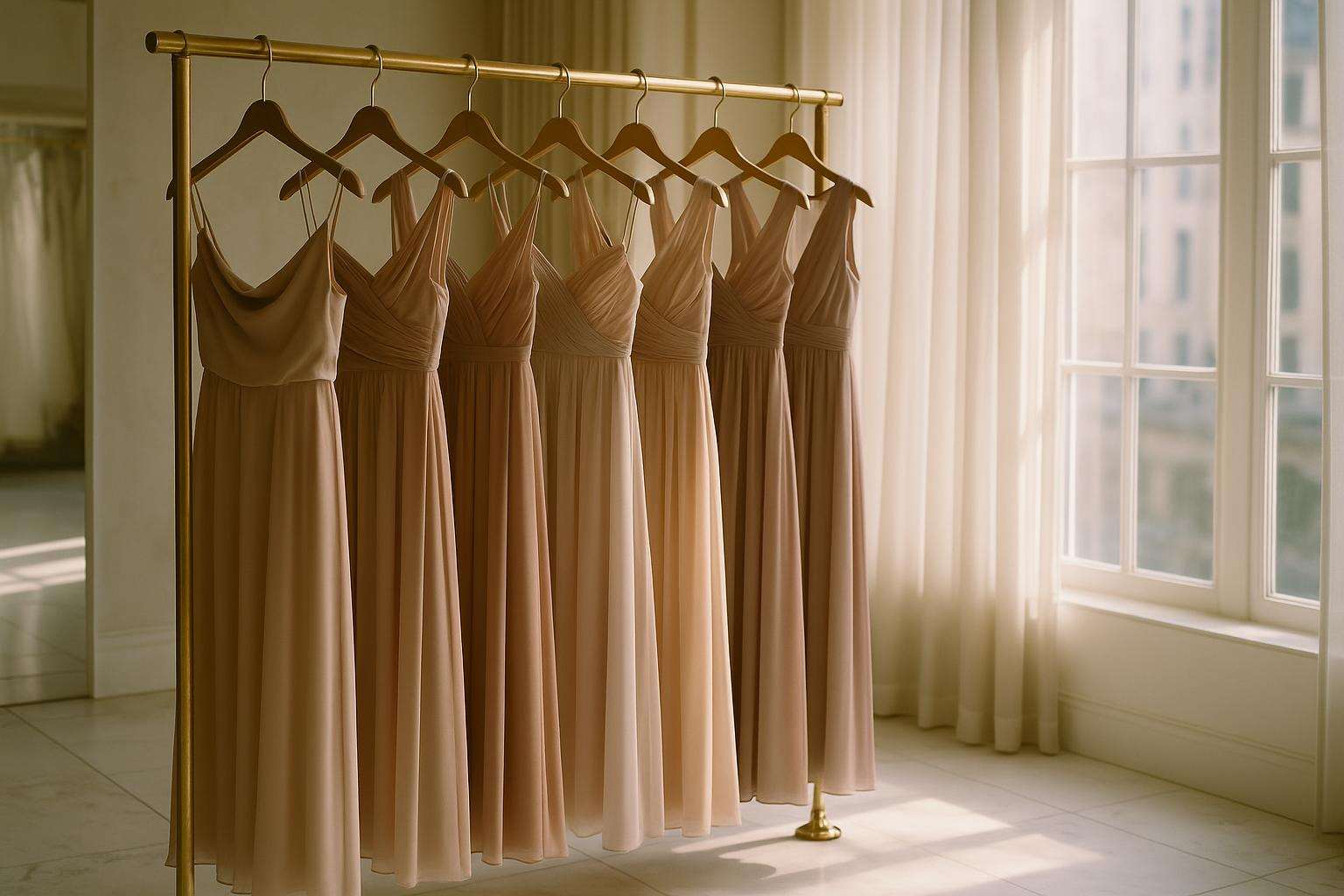
The national average bridesmaid dress costs $128 (The Knot, 2025 Real Weddings Study, 16,956 couples surveyed). U.S. etiquette places the cost on each bridesmaid; modern practice says the bride covers any amount above a bridesmaid's stated ceiling. All-in — dress plus alterations — most parties spend $200–$280 per person. Budget DTC brands like Azazie ($69+) and Birdy Grey ($89+) keep the total well under $200; designer tiers like Jenny Yoo ($260+) raise it considerably.
Bridesmaid dress budgeting sits at an intersection that most wedding guides underserve: it requires honest money conversations with close friends, an understanding of what the market actually charges at every tier, and clarity on an etiquette question — who pays? — that has a traditional answer and a modern nuance. This guide resolves all of it, drawing on verified pricing, real retailers, and sourced guidance so you can approach the conversation with your party from a position of knowledge.
How Much Do Bridesmaid Dresses Cost on Average in 2026?
The clearest data point comes from The Knot's 2025 Real Weddings Study, which surveyed 16,956 U.S. couples who married in 2024 and found the national average bridesmaid dress cost is $128 per person. Regional variation is meaningful: in the Mid-Atlantic and Northeast, the average climbs to roughly $140. Generation also correlates with spend — bridesmaids at Gen X weddings average $146 per dress, while those at Gen Z weddings average $118.
Zola's editorial guidance places the typical bridesmaid dress range at $100–$300, averaging $130–$150 once fabric and style choices are factored in — which aligns closely with The Knot figure once regional variation is considered. Azazie's own 2026 planning guide pegs the same $100–$300 range as the practical market span for most buyers.
The table below maps the real retail landscape by tier, so you can anchor expectations before the first conversation with your party.
| Tier | Retailer | Price Range | Size Range | Key Differentiator |
|---|---|---|---|---|
| Budget DTC | Azazie | $69–$150 | 0–30 + free custom sizing | 600+ silhouettes, 90+ colors; at-home try-on program; no surcharge for custom measurements |
| Budget DTC | Birdy Grey | $89–$129 | XS–4X; maternity options | Most styles at $99; ready-to-ship; up to 6 free fabric swatches for color coordination |
| Value chain | David's Bridal | Many styles under $100 | 0–30W | Largest U.S. bridal chain; in-store availability; immediate purchase; no ordering lead time |
| Mid-range | Anthropologie Weddings (BHLDN) | $140–$225 | 0–26 | Mix-and-match editorial aesthetic; made-to-order and off-the-rack; Jenny Yoo collaboration line |
| Designer | Jenny Yoo | From ~$260 | 0–32 | 30+ colors, 10 fabrics; 12-week lead time; available through Bella Bridesmaids boutiques nationwide |
Who Is Supposed to Pay for Bridesmaid Dresses?
The traditional U.S. answer is unambiguous: each bridesmaid pays for her own dress, alterations, shoes, and accessories. This is the consistent position of Zola, The Knot, and Bella Bridesmaids — the three most-consulted authorities on wedding etiquette in the American market. The logic is historical: being asked to stand in a wedding is an honor, and the financial responsibility that accompanies it has long been treated as the bridesmaid's to carry.
It is worth noting that the etiquette differs internationally. In the UK and Ireland, the convention typically flips: the bride or couple covers the cost of bridesmaid attire. For U.S. weddings with members of the bridal party traveling from abroad, that assumption mismatch is worth addressing directly and early.
Modern practice has meaningfully softened the traditional rule. Dimitra Designs, a bridal boutique and editorial authority on bridesmaid etiquette, notes that it has become "increasingly common for brides to contribute to or entirely cover the cost of bridesmaids' dresses," particularly when the bride selects a dress that exceeds a bridesmaid's stated budget ceiling. The practical arrangement that etiquette guides across the board endorse: the bridesmaid names her maximum (say, $200), the bride selects a $300 dress, and the bride absorbs the $100 difference. Bella Bridesmaids echoes this: if the bride insists on a specific designer style or strict boutique-only color, she assumes at least partial financial responsibility for costs above what an ordinary dress budget would require.
The underlying principle, stated plainly: the person doing the choosing bears the cost of choices that exceed what others can absorb.
How Much Do Bridesmaid Dress Alterations Actually Cost?
Alterations are a near-universal reality for made-to-order bridesmaid dresses, and they are almost never included in the retail price. This is the single most common source of budget surprise in bridesmaid dress planning.
Average alteration costs for bridesmaid dresses run $45–$150, though complex work or rush timelines in major metro areas can push costs to $240 or higher. Common line items and their approximate ranges:
- Taking in sides (bust, waist, hips): $20–$130
- Strap alterations: $15–$80
- Hemming (standard length adjustment): $30–$75
- Closure changes (adding a corset back): $50–$180
- Rush premium (less than 2 weeks): +50–100% on any of the above
Azazie recommends budgeting a full $75–$150 cushion on top of the dress price to cover alterations — a practical rule of thumb that holds across most tiers. Bella Bridesmaids advises beginning the alteration process four to six weeks before the wedding to avoid rush premiums and allow time for multiple fittings. When several bridesmaids book the same tailor simultaneously, group discounts of 10–20 percent are often available.
Combining dress and alteration costs: a $99 Birdy Grey dress with $100 of alterations reaches $199. A $128 average dress with $125 of alterations lands at $253. A $300 Jenny Yoo dress with $150 of complex alterations reaches $450. Budget for the full number, not just the tag.
How Do I Talk About the Budget With My Bridesmaids Without Causing Tension?
The budget conversation is the single most diplomatically sensitive step in the bridesmaid dress process. Handled poorly, it sets a tone of financial pressure that can simmer through the entire engagement. Handled well, it builds trust and makes everyone's planning easier.
Gathered Assembly, a wedding planning editorial, recommends a specific sequence: contact each bridesmaid privately — by call or personal text, not a group chat — and ask for her maximum dress budget ceiling before presenting any options. Here is how to execute that conversation well.
- Be specific, not vague. State a concrete price range — including an alteration estimate — rather than a comfort word like "affordable." "I'm thinking $100–$150 for the dress, plus roughly $75–$100 for alterations" is far more actionable than "something reasonable."
- Ask individually, not in a group. Financial comfort levels vary widely, and group settings create social pressure that prevents honest answers. A bridesmaid in a tighter financial position will not speak up freely in a group text.
- Present the full picture from the start. Remind each bridesmaid that dress plus alterations plus shoes plus hair and makeup can collectively reach $300–$500 before the wedding day. That context makes an early conversation about ceiling budgets feel caring rather than transactional.
- Offer silhouette flexibility within a locked color palette. Letting each bridesmaid choose her own silhouette within a shared color scheme opens the door to dresses at varied price points — a $99 Birdy Grey A-line and a $260 Jenny Yoo convertible gown can both read as the same dusty sage in photographs.
- Be prepared to cover the gap. If the dress you want costs more than a bridesmaid can absorb, covering the difference is both etiquette-sound and relationship-preserving. Frame it as a gift, not an obligation.
The WeddingWire community and Bella Bridesmaids both emphasize the importance of this early, individual dialogue because the total cost of being a bridesmaid — dress, alterations, travel, hair, makeup, shower, and bachelorette contributions — averages $1,200–$1,800 per person for a typical wedding weekend. That cumulative figure makes honest budget dialogue not just diplomatic but essential.
Is Renting a Bridesmaid Dress Ever Worth It?
Rental makes financial sense in a specific and narrow set of circumstances. The strongest case: the selected dress costs more than $200 and the bridesmaid is confident she will never wear it again. Rental platforms — including Rent the Runway, which carries bridesmaid-appropriate gowns with four- and eight-day rental windows — charge roughly 10–20 percent of retail per rental, which at the $260+ Jenny Yoo tier could mean a rental fee of $40–$60 versus $260+ to buy.
That said, renting carries real practical limitations:
- Fit is approximate, not precise. Rental dresses cannot be altered to the wearer's measurements. A made-to-order Azazie dress in free custom sizing will fit better than a rental that is sized by general category.
- Availability is not guaranteed. A specific style in the required size may not be available for the exact wedding weekend, particularly for popular seasonal colors.
- The price gap narrows fast at budget tiers. For Azazie at $69, Birdy Grey at $89, or David's Bridal under $100, the financial case for renting essentially disappears — buying is a similar cost with a permanent result.
The practical verdict: buy at budget and mid-range tiers; evaluate rental only for designer gowns above $250 where the savings are meaningful and the bridesmaid's schedule is predictable enough to rely on rental availability. If the bride is covering the cost of the dress, the rental question becomes moot — the dress is a gift either way.
What Is the Total Cost Burden of Being a Bridesmaid?
For a bride assembling her bridal party, understanding the full cost burden on each bridesmaid — not just the dress — produces better decisions and more gracious hosting. According to The Knot and Bella Bridesmaids, the full financial picture per bridesmaid for a typical U.S. wedding breaks down roughly as follows:
| Expense | Typical Range | Notes |
|---|---|---|
| Bridesmaid dress | $69–$260+ | $128 national average (The Knot 2025) |
| Alterations | $45–$150 | Near-universal; budget $75–$150 as a cushion |
| Shoes | $50–$150 | Often mandated by bride in a specific color or style |
| Jewelry & accessories | $30–$100 | Variable; some brides gift earrings or jewelry |
| Hair & makeup on the wedding day | $150–$300 | Required by many brides; varies by vendor and region |
| Bridal shower contribution | $50–$150 | Venue, gifts, decorations split among party |
| Bachelorette contribution | $100–$300+ | Highly variable; destination bachelorettes are significantly higher |
| Travel & accommodation | $0–$500+ | Dependent on wedding location; often the largest single variable |
| Estimated total | $494–$1,800+ | Average cited by The Knot and Bella Bridesmaids: $1,200–$1,800 |
Brides who understand this full picture are better positioned to make choices that honor both the relationship and each bridesmaid's financial reality. Common gestures that meaningfully reduce the burden: gifting jewelry so bridesmaids do not need to purchase accessories; allowing each bridesmaid to choose her own shoes within a broad color guideline (dusty rose, nude, silver) rather than mandating a specific style; and covering hair and makeup as a wedding gift to the party. None of these are required by etiquette — but each one makes being in your wedding a genuinely joyful experience rather than a financial strain.
Dress alone: $69 (Azazie) to $260+ (Jenny Yoo), national average $128. Add $75–$150 for alterations. All-in dress cost: $200–$280 for most parties. Total bridesmaid commitment for a typical wedding weekend: $1,200–$1,800. Budget conversations should happen individually, early, and with a concrete number — not a vague comfort word.
Considered Counsel
Frequently asked
How much does the average bridesmaid dress cost in 2026?
According to The Knot's 2025 Real Weddings Study — which surveyed 16,956 couples who married in 2024 — the national average bridesmaid dress cost is $128 per person. Regional averages climb to roughly $140 in the Mid-Atlantic and Northeast. The full market range is considerably wider: budget DTC brands like Azazie start at $69 and Birdy Grey starts at $89, while mid-range options from Anthropologie Weddings (formerly BHLDN) run $140–$225, and designer styles from Jenny Yoo begin at approximately $260. When alterations are included — which typically add $75 to $150 per bridesmaid — the all-in dress cost most commonly falls between $200 and $280. Adding shoes, jewelry, hair, and makeup, the total cost of being a bridesmaid can reach $1,200–$1,800 per person for the full wedding weekend, according to Bella Bridesmaids and The Knot.
Who is traditionally supposed to pay for bridesmaid dresses?
Traditional U.S. wedding etiquette holds that each bridesmaid pays for her own dress, alterations, shoes, and accessories. This convention is consistent across major planning authorities including Zola, The Knot, and Bella Bridesmaids. The convention differs internationally: in the UK and Ireland, it is customary for the bride or couple to cover the cost of bridesmaid attire. Modern practice in the U.S. has softened the traditional rule. Dimitra Designs notes it has become increasingly common for brides to contribute to or entirely cover the cost, particularly when the chosen dress exceeds a bridesmaid's stated budget ceiling. The practical consensus: if the bride selects a dress that costs more than what a bridesmaid has indicated she can afford, covering the difference is both etiquette-sound and relationship-preserving.
How much should I budget for bridesmaid dress alterations?
Alterations are a near-universal reality for made-to-order bridesmaid dresses and are almost never included in the retail price. Average alteration costs run $45 to $150 per bridesmaid, though complex work or rush timelines in major metro areas can push costs to $240 or higher. Common line items include taking in the sides (bust, waist, hips) at $20–$130; strap alterations at $15–$80; and closure changes such as adding a corset back at $50–$180. Rush alterations — common when dresses arrive later than expected — can add 50 to 100 percent to standard fees. Azazie recommends budgeting a full $75–$150 cushion on top of the dress price for alterations. Bridesmaids should begin the alteration process four to six weeks before the wedding to avoid rush premiums and allow time for multiple fittings. Booking multiple bridesmaids at the same tailor simultaneously can unlock group discounts of 10–20 percent.
Is it better to buy or rent a bridesmaid dress?
Renting a bridesmaid dress makes financial sense in a narrow set of circumstances — primarily when the dress costs more than $200 and the bridesmaid is confident she will never wear it again. Rental platforms such as Rent the Runway offer bridesmaid-appropriate gowns with four- or eight-day rental windows. However, renting carries practical limitations that buying does not: rental dresses cannot be altered to the wearer's measurements, fit is approximate rather than precise, and the bridesmaid has no guarantee the specific dress will be available in her size on the required date. For budget tiers — Azazie from $69, Birdy Grey from $89, David's Bridal from under $100 — the price gap between buying and renting narrows enough that ownership is almost always the better value. Renting is most defensible for designer gowns in the $260–$400 range where the rental fee may be 40–60 percent of retail.
How do I tell my bridesmaids how much the dress costs without causing tension?
Budget conversations should happen individually and early — ideally shortly after asking each woman to join the bridal party, before any dress shopping or browsing begins. Gathered Assembly, a wedding planning editorial, recommends contacting each bridesmaid privately by call or text to ask her maximum dress budget ceiling before presenting any options. Be specific: state a concrete price range that includes an estimate for alterations, not just a vague word like 'affordable.' Never ask in a group setting — financial comfort varies widely and group dynamics create pressure. If the dress you want costs more than what a bridesmaid can comfortably spend, cover the gap yourself. Framing the conversation as collaborative rather than directive — 'I have a few options I love and want to make sure they work for everyone' — makes it easier for bridesmaids to be honest about their constraints.
What are the most affordable bridesmaid dress brands in 2026?
Azazie and Birdy Grey are the leading budget-tier bridesmaid dress brands. Azazie starts at $69 with over 600 silhouettes in 90+ colors; free custom sizing is included on every order regardless of price point, which is a significant differentiator for parties where bridesmaids range widely in proportions. Their Try at Home Program lets each bridesmaid select up to three dresses for $10–$15 each, try them for a week, and return before committing to a made-to-order. Birdy Grey starts at $89, with most styles priced at $99, and the full range stays under $129. The brand offers convertible and maternity-friendly styles, and free fabric swatches for color coordination. David's Bridal, the largest U.S. bridal chain, carries hundreds of bridesmaid styles under $100 in sizes through 30W, with the added advantage of in-store availability for immediate purchase — useful for parties with shorter timelines or bridesmaids who want to try before buying.
What is the total cost of being a bridesmaid beyond the dress?
The dress is only one component of the total cost of being a bridesmaid. According to The Knot and Bella Bridesmaids, the full financial commitment averages $1,200–$1,800 per person for a typical wedding weekend. Beyond the dress and alterations ($200–$280 combined), common additional expenses include wedding shoes ($50–$150), jewelry ($30–$100), hair and makeup on the wedding day ($150–$300 depending on venue requirements), contributions to the bridal shower and bachelorette party ($75–$300+), and travel and accommodation costs if the wedding is out of town. Brides who are mindful of these cumulative costs often make deliberate choices that reduce them — such as allowing bridesmaids to choose their own shoes within a color guideline, or covering hair and makeup as a gift to the party. Making these choices explicit and early preserves both the relationship and the financial wellbeing of everyone in the party.