The Bride's Circle
Flower Girl Dress Guide: Styles, Sizing & Comfort
From coordinating with your bridal palette and choosing kid-comfortable fabrics to ordering the right size and shopping affordably — a complete, retailer-grounded guide to flower girl dresses for 2026 weddings.
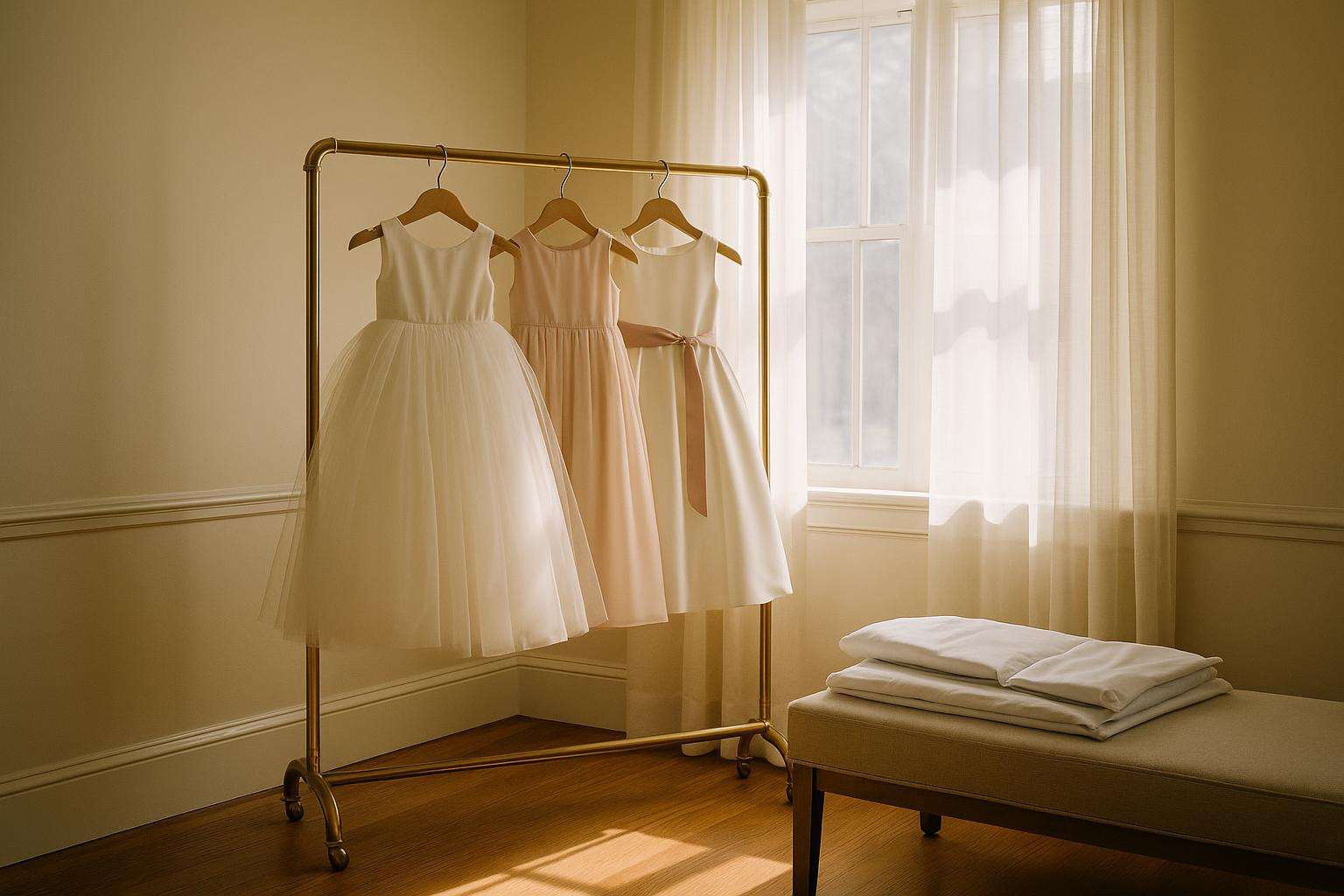
A flower girl dress should coordinate with the bridal palette through one or two shared details — not copy the gown. Order the larger size when measurements fall between two, prioritize chiffon for comfort and outdoor venues, and place off-the-rack orders two to three months out (custom orders four to six months). Budget options start under $30 at Azazie and David's Bridal; couture starts at $250 from Pegeen.
A flower girl's dress is a small garment with an outsized role: it has to coordinate with the bridal gown, survive hours of movement and outdoor terrain, fit a child who may grow between the order date and the wedding day, and — ideally — look effortless in every photograph. This guide works through each of those requirements in sequence, drawing on real retailers, verified pricing, and the sizing and fabric guidance professionals in the bridal industry rely on.
What size flower girl dress should I order?
Most flower girls fall between ages three and nine, but sizing charts across major retailers are built on measurements — not simply age — because children's proportions vary enormously. The correct measurement sequence is chest, waist, and hollow-to-hem (from the base of the throat to the floor). Hollow-to-hem is the primary dimension to satisfy first: a dress that is too long can be hemmed, but a bodice that is too tight offers almost no alteration path.
Because children grow roughly half an inch to one inch every three months, experts universally recommend ordering the larger size when measurements fall between two. Factor in any anticipated growth between your order date and the wedding day — if the wedding is five months away and the child is currently between a 6 and an 8, order the 8 and plan a standard hem and side-seam adjustment.
The Dessy Group's flower girl size chart covers toddler sizes 2T through 4T and girls' sizes through 14, with hollow-to-hem as the lead dimension. Azazie offers free custom sizing alongside standard sizes 2–14 on every flower girl style, removing the guesswork for hard-to-fit children. Pegeen, which has been producing American-made children's formalwear since 1982, initiates a bespoke measurement process approximately twelve weeks before the event, eliminating the alteration burden entirely.
Timing rule of thumb: Purchase two to three months before the wedding for off-the-rack styles; allow four to six months for boutique or custom orders.
What is the most comfortable fabric for a flower girl dress?
Fabric is the single biggest lever on a child's comfort over a long wedding day. The three most common choices — tulle, satin, and chiffon — perform very differently in real conditions.
| Fabric | Comfort for Kids | Photography | Durability | Best Venue |
|---|---|---|---|---|
| Chiffon | Excellent — lightweight, non-clingy, breathable, free-moving | Very good — natural drape, flattering in outdoor light | Good — resists wrinkling; less prone to snags than tulle | Outdoor, garden, beach, destination |
| Tulle | Variable — open weave traps debris; softness varies by weave | Excellent — volume and light-catching silhouette photographs beautifully | Fair — snags and tears easily; difficult to clean grass and dirt | Formal indoor; climate-controlled |
| Satin | Fair — heavier; retains heat; can feel restrictive in warm weather | Excellent indoors — structured silhouette; rich color under venue lighting | Very good — holds shape; easy to spot-clean | Autumn/winter; indoor ballroom; church |
| Organza | Good — lighter than satin; crisp structure with some movement | Good — holds shape for portraits; slightly stiff in motion shots | Fair — prone to snagging; requires careful handling | Formal indoor; spring garden |
Chiffon is the default recommendation for most 2026 wedding scenarios. Kennedy Blue's fabric editorial notes that chiffon's airy texture and superior drape make it the natural choice for layered, flowing silhouettes — qualities that translate directly to ease of movement for young children who need to walk down an aisle, scatter petals, and then sit still through a ceremony. For spring and summer weddings or any venue with outdoor elements, default to chiffon. Reserve satin and heavy tulle for climate-controlled, formal indoor events where the visual payoff justifies the trade-off in comfort.
How do I coordinate a flower girl dress with my wedding gown?
The guiding principle is coordination, not copying. The flower girl's dress should echo the bridal aesthetic through one or two shared details — a fabric texture, a sash color, a lace overlay — without replicating the bridal silhouette at miniature scale. Children scaled down in a replica bridal gown can read as costume rather than bridal party, especially in photographs.
Match by silhouette family first:
- Ballgown brides: A full tulle or organza skirt on the flower girl mirrors the romance and volume of the bridal look. This pairing is most requested for formal church ceremonies and evening weddings where the visual drama of a layered skirt reads appropriately.
- A-line brides: A simple A-line flower girl dress with a ribbon sash is the most versatile option across wedding types. It avoids competing with the bride's cleaner lines and works from garden parties to hotel ballrooms without alteration to the concept.
- Boho or flowing brides: Chiffon or lightweight organza in loose, layered silhouettes naturally harmonizes with a garden or bohemian ceremony aesthetic and gives young children maximum freedom of movement — a genuine win on both counts.
On color: exact fabric matching between flower girl and bridesmaid dresses rarely succeeds because children's garment dye lots differ from adult dress production runs. Tonal coordination — a lighter blush or ivory with a dusty-rose sash when bridesmaids are in dusty rose — photographs more cohesively than a forced exact match. The color variation between a child's dress and the adult palette actually reads as intentional layering in group portraits.
David's Bridal offers a dedicated Mini Me category that pairs its bridal gown styles with coordinating flower girl dresses, streamlining this coordination step for brides who want a polished, matched look without the effort of independent sourcing. Styles include satin A-lines, tulle cap sleeves with rosettes, and faux-wrap chiffon in coordinating colorways.
Where can I buy flower girl dresses — and what does each retailer actually offer?
The market spans a genuinely wide range, from under-$20 Amazon picks to American-made couture above $600. Here is what each major retailer delivers in practice.
David's Bridal is the highest-traffic starting point for most families. Their flower girl collection is focused on styles under $100, with clearance options available at further reductions, and loyalty program members receive additional discounts. Labels include DB Studio, Popatu, and The Edit by DB Studio — covering satin A-lines, tulle cap sleeves with rosettes, faux-wrap chiffon, and embellished halter necks in a broad range of colors.
Azazie lists more than 20 flower girl styles in over 70 color options, with retail prices typically between $60 and $110 and sale prices starting around $30. The brand's free custom sizing is its most meaningful differentiator: parents who cannot find a standard size that fits both the child's waist and height simultaneously can order custom measurements at no additional cost.
The Dessy Group coordinates its flower girl collection with its adult bridesmaid lines under labels including Dessy Collection, After Six, Alfred Sung, and the JY–Jenny Yoo collaboration. Jenny Yoo Kids flower girl dresses are available in sizes 2T–10 through Dessy's network and directly at jennyyoo.com. Dessy is the strongest option when whole-party fabric and color cohesion is the priority, because the same colorways run across the adult and children's ranges from a shared dye lot.
Eden Bridals, a California-based bridal manufacturer, produces flower girl styles designed to coordinate with its bridesmaid and bridal gown lines, featuring ribbon sashes, illusion overlays, and ball gown silhouettes. Authorized boutiques including Wedding Shoppe carry the line and can facilitate in-person fitting for children in the same appointment where bridesmaids are being sized.
Amazon offers the widest price range — under $20 to over $150 — with leading third-party brands including 2Bunnies, GRACE KARIN, Glamulice, ekidsbridal, and LalaMira consistently appearing in the best-seller rankings for girls' special occasion dresses. The trade-off is quality variance: reading verified purchase reviews, checking the seller's specific size chart (not just the general Amazon chart), and ordering at least eight weeks before the wedding are essential steps.
Pegeen serves the custom and couture segment. Founded in 1982 and based near Orlando, Florida, Pegeen has produced over 1.7 million children's garments and offers access to more than 280 silk colors via a Dress Dreamer configuration tool supporting more than one billion style combinations. Prices start at approximately $250 for infant couture styles and can exceed $600 depending on fabric complexity. The production and fitting timeline requires approximately twelve weeks minimum, making Pegeen the right choice for brides planning six months or more in advance who want a true one-of-a-kind result.
How much does flower girl dress alteration actually cost?
Children's dresses almost always require some alteration, because off-the-rack sizing is built to average proportions and children's measurements rarely fit a standard template exactly. The two most common adjustments are hemming (shortening the length for children who are smaller than the ordered size) and taking in the sides (when ordering up a size to accommodate anticipated growth).
Current pricing data from Airtasker's 2026 U.S. alteration cost report and Thumbtack's seamstress pricing benchmarks places basic hemming at $10–$50 for single-layer styles. Multi-layer tulle or organza skirts require four to six hours of skilled work and are priced accordingly — often $60 to $120. Side seam adjustments run $25–$70. Rush fees of approximately 30% apply when the first fitting falls within three weeks of the wedding date.
Practical steps to minimize alteration cost:
- Bring the child's wedding shoes to every fitting — heel height directly affects the required hem length, and an incorrect hem measured in flat shoes will need to be re-done after the shoes are introduced.
- Schedule the final fitting no earlier than two to four weeks before the wedding, to capture any last growth without having to repeat alterations.
- Choose styles with elastic waistbands or sash ties, which allow some waist adjustment between fittings without a seamstress visit — a practical buffer for children between sizes.
- For Pegeen custom orders, the bespoke measurement process eliminates most alteration needs by building to the child's exact dimensions from the start.
Measure hollow-to-hem first and satisfy length before checking chest and waist. Order the larger size when measurements fall between two. Account for three to five months of growth between the order date and the wedding day. A too-long dress can always be hemmed — a too-tight bodice cannot be let out.
What is the right lead time to order a flower girl dress?
Lead time depends almost entirely on where you are shopping. Off-the-rack retailers with in-stock inventory — David's Bridal, Amazon, and Azazie's ready-to-ship selection — can deliver in one to two weeks, but the full process including delivery, fitting, alteration booking, alteration completion, and a final try-on still requires a minimum of six to eight weeks. Made-to-order styles at Azazie, Dessy, and Jenny Yoo require three to four months of production alone. Custom and couture orders at Pegeen require approximately twelve weeks for the measurement and production process.
The practical rule from Joy's 2026 flower girl guide: never leave less than eight weeks of total lead time even for the fastest-shipping styles, because alterations, a final fitting, and the inevitable growth adjustment all require buffer time. For brides who want a coordinated look across the whole party — flower girl, bridesmaids, and bridal gown in the same colorway — placing all orders through the same retailer or designer (David's Bridal Mini Me, Dessy's coordinated children's line, or Jenny Yoo Kids alongside Jenny Yoo bridesmaids) at the same time from the same production run is the most reliable path to a cohesive result on the wedding day.
Considered Counsel
Frequently asked
What size flower girl dress should I order?
Sizing a flower girl dress starts with three measurements taken in the correct order: chest, waist, and hollow-to-hem. The hollow-to-hem dimension — from the base of the throat to the floor — is the most critical because a dress that is too long can be hemmed, but a bodice that is too tight has almost no alteration path. When a child's measurements fall between two sizes, experts universally recommend ordering the larger size. Because children grow roughly half an inch to one inch every three months, factor in any anticipated growth between the order date and the wedding day. The Dessy Group's flower girl size chart covers toddler sizes 2T through 4T and girls' sizes through 14, using hollow-to-hem as the primary dimension. Azazie offers free custom sizing alongside standard sizes 2 through 14 for any flower girl style, which removes the guesswork entirely for hard-to-fit children. For off-the-rack purchases, plan two to three months' lead time; for custom or boutique orders, allow four to six months.
What is the most comfortable fabric for a flower girl dress?
Chiffon is the strongest performer for child comfort across a long wedding day. It is lightweight, slightly sheer, non-clingy, and naturally flowing — qualities that allow free movement without overheating. Chiffon also resists wrinkling, travels well, and performs at its best in outdoor, garden, and beach settings. Kennedy Blue's bridal fabric editorial notes that chiffon's airy texture and superior drape make it the default choice for layered, flowing silhouettes, and these properties translate directly to ease of movement for young children. Tulle delivers the storybook princess silhouette but snags easily and traps debris, making it better suited to formal indoor ceremonies. Satin photographs beautifully under indoor lighting but retains heat — a real drawback for outdoor summer weddings or children under bright ceremony lights. The practical rule: for spring and summer weddings or any venue with outdoor elements, default to chiffon. Reserve satin and heavy tulle for climate-controlled, formal indoor events.
How do I coordinate a flower girl dress with my wedding gown style?
The guiding principle is coordination, not copying. The flower girl's dress should echo the bridal aesthetic through one or two shared details — fabric texture, a sash color, a lace trim — without replicating the bridal silhouette at miniature scale. Ballgown brides pair naturally with full tulle or organza skirts on the flower girl, mirroring the romance and volume of the bridal look. A-line brides work best with a simple A-line style finished with a ribbon sash — versatile across garden parties and hotel ballrooms alike. Boho or flowing bridal looks harmonize with chiffon or lightweight organza in loose, layered silhouettes that also give young children maximum freedom of movement. On color: exact fabric matching between flower girl and bridesmaid dresses rarely succeeds because children's garment dye lots differ from adult production runs. Tonal coordination — a lighter blush with a dusty-rose sash when bridesmaids are in dusty rose — photographs more cohesively than a forced exact match. David's Bridal offers a dedicated 'Mini Me' category that pairs its bridal gown styles with coordinating flower girl dresses to streamline this decision.
Where can I buy flower girl dresses affordably?
David's Bridal is the highest-traffic starting point for most families, with a dedicated flower girl collection focused on styles under $100, clearance options at further reductions, and additional discounts for loyalty program members. Styles span the DB Studio, Popatu, and The Edit by DB Studio labels, including satin A-lines, tulle cap sleeves with rosettes, faux-wrap chiffon, and embellished halter necks. Azazie lists more than 20 flower girl styles in over 70 color options, with retail prices typically between $60 and $110 and sale prices starting around $30 — plus free custom sizing on every order. Amazon offers the widest price range overall, from under $20 to over $150, with top-rated third-party brands including 2Bunnies, GRACE KARIN, Glamulice, ekidsbridal, and LalaMira consistently appearing in the best-seller rankings. The trade-off on Amazon is that fit and fabric quality vary widely, so reading verified purchase reviews and checking each seller's size chart independently are essential steps.
How much does it cost to hem a flower girl dress?
Basic hemming for a children's dress runs between $10 and $50 for simple single-layer styles, but multi-layer tulle or organza skirts require four to six hours of work and are priced accordingly — often $60 to $120 or more. Side seam adjustments (necessary when ordering up a size to accommodate a growth spurt) typically cost $25 to $70. Rush fees of approximately 30% apply when the first fitting falls within three weeks of the wedding, according to Thumbtack's 2024 seamstress pricing data and Airtasker's 2026 U.S. cost benchmarks. To minimize alteration costs: bring the child's wedding shoes to every fitting so heel height is factored into the hem length; schedule the final fitting no earlier than two to four weeks before the wedding to capture any last growth; and choose styles with elastic waistbands or sash ties, which allow some waist adjustment without a seamstress visit.
How far in advance should I buy a flower girl dress?
For off-the-rack styles at David's Bridal, Azazie, or Amazon, two to three months before the wedding is sufficient — enough time to receive the dress, schedule at least one fitting, complete any alterations, and allow a final try-on in the week before the wedding. For boutique or custom orders — Pegeen requires approximately twelve weeks to initiate a bespoke measurement process and complete production — plan a minimum of four to six months from order to delivery, plus an additional four to six weeks for alterations. The Dessy Group and Eden Bridals styles sold through authorized boutiques such as Wedding Shoppe typically require four to five months of production and shipping time. Joy's 2026 flower girl guide sets the general rule: never leave less than eight weeks of total lead time even for the fastest-shipping styles, because alterations, final fittings, and the inevitable growth adjustment between purchase and wedding day all require buffer time.