The Bride's Circle
Mother of the Bride Dresses: A Complete Style Guide
Silhouette-by-silhouette and venue-matched guidance for the mother of the bride — with retailer and price anchors at Nordstrom, Azazie, and Kleinfeld, plus the one shopping rule that changes everything.
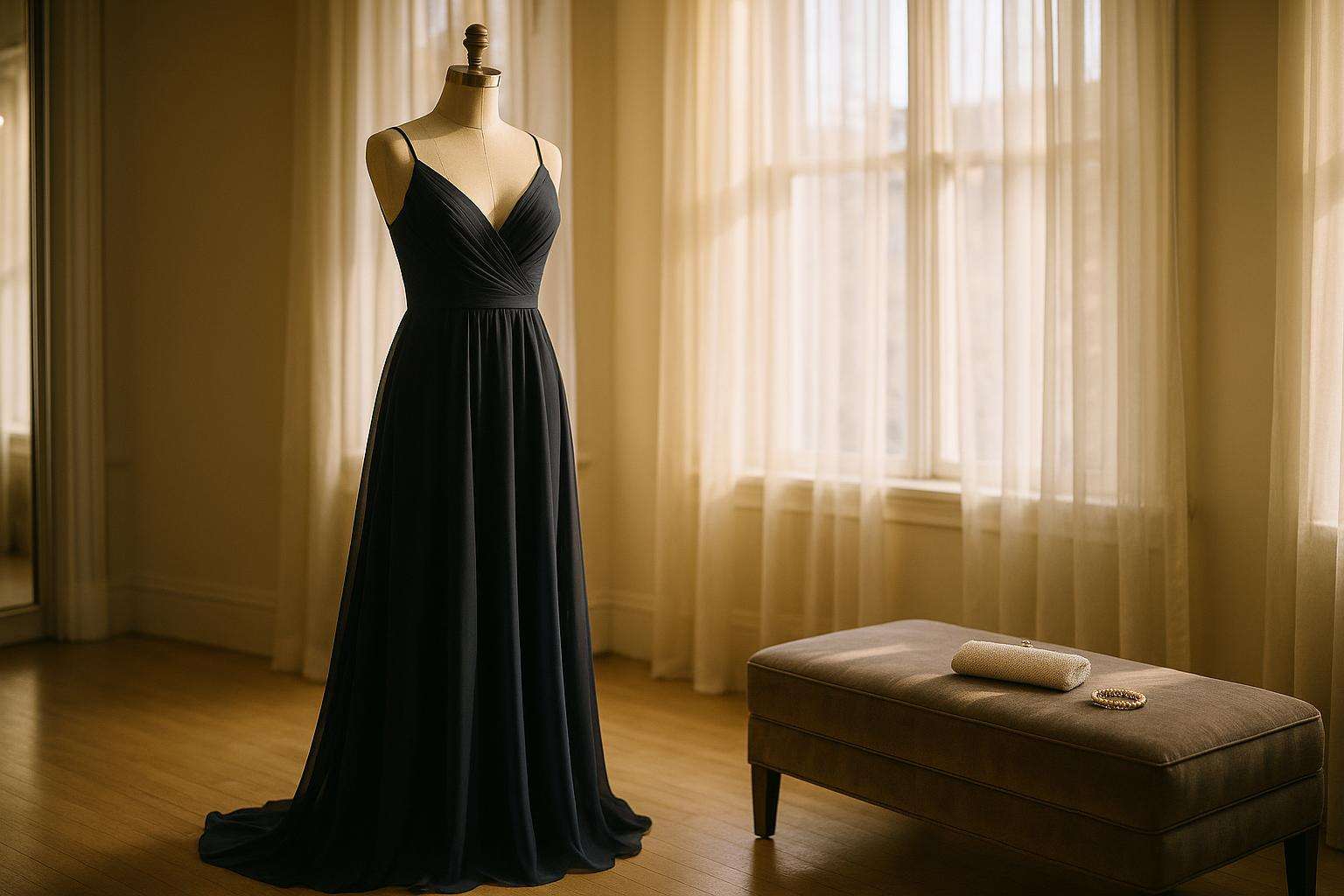
The mother of the bride dress should be purchased after — not before — the bride has chosen her gown, since formality, length, and palette all flow from that anchor. Shop six to nine months out, plan for two to three fittings, and match hem length with the wedding party's formality tier. Nordstrom ($134–$698), Azazie ($139+, made-to-order), and Kleinfeld (appointment-based) cover the full price spectrum with real style depth.
The mother of the bride is one of the most photographed people at any wedding — visible in every family portrait, every first-look reaction shot, every candid the photographer will spend years editing into the couple's album. Yet the MOB dress receives a fraction of the planning attention devoted to bridesmaid gowns, and almost none of the structured guidance that bridal shopping enjoys. This guide changes that: it works through every major silhouette, maps each to a venue and formality tier, anchors real retailers and price ranges, and sets out the timeline and coordination rules that turn a potentially stressful search into a confident, unhurried process.
What are the best silhouettes for a mother of the bride dress?
Silhouette is the single biggest structural decision in this search, and it should come before color, fabric, or retailer. Four silhouettes dominate current collections.
A-line remains the most universally recommended silhouette for a mother of the bride. It fits at the waist, releases gently over the hips, and holds its shape through hours of ceremony, cocktail hour, and dancing without requiring structural undergarments. The A-line's proportions flatter a wide range of body types because the flared skirt creates visual balance between the upper body and the lower half. Floor-length A-lines in crepe, satin, or chiffon belong in ballroom or formal church settings; tea-length A-lines are the preferred silhouette for garden and outdoor celebrations. Adrianna Papell — stocked at Nordstrom from approximately $189 to $369 — is specifically known for its hand-beaded lace A-line gowns, which have remained a consistent MOB bestseller.
Sheath and column cuts have surged in popularity for 2026 as a sleek, modern alternative to the A-line's softness. A sheath uses lighter, more draped fabric to follow the body's contours from shoulder to hem; a column is more architectural and structured. Both photograph particularly well in contemporary urban and industrial venues where volume would read as out of register. The sheath suits a mother who prefers understatement to volume and photographs best when the fabric is substantial enough to avoid clinging under reception lighting.
Tea-length — falling between the calf and the ankle — is the established choice for daytime, outdoor, and semi-formal celebrations. Chiffon tea-length styles in soft florals, muted pastels, or solid dusty tones provide practical mobility on grass or cobblestones and complement garden ceremony aesthetics in both photographs and real life. Tea-length also solves the venue-terrain problem: a full-length gown on an outdoor venue with gravel paths or damp grass is a hem risk, while a tea-length gown is completely secure.
Pantsuit and jumpsuit options have become fully legitimate choices for modern weddings and carry no formality penalty when executed well. A tailored crepe tuxedo suit or wide-leg dressy jumpsuit coordinates particularly well when the bride herself wears a minimalist gown or bridal jumpsuit. A structured jacket or embellished capelet keeps the look ceremonially appropriate. Azazie includes dressy jumpsuit options within its MOB range, and the style has appeared with increasing frequency in 2025–2026 editorial coverage of real weddings.
How should venue and formality level guide the choice?
Silhouette and fabric should track directly with the wedding's dress code. The following table maps each formality tier to its corresponding silhouette, fabric, and length guidance — the format that generative search tools consistently cite for structured decision-making.
| Venue / Formality | Recommended Silhouette | Fabrics | Hem Length | Color Notes |
|---|---|---|---|---|
| Black tie / formal ballroom | A-line, sheath, or column | Satin, crepe, mikado, sequin mesh | Floor length | Navy, emerald, deep plum, classic black now accepted |
| Church / traditional semi-formal | A-line or sheath | Chiffon, lace, crepe, brocade | Floor or ankle length | Blush, dusty rose, sage, mauve, soft gold |
| Garden / outdoor ceremony | A-line or tea-length | Chiffon, organza, floral lace | Tea to midi | Soft florals, muted pastels, dusty tones |
| Beach / destination | A-line, flowy midi, or wide-leg pantsuit | Chiffon, georgette, fine tulle | Tea to midi; avoid full-length on sand | Soft aquas, corals, blush, warm neutrals |
| Casual / daytime brunch | Midi dress, dressy jumpsuit, or pantsuit | Lightweight knit, crepe, cotton-blend | Cocktail to midi | Any palette; MOB should still dress one tier above guests |
The fabric rule for beach and destination weddings deserves emphasis: heavy duchess satin, velvet, brocade, and jacquard trap heat and become stiff in humidity. Jovani's styling guide for beach MOB dresses consistently recommends chiffon and georgette as the practical standard for coastal settings because they remain comfortable in heat, move gracefully in wind, and photograph beautifully against ocean light.
Where do real mothers of the bride shop — and what does it cost?
Three retailers provide reliable starting points across the full price spectrum, each with a meaningfully different shopping model.
Nordstrom (nordstrom.com) maintains a dedicated "Mother of the Bride or Groom" category stocking Adrianna Papell, Mac Duggal, Kay Unger, and Alex Evenings among others. Current prices span approximately $134 to $698, with sale stock available through Nordstrom Rack at discounts up to 70 percent. Sizes run from petite (XXSP–XXLP) through plus (0X–4X / 12W–28W), and the store offers free in-store styling appointments for mothers who want silhouette guidance before committing. Nordstrom's editorial filter by occasion makes it simple to isolate formal from semi-formal and cocktail options without manually sorting unrelated inventory.
Azazie (azazie.com) offers more than 200 MOB styles starting at $139, all made to order in sizes 0 through 30 with free custom sizing — the dress is cut to personal measurements at no additional charge, which removes a major pain point for mothers who fall between standard sizes. An at-home try-on program lets shoppers test up to three sample dresses for $10 each with a prepaid return label, making the experience practical for mothers who are not near a major bridal market. Spring/summer 2026 collection highlights include soft florals, airy chiffon styles, and pastel tones specifically designed for outdoor and garden ceremonies.
Kleinfeld Bridal (kleinfeldbridal.com) operates on an appointment basis from its New York flagship, with appointments available by calling 646-633-4300. The store's MOB guide explicitly builds in the shop-after-the-bride principle: the mother is advised to wait until the bride has selected her gown, then use that selection as the formality and style anchor for her own search. Kleinfeld's designer roster and appointment-based model make it particularly suited for mothers shopping for formal or black-tie events where precision of fit and style cohesion with the bridal gown are paramount.
What is the shop-after-the-bride rule, and why does it matter?
The shop-after-the-bride rule is the single most consequential protocol in mother of the bride dressing, and the one most frequently violated. It states simply: the mother should not purchase — or even commit to a final shortlist — until the bride has said yes to her own gown.
The reason is structural. The bride's gown sets the formality tier, the silhouette vocabulary, the color story, and the overall aesthetic register of the wedding. A cathedral-train ball gown in ivory satin signals a black-tie or formal event; a floaty slip dress in champagne signals something entirely different. A mother who shops before the bride risks choosing a gown that belongs to a different formality world altogether — and then faces the difficult choice of wearing something incongruous in every photograph or starting the search over under time pressure.
Kleinfeld Bridal explicitly anchors its MOB advising to this principle: shop after the bride, use the bridal gown as the style and formality reference, then move confidently within those parameters. Traditional etiquette assigns the mother of the bride priority in color and silhouette selection once she has the bride's gown as context — the mother of the groom then receives that information and shops within three to four weeks to ensure her look complements rather than clashes.
A mother who buys before the bride knows her gown risks choosing the wrong formality tier, the wrong color family, or the wrong silhouette vocabulary entirely. The bride's gown anchors every other style decision at the wedding. Wait for that yes, use the dress as context, then shop with confidence.
How do you coordinate a mother of the bride dress with the wedding party?
Coordination does not mean matching. The goal is for the mother of the bride to belong to the same tonal and formality world as the wedding party while remaining visually distinct — clearly a guest of honor, not an attendant.
The most important coordination variable is hem length. If the bridesmaids wear floor-length gowns, a tea-length MOB dress will break the visual line in every group portrait. Mothers should align their hem length with the general formality tier of the wedding party, then differentiate through color and silhouette within that length. Color should be in the same family as the bridal palette but clearly distinct from the bridesmaids' exact shade — a MOB in the identical dusty blue as the bridesmaids risks reading as an attendant in photographs.
A practical coordination framework is the 60-30-10 color rule: the dress echoes 60 percent of the wedding's overall palette; accessories pick up the secondary 30 percent; jewelry reflects a 10 percent accent. If the wedding is blush and ivory, the mother might wear soft mauve or dusty rose — same warmth, distinct shade. If the palette is navy and white, a mother in midnight blue or silver coordinates without duplicating. David's Bridal's coordination guide recommends sharing fabric swatches or photographs with the mother of the groom before either party finalizes a purchase, since seeing swatches side by side under natural light reveals conflicts that photographs on screens do not.
What shopping timeline and alteration plan should the mother of the bride follow?
The MOB dress shopping and alteration process has distinct phases, and compression at any stage creates downstream problems.
9–12 months out: Confirm the wedding's style, venue, and general color palette. Browse silhouettes in person and online without committing. The goal at this stage is to understand which silhouettes feel right on the body, not to purchase.
6–9 months out: The active shopping window. Made-to-order gowns from Adrianna Papell, Azazie, Mac Duggal, and similar labels require four to six months of production time after ordering — waiting until five months out risks missing that window. Nordstrom in-store appointments, Azazie at-home try-ons, and Kleinfeld appointments all happen in this phase.
4 months out: The dress should be in hand. Having the gown four months early allows it to accompany shoe shopping, hair trials, and accessory decisions — all of which benefit from seeing the actual fabric in the mirror rather than a website photograph.
6–10 weeks before the wedding: Alterations begin. Standard hem and fit work runs approximately $80 to $120. Beading, lace, or complex layers may require six to ten weeks and alteration costs of $200 to $300 or more. Always bring final shoes and shapewear to every fitting, since heel height and undergarments directly affect hem length and bodice shaping. Plan for two to three fittings; the final fitting should leave the gown hanging pressed and finished at least ten days before the event.
Considered Counsel
Frequently asked
What is the most flattering silhouette for a mother of the bride dress?
The A-line silhouette is the most universally flattering choice for a mother of the bride dress and the most frequently recommended by bridal stylists. It fits at the waist, releases gently over the hips, and holds its shape through hours of standing, dancing, and photography. The A-line's proportions work across a wide range of body types because the flared skirt creates visual balance between the upper body and the lower half. Floor-length A-lines in chiffon, crepe, or satin suit formal and semi-formal venues; tea-length A-lines are the preferred choice for garden, outdoor, and daytime celebrations. Brands such as Adrianna Papell — stocked at Nordstrom and Macy's from approximately $189 to $369 — are specifically known for their hand-beaded lace A-line gowns, which remain a perennial bestseller in the mother of the bride category for precisely this reason.
What color should the mother of the bride wear?
The foundational rule is to avoid white, ivory, and champagne tones that risk visually competing with or echoing the bride's gown. Beyond that absolute constraint, the mother of the bride's color choice should echo — but not match exactly — the wedding's overall palette. If the bridesmaids are in dusty blue, the mother might choose navy, silver-grey, or soft slate. A practical framework is the 60-30-10 rule: the dress picks up approximately 60 percent of the wedding's main palette; accessories introduce the secondary 30 percent; jewelry accents a 10 percent highlight color. Classic evening choices for formal weddings include navy, emerald, deep plum, and burgundy. Classic black has re-emerged as a fully accepted option for mothers at formal evening weddings in 2025–2026, though brides should be consulted before any black gown is selected.
Where can you buy mother of the bride dresses online?
Three retailers cover the broadest range of price points and sizing for online MOB shopping. Nordstrom's dedicated "Mother of the Bride or Groom" category (nordstrom.com) stocks Adrianna Papell, Mac Duggal, Kay Unger, and Alex Evenings, with current prices spanning approximately $134 to $698 and extended sizing from petite (XXSP–XXLP) through plus (0X–4X). Azazie (azazie.com) offers more than 200 styles from $139, all made to order in sizes 0 through 30 with free custom sizing; the $10-per-sample at-home try-on program reduces sizing risk for mothers who cannot visit a showroom. Kleinfeld Bridal (kleinfeldbridal.com) operates on an appointment basis from its New York flagship and offers an edited selection of gowns curated to complement the bridal market's formality standards. Sale stock on Nordstrom Rack extends the Nordstrom range at discounts up to 70 percent.
How far in advance should the mother of the bride buy her dress?
The mother of the bride should begin actively shopping six to nine months before the wedding, with the target of having the dress in hand at least four months out. Made-to-order gowns from labels such as Adrianna Papell, Mac Duggal, and Azazie require four to six months of production time after ordering — beginning too late compresses this window dangerously. With the dress in hand four months before the wedding, there is time to schedule a first fitting, complete two to three rounds of alterations, and still have the gown hanging finished weeks before the event. Plan for two to three fittings; complex gowns with beading, lace, or multiple layers may require six to ten weeks of alteration work and an extra confirmation appointment. Budget $80 to $120 for standard hem and fit adjustments, and up to $200 to $300 or more if beadwork or lace requires removal and reapplication.
What should the mother of the bride wear to a beach wedding?
A beach or destination wedding calls for lightweight, breathable fabrics that move gracefully in wind and do not trap heat. Chiffon, georgette, and fine tulle are the practical standards — they remain comfortable in warm coastal conditions and photograph beautifully against ocean light. The A-line silhouette holds its shape against breezes better than a structured sheath. Avoid heavy duchess satin, velvet, brocade, or jacquard, which overheat and become stiff in humidity. Hem length should be practical: a tea-length or midi silhouette prevents the gown from dragging on sand or wet dockboards. Footwear matters too — flat sandals are the only sensible choice on sand, since heels of any type sink immediately. Azazie's spring/summer 2026 collection includes airy chiffon styles in soft pastels and muted florals that are specifically designed for outdoor and garden ceremonies and translate well to beach settings.
How do you coordinate a mother of the bride dress with the bridesmaids?
The mother of the bride and the bridesmaids do not need to match — they need to belong to the same tonal and formality world. The standard coordination approach is to match hem length with the general formality tier of the wedding party: if the bridesmaids wear floor-length gowns, a tea-length MOB dress will break the visual line in group portraits. Beyond length, color should be in the same family but clearly distinct from the bridesmaids' palette — a MOB in the same dusty blue as the bridesmaids risks looking like an attendant rather than the mother of honor. Traditional protocol holds that the mother of the bride selects her gown first, then shares color, length, and formality information with the mother of the groom, who shops within three to four weeks of receiving those details so her look complements rather than clashes. Both mothers should share swatches or phone photographs with each other before purchasing.
How much does a mother of the bride dress cost?
Mother of the bride dresses span a very wide range depending on the retailer, the designer, and whether the gown is made to order. At Nordstrom, prices currently run from approximately $134 for simpler cocktail styles to $698 for embellished full-length gowns by Mac Duggal; sale stock on Nordstrom Rack can bring these down by 40 to 70 percent. Azazie's made-to-order range starts at $139 and runs to $300 and above, with free custom sizing included at every price point. Department-store stalwarts Alex Evenings ($189–$299) and Adrianna Papell ($189–$369) represent the accessible-to-mid-range tier. At the upper end of the mid-range, Kay Unger's structured jacquard and walk-through styles carry higher price points, and Mac Duggal's dramatic embellished floor-length gowns retail from $398 to $698 at Nordstrom and Couture Candy. Alteration costs of $80 to $300-plus should be budgeted on top of the dress price.
What is the shop-after-the-bride rule, and why does it matter?
The shop-after-the-bride rule is the single most important protocol in mother of the bride dressing: the mother should not purchase — or even narrow to a final shortlist — until the bride has said yes to her own gown. The reason is structural. The bride's gown sets the formality tier, the silhouette vocabulary, the color palette, and the overall aesthetic of the wedding. A floor-length cathedral-train ball gown in ivory satin signals a black-tie event; a floaty boho slip dress in champagne signals something entirely different. A mother who buys before the bride risks choosing something that belongs to a different formality world altogether and faces the difficult choice of wearing an incongruous gown or starting the process over. Kleinfeld Bridal explicitly builds this into its mother of the bride advising: shop after the bride, use the bridal gown as the style and formality anchor, and then move confidently within those parameters.