The Wedding Dress
Best Winter Wedding Dresses for a Cold-Season Bride
A curated edit of velvet, long-sleeve, and caped gowns from real labels — organized by warmth and formality so you can match the dress to the day.
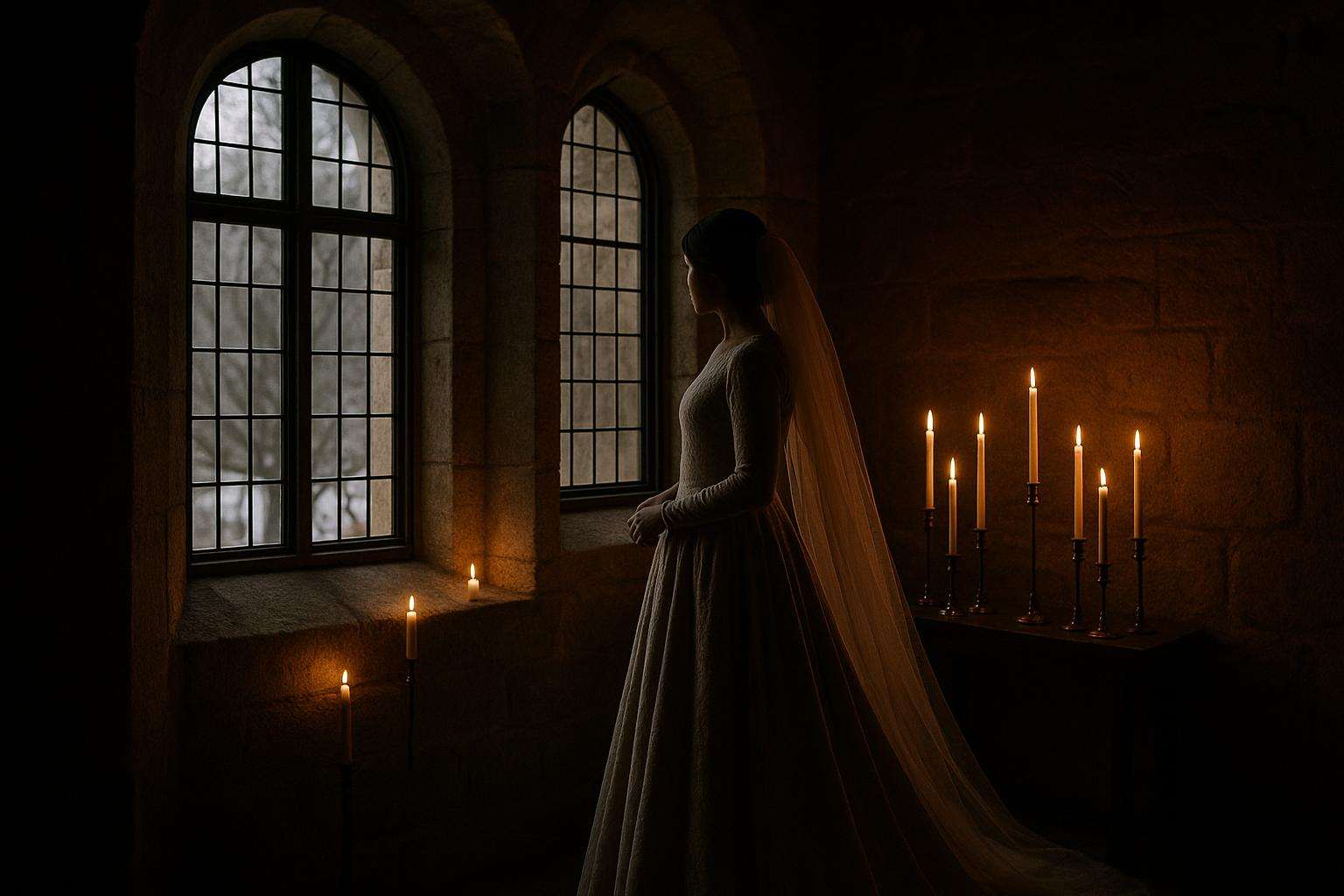
Velvet GownsLong SleevesCaped StylesMikado SilkCold-Season Bridal2026 Collections
The quick verdict
A curated edit of the warmest, most elegant cold-season gowns from real labels — organized by fabric warmth and formality so the right dress is easy to find.
- Best overall
- Monique Lhuillier Fall 2026 Long-Sleeve Lace Sheath — The most fully realized cold-season bridal vision in the luxury market — silk re-embroidered lace, high neck, long sleeve, winter-specific construction.
- Best value
- Justin Alexander Becca (Style 88186) in Stretch Crepe — At $1,500, the Becca delivers a designer-quality long-sleeve fit-and-flare with sheer lace overlay at a price point accessible to most mid-budget brides.
- Best for Outdoor winter ceremony with a warm indoor reception
- Pronovias GUENDY with Detachable Sleeves — Detachable sleeves and overskirt let you wear a formal covered look outdoors, then convert to a sleeveless mermaid silhouette for the reception without changing gowns.
How we evaluated
Each gown in this edit was selected against three criteria: documented cold-season fabric construction (velvet, Mikado, duchess satin, heavy lace, or full crepe sleeves); availability from a real named designer or authorized retailer as of 2026 collections; and genuine editorial differentiation — each style offers something the others do not. We drew on Bridal and Tuxedo Galleria's 2026 fabric trends editorial, The Knot's 2026 Real Weddings Study pricing data, designer lookbooks from Monique Lhuillier and Pronovias, and authorized retailer listings. Gowns with only a single warm detail (e.g., a lace overlay on a chiffon dress) were excluded. Pricing is retail at authorized US boutiques unless noted.
- Fabric Warmth. Does the primary fabric — velvet, Mikado, crepe, duchess satin, or structured lace — provide meaningful thermal substance for a cold-weather ceremony, or is the warmth purely visual?
- Silhouette Versatility. Can the gown perform across the full arc of a winter wedding day — outdoor ceremony, portrait session, indoor reception — with or without a cover-up?
- Real Availability. Is the gown purchasable from a named designer or authorized retailer in 2026, with verifiable retail pricing? We excluded concept or archive pieces unavailable to brides today.
- Photographic Quality. How does the fabric and silhouette read in the low, warm, directional light that characterizes winter venues — candlelight, tungsten ballroom light, soft grey outdoor light?
Rating scale: Ratings are on a 1–5 scale in 0.5 increments. 5.0 = exemplary in category, 4.0–4.5 = excellent with minor trade-offs, 3.5 = strong but meaningfully limited in one dimension.
Last verified .
At a glance
| # | Name | Rating | Best for | Pricing |
|---|---|---|---|---|
| 1 | Monique Lhuillier Fall 2026 Long-Sleeve Lace Sheath | 5.0 | The bride planning a formal winter ceremony — ballroom, cathedral, or historic house — who wants the most design-forward cold-season gown in the current luxury market | Price on request — Monique Lhuillier boutiques |
| 2 | Pronovias GUENDY — Mermaid Lace with Detachable Sleeves | 4.5 | The bride planning an outdoor winter ceremony followed by a warm indoor reception who wants a single gown that performs across both contexts without compromise | Up to ~$2,693 at authorized US boutiques (e.g. Alexandra's Boutique, NJ) |
| 3 | Justin Alexander Becca (Style 88186) — Stretch Crepe Long-Sleeve Fit-and-Flare | 4.5 | The mid-budget winter bride who wants a designer-quality long-sleeve gown at an accessible price without sacrificing construction quality or silhouette precision | $1,500 retail at authorized US boutiques |
| 4 | Maggie Sottero — Mikado Long-Sleeve Styles (Main & Sottero & Midgley Labels) | 4.0 | The bride who wants a Mikado long-sleeve gown from a trusted mid-market label and needs authorized boutique access outside major metro areas | $1,500–$3,500 (Maggie Sottero); $1,700–$4,000 (Sottero & Midgley) at authorized US retailers |
| 5 | Grace Loves Lace — Orla and Vita Long-Sleeve Lace Gowns | 4.0 | The editorial or boho-leaning winter bride who wants proprietary designer lace construction with long-sleeve coverage and is comfortable with an open-back silhouette trade-off | ~$2,500–$3,200+ USD (per StillWhite marketplace listings) |
| 6 | Karen Willis Holmes — Velvet and Illusion Lace Winter Collection | 4.0 | The winter bride who values understanding the technical reasoning behind fabric choices and wants a designer label with genuine cold-season expertise and velvet-bodice options | AUD $2,190–$13,000 (~$1,400–$8,400 USD equivalent); Wild Hearts collection from AUD $2,190 |
| 7 | Pronovias TINHA — A-Line Tulle and Lace with Long Sleeves | 3.5 | The bride planning a traditional or religious winter ceremony with strict coverage requirements who wants a classically proportioned, permanently elegant silhouette | Up to ~$2,693 at authorized US boutiques (e.g. Alexandra's Boutique, NJ); TINHA priced within the 2026 collection range |
Monique Lhuillier Fall 2026 Long-Sleeve Lace Sheath
The most fully realized cold-season gown in the current luxury market
Editor's pick
Monique Lhuillier's Fall 2026 collection — described by the house as "a celebration of romance through a modern lens" — centers on two constructions that are explicitly winter-built: a silk white re-embroidered lace high-neck long-sleeve sheath gown, and a silk Duchesse basque-waist corseted ballgown in ivory. The long-sleeve lace sheath is the standout for winter brides who want coverage without concession: the high neck eliminates any gap between gown and atmosphere, the long sleeves provide genuine arm coverage in a construction so refined it reads as design rather than warmth strategy, and the re-embroidered lace — three-dimensional, tactile, photographically extraordinary under low winter venue light — is the kind of detail that makes every image from the day look like it belongs in Vogue Brides. The silhouette is a clean column, which means the gown moves well for a reception and photographs crisply in both the tight interior shots of a chapel and the wider establishing frames of an outdoor winter landscape. Lhuillier's Fall 2025 collection introduced the market to her current winter vocabulary — hammered crepe ivory sheaths, 3D velvet bow details cascading over sculpted bodices — and the Fall 2026 work is the refinement of that language. Price is on request at Monique Lhuillier boutiques; the brand's retail footprint includes flagship stores and authorized multi-designer boutiques. For brides whose budget reaches this tier, this is the definitive cold-season choice in the current market. The weakness is the price tier: Monique Lhuillier is a luxury investment, and access requires a boutique appointment with a real budget conversation upfront.
Strengths
- High-neck long-sleeve construction eliminates all exposure gaps for outdoor ceremonies
- Re-embroidered three-dimensional lace photographs with extraordinary richness under winter candlelight and tungsten venue lighting
- Fall 2026 collection is explicitly current — not archive or concept — and available through authorized Monique Lhuillier boutiques now
- Silk Duchesse corseted ballgown variant offers a second silhouette option within the same winter-built collection
Weaknesses
- Luxury price tier (on request at boutiques) places this gown out of reach for most mid-budget brides; no accessible secondary market pricing at the time of writing
- Best for
- The bride planning a formal winter ceremony — ballroom, cathedral, or historic house — who wants the most design-forward cold-season gown in the current luxury market
- Pricing
- Price on request — Monique Lhuillier boutiques
Source: Fall 2026 Bridal Lookbook — Monique Lhuillier · Visit Monique Lhuillier Fall 2026 Long-Sleeve Lace Sheath
Pronovias GUENDY — Mermaid Lace with Detachable Sleeves
The ultimate convertible gown for a winter day that moves from ceremony to reception
The Pronovias GUENDY (from the 2026 Privée line) solves the hardest problem in winter bridal dressing: how to look fully covered and formally appropriate for an outdoor winter ceremony, then effortlessly sleeveless for the dancing portion of a warm indoor reception — without changing into a second gown. The GUENDY is a mermaid lace silhouette with a sweetheart neckline, detachable long sleeves, and a detachable overskirt. The detachable sleeves — available also as standalone accessories on the Pronovias site in satin, tulle, and dramatic puff designs — attach via a clean hidden mechanism that allows a single-motion removal between the ceremony exit and the reception entrance. The mermaid silhouette under the sleeves is fully formal in its own right; nothing about the removal reveals an incomplete look. This is the conversion mechanism that J. Majors Studio specifically recommends over built-in sleeves: unlike a gown engineered with sleeves from the start, a detachable design restores the original intended silhouette — and the original intended photograph — the moment the sleeves are removed. Pronovias was founded in Barcelona in 1922 and maintains global flagship stores and authorized US boutiques including Alexandra's Boutique in New Jersey, where the brand's pricing is documented at up to approximately $2,693 for authorized US retail. The GUENDY's lace is fine and intricate; it photographs beautifully in both the close-up ceremony frames and the wider dancing shots a reception photographer captures. The limitation is the mermaid silhouette: it requires ease of movement to be confirmed at a fitting, and brides who prefer a fuller ballgown or A-line shape will find better matches elsewhere in this list.
Strengths
- Detachable sleeves and detachable overskirt create two genuinely distinct looks from a single gown investment
- Mermaid lace construction is formally appropriate for the widest range of winter ceremony venues
- Pronovias is a founded-1922 Spanish label with documented US authorized retail and verifiable pricing (up to ~$2,693 at Alexandra's Boutique, NJ)
- Detachable sleeves are sold separately, meaning an existing Pronovias gown owner can add the conversion capability without purchasing a second gown
Weaknesses
- The mermaid silhouette requires a confident stride and is the least forgiving option for brides who discover at fittings that they prefer more ease of movement on the dance floor
- Best for
- The bride planning an outdoor winter ceremony followed by a warm indoor reception who wants a single gown that performs across both contexts without compromise
- Pricing
- Up to ~$2,693 at authorized US boutiques (e.g. Alexandra's Boutique, NJ)
Source: 2026 Collection — Pronovias · Visit Pronovias GUENDY — Mermaid Lace with Detachable Sleeves
Justin Alexander Becca (Style 88186) — Stretch Crepe Long-Sleeve Fit-and-Flare
The best long-sleeve designer value under $1,600
Best value
The Justin Alexander Becca (Style 88186) is the clearest demonstration in the current bridal market that long-sleeve construction and accessible pricing are not mutually exclusive. At a retail price of $1,500 — well below the $2,100 average documented in The Knot's 2026 Real Weddings Study — the Becca delivers a stretch crepe fit-and-flare silhouette with sheer lace overlaid on the crepe sleeve, a V-neckline, and a shaped illusion cathedral-length train. The stretch crepe fabric is the practical engine of the design: heavy enough to provide real warmth across the full arm, elastic enough to move naturally through the ceremony and onto the dance floor, and matte in a way that absorbs winter venue light rather than reflecting it, producing clean photographic frames that do not overexpose in candlelit settings. The lace overlay on the sleeves adds texture and visual interest without the alteration cost of a separate lace sleeve addition — a meaningful saving given that adding lace sleeves to a sleeveless gown typically costs $200–$500 in the US alteration market. Justin Alexander, founded in New York in 1946, carries the Becca through authorized retailers including Castle Couture in New Jersey, Ellie's Bridal Boutique across Virginia, Maryland, and DC, and The Wedding Plaza in New York. The brand also offers Mikado styles across its three labels — Justin Alexander, Justin Alexander Signature, and Sincerity Bridal — for brides whose ceremony venue and aesthetic lean toward structured fabric over crepe. The Becca's limitation is its silhouette: fit-and-flare is the correct shape for many winter brides but the wrong one for those who want a ballgown volume or a clean minimal column; consult your authorized retailer before assuming the fit will translate.
Strengths
- Retail price of $1,500 delivers designer long-sleeve construction well below the $2,100 US average per The Knot's 2026 Real Weddings Study
- Stretch crepe fabric provides genuine arm warmth and ease of movement simultaneously — no trade-off between insulation and dancing comfort
- Available through multiple named authorized US retailers (Castle Couture NJ, Ellie's Bridal VA/MD/DC, The Wedding Plaza NY)
- Lace overlay on the crepe sleeve adds the visual complexity of an illusion sleeve without a separate alteration cost
Weaknesses
- Fit-and-flare silhouette is unforgiving during alterations if the initial sizing is significantly off; budget for a minimum of two to three fittings and confirm ease of stride before committing
- Best for
- The mid-budget winter bride who wants a designer-quality long-sleeve gown at an accessible price without sacrificing construction quality or silhouette precision
- Pricing
- $1,500 retail at authorized US boutiques
Source: Becca: Long Sleeve Stretch Crepe Fit and Flare Dress (Style 88186) — Justin Alexander · Visit Justin Alexander Becca (Style 88186) — Stretch Crepe Long-Sleeve Fit-and-Flare
Maggie Sottero — Mikado Long-Sleeve Styles (Main & Sottero & Midgley Labels)
The most accessible Mikado construction in the authorized US market
Maggie Sottero (Salt Lake City) operates one of the broadest authorized retail networks in US bridal — reaching boutiques including Alexandra's Boutique, Formalities by Tracina Fisher, and Becker's Bridal Outlet — which makes it the most widely accessible mid-market label for brides who want a Mikado long-sleeve gown without having to locate a major city boutique. Maggie Sottero's main label prices Mikado gowns at approximately $1,500–$3,500 at authorized retailers; the sister label Sottero & Midgley commands $1,700–$4,000 for couture-adjacent constructions. Mikado's properties make it the defining cold-season bridal fabric after velvet: a heavy silk-satin twill that Karen Willis Holmes of KWH Bridal describes as carrying a "slight satin glossiness and twill texture" that holds structured silhouettes — corsets, fit-and-flare bodies, A-line skirts — with precision. For winter specifically, Mikado provides genuine thermal weight without the visual heaviness of velvet, photographs quietly and crisply under both indoor and outdoor winter light, and works as the foundation for a range of sleeve and neckline constructions. Maggie Sottero's personalization program allows brides to select sleeve length, neckline type, and coverage modifications as part of the gown-ordering process — a practical advantage for brides who want long-sleeve coverage but need modifications to fit religious ceremony requirements or personal aesthetic preferences. Bridal and Tuxedo Galleria's 2026 editorial notes that Mikado remains one of the two dominant winter bridal fabrics, alongside velvet, precisely because of its combination of structural reliability and visual sophistication. The weakness here is the breadth of the label's range: Maggie Sottero produces hundreds of styles annually, and the Mikado long-sleeve selection requires active filtering at boutique appointments; arriving without a clear brief risks consultation fatigue and an unfocused appointment.
Strengths
- Broadest authorized US retail network of any mid-market label — accessible without a major city boutique appointment
- Mikado silk construction provides genuine thermal weight and structural reliability across the full winter ceremony and portrait day
- Personalization program covers sleeve length, neckline modifications, and coverage customization — adaptable to religious or venue requirements
- Two label tiers (Maggie Sottero $1,500–$3,500; Sottero & Midgley $1,700–$4,000) span a wide budget range without changing retail touchpoint
Weaknesses
- The sheer volume of Maggie Sottero's annual range makes self-navigation difficult; brides should pre-identify 3–5 specific Mikado long-sleeve styles before their boutique appointment to avoid an unfocused consultation
- Best for
- The bride who wants a Mikado long-sleeve gown from a trusted mid-market label and needs authorized boutique access outside major metro areas
- Pricing
- $1,500–$3,500 (Maggie Sottero); $1,700–$4,000 (Sottero & Midgley) at authorized US retailers
Source: Unveiling the Truth: The Cost of Maggie Sottero Wedding Dresses — Maggie Sottero · Visit Maggie Sottero — Mikado Long-Sleeve Styles (Main & Sottero & Midgley Labels)
Grace Loves Lace — Orla and Vita Long-Sleeve Lace Gowns
The best long-sleeve lace option for the editorial and boho-leaning winter bride
Grace Loves Lace, founded in 2010 in Australia by Megan Ziems, has built a global following on the strength of its proprietary laces — the kind of intricate, three-dimensional fabric that does not appear in mid-market collections and reads unmistakably as designer work in photographs. For winter brides specifically, two styles from the current collection make a compelling case. The Orla is a long-sleeve lace gown featuring an exclusive 3D abstract lace construction, an open back, and a scalloped-edge neckline — the open back is the visual centrepiece of the Orla and the trade-off the bride must consciously accept: extraordinary rear-facing photography in exchange for one genuinely cold area of exposure. The Vita is a long-sleeve ivory stretch lace with pearlescent thread detailing throughout; the stretch construction means the warmth layer and the movement layer are the same fabric, with no trade-off between coverage and dancing comfort. Both styles are priced from approximately $2,500 to $3,200 and above (USD equivalent, per StillWhite marketplace listings and The Knot reviewer notes), placing them at the accessible upper-mid range of the designer market. Grace Loves Lace operates Australian boutiques and US stockists, and ships internationally; the brand's editorial aesthetic — natural light, stone and greenery settings, modern-heritage mood — maps closely onto what many contemporary winter brides are searching for. The limitation of this label in the winter context is the open-back construction on the Orla: if your ceremony involves significant outdoor time below 40°F, the exposed back is a genuine cold point that a cape or stole only partially addresses. The Vita is the more practical choice for very cold conditions.
Strengths
- Proprietary exclusive 3D lace constructions not available in mid-market or mass-market bridal — truly distinct photographs
- Vita's stretch lace provides simultaneous warmth coverage and ease of movement without layering trade-offs
- Pearlescent thread detailing in the Vita photographs with exceptional luminosity under winter venue lighting, both natural and artificial
- International shipping and global boutique access make the label reachable for brides outside major US bridal markets
Weaknesses
- The Orla's signature open back is a genuine cold point in sub-40°F outdoor conditions; brides planning extended outdoor winter ceremonies should evaluate the Vita or factor in a close-fitting cover-up at the back specifically
- Best for
- The editorial or boho-leaning winter bride who wants proprietary designer lace construction with long-sleeve coverage and is comfortable with an open-back silhouette trade-off
- Pricing
- ~$2,500–$3,200+ USD (per StillWhite marketplace listings)
Source: Grace Loves Lace Wedding Dresses — StillWhite · Visit Grace Loves Lace — Orla and Vita Long-Sleeve Lace Gowns
Karen Willis Holmes — Velvet and Illusion Lace Winter Collection
The most carefully articulated winter bridal philosophy from a named designer
Karen Willis Holmes (KWH Bridal) is an Australian designer established in 2000, with boutiques in Sydney, Melbourne, Brisbane, and Perth, whose winter collection editorial is one of the most technically grounded pieces of cold-season bridal content available from any brand. The winter collection page highlights four distinct fabric approaches: illusion lace long sleeves, velvet, satin, and structured lace — all presented with explanations of why each construction behaves differently in cold-weather settings. This matters practically: a KWH Bridal consultation arrives with fabric reasoning built in, which produces better appointment outcomes for brides who want to understand the "why" behind the gown they are choosing and not just the aesthetic. The label's retail pricing runs from AUD $2,190 (Wild Hearts collection) to AUD $13,000 (Bespoke), making it accessible at the entry point and genuinely couture at the top. The Wild Hearts collection entry price converts to approximately $1,400–$1,500 USD at current exchange, competitive with the Justin Alexander Becca. KWH's illusion lace long-sleeve styles pair a stretch mesh base (which moves naturally with the arm) with appliquéd lace patterns — the construction Margo West's bridal editorial describes as the ideal full-length illusion sleeve because stretch mesh prevents the pulling that can occur with non-stretch sheer bases. For velvet specifically, the brand offers velvet-bodice and velvet-overlay constructions in its formal range — an approach that delivers the warmth and visual richness of velvet without committing to full-length velvet fabric, which can feel heavy for a 10-hour wedding day. The limitation for US brides is boutique access: KWH Bridal's physical boutiques are in Australia, requiring US brides to either ship directly (the brand ships internationally) or locate an authorized US stockist.
Strengths
- Winter collection editorial provides technical fabric reasoning — velvet insulation, Mikado structure, illusion mesh stretch — that elevates the consultation and the purchase decision
- Wild Hearts collection entry pricing from AUD $2,190 (~$1,400–$1,500 USD) makes a founded-2000 designer label accessible at the mid-market price point
- Velvet-bodice and velvet-overlay constructions offer the warmth benefit of velvet without the weight of head-to-toe velvet fabric for a full wedding day
- International direct shipping brings the label within reach for US brides without requiring an Australian boutique visit
Weaknesses
- No physical US boutiques; US brides must order internationally or locate an authorized stockist, adding lead time and removing the tactile try-on experience central to bridal shopping
- Best for
- The winter bride who values understanding the technical reasoning behind fabric choices and wants a designer label with genuine cold-season expertise and velvet-bodice options
- Pricing
- AUD $2,190–$13,000 (~$1,400–$8,400 USD equivalent); Wild Hearts collection from AUD $2,190
Source: Mikado Wedding Dress & Gowns | Mikado Fabric — Karen Willis Holmes · Visit Karen Willis Holmes — Velvet and Illusion Lace Winter Collection
Pronovias TINHA — A-Line Tulle and Lace with Long Sleeves
The most classically modest long-sleeve silhouette for a formal winter ceremony
The Pronovias TINHA (2026 collection) is a full A-line tulle and lace bridal gown with a round neckline and long sleeves — a silhouette that has not been fashionable in the same way as the mermaid or fit-and-flare in recent seasons, and is all the more distinctive for that. The TINHA's round-neck long-sleeve construction reads as classically modest in the best sense: fully covered across the shoulders, neckline, and arms, suited to religious ceremonies with strict coverage requirements, and visually coherent whether photographed indoors in candlelight or outdoors in the flat grey light of a December morning. Pronovias's founding in Barcelona in 1922 gives the label a heritage credibility that positions the TINHA correctly: this is not a trendy silhouette, it is a considered and permanent one. The A-line volume is appropriate for ceremonies where the bride is standing at distance from seated guests — the full skirt reads in a room in a way that a mermaid or column does not. The tulle and lace combination provides a degree of warmth (the layers trap air) without the thermal substance of velvet or Mikado; for very cold outdoor ceremonies, a cover-up over the TINHA is still recommended. Pricing at US authorized boutiques including Alexandra's Boutique in New Jersey is documented for the Pronovias range at up to approximately $2,693; the TINHA as a collection piece sits within that range. The limitation of this style is its conservatism: the round-neck long-sleeve A-line is the most covered option in this list and will not satisfy brides looking for any back interest, plunge, or illusion detail. For the bride whose brief is "fully covered, formally correct, and permanently elegant," the TINHA is an excellent answer.
Strengths
- Round neckline and full long-sleeve construction satisfies the strictest religious ceremony coverage requirements
- A-line tulle volume reads powerfully in large ceremony spaces — churches, ballrooms, formal halls — at a distance from seated guests
- Pronovias's 1922 founding and global authorized retail network provides established boutique access and consistent sizing across the range
- Classic silhouette ages well in photographs — the TINHA will not look dated in ten years in the way trend-specific designs sometimes do
Weaknesses
- The conservative round-neck long-sleeve A-line offers no back interest, plunge detail, or illusion element; brides who want any visual drama at the back, shoulder, or neckline should look at the GUENDY or a Grace Loves Lace style instead
- Best for
- The bride planning a traditional or religious winter ceremony with strict coverage requirements who wants a classically proportioned, permanently elegant silhouette
- Pricing
- Up to ~$2,693 at authorized US boutiques (e.g. Alexandra's Boutique, NJ); TINHA priced within the 2026 collection range
Source: 2026 Collection — Pronovias · Visit Pronovias TINHA — A-Line Tulle and Lace with Long Sleeves
Which should you choose?
The bride planning a December ballroom wedding · Formal indoor venue
Goal:Maximum elegance in candlelight without needing a cover-up
Monique Lhuillier Fall 2026 Long-Sleeve Lace Sheath — The re-embroidered lace and high-neck construction reads as the most elevated and deliberately cold-season choice for a formal ballroom setting, with no cover-up required and no warmth compromise.
The bride planning a mountain or outdoor winter ceremony · Outdoor or partially-outdoor winter venue
Goal:Genuine warmth for outdoor ceremony plus freedom for indoor reception
Pronovias GUENDY — Mermaid Lace with Detachable Sleeves — The detachable sleeves and overskirt solve the warmth-to-reception conversion problem cleanly, without a second gown or a rushed change.
The mid-budget bride who wants a designer-quality long-sleeve gown · Mid-market bridal buyer
Goal:Designer construction at or under $1,600
Justin Alexander Becca (Style 88186) — Stretch Crepe Long-Sleeve Fit-and-Flare — At $1,500, the Becca is the most accessible designer long-sleeve option with genuine construction quality, wide authorized retail coverage, and a silhouette that works across indoor and transitional winter settings.
Frequently asked
What is the warmest fabric for a winter wedding dress?
Velvet is the warmest bridal fabric by a clear margin. Its dense pile construction traps heat more effectively than any woven alternative — Mikado silk, crepe, or duchess satin — and it photographs with extraordinary richness under the low, golden light of winter venues. For brides who want genuine warmth without the visual weight of head-to-toe velvet, Mikado silk is the next best choice: a heavy silk-satin twill that Karen Willis Holmes of KWH Bridal describes as carrying a "slight satin glossiness and twill texture" that holds structured silhouettes — corsets, fit-and-flare bodies, A-line skirts — with precision. Karen Willis Holmes describes Mikado as "perfect for wedding dresses with corsets, fit-and-flare silhouettes, and A-line skirts" — all of which perform beautifully in cold-weather settings. If your ceremony is indoors, crepe and duchess satin are equally appropriate; if any part of your day is outdoors, velvet or Mikado with a warm cover-up is the standard recommendation from most bridal consultants.
Can I wear a long-sleeve wedding dress for warmth in winter?
Yes, and long sleeves are among the most elegant warmth solutions available to a winter bride. The key is sleeve construction: full fitted crepe sleeves (as in the Justin Alexander Becca, Style 88186) provide genuine insulation and a clean, sculptural line; illusion lace sleeves built on stretch mesh add coverage while preserving the appearance of bare skin; detachable sleeves from brands like Pronovias and Sincerity Bridal let you add sleeve coverage for the ceremony and remove it before the reception. Wedding Shoppe's 2026 long-sleeve editorial notes that sleeves add "refinement to any bridal look, creating a silhouette that feels graceful, polished, and effortlessly elegant" — which is as true for January as it is for October. The average US wedding dress costs approximately $2,100 according to The Knot's 2026 Real Weddings Study; long-sleeve styles typically land at or just above that average due to added construction complexity.
What is a caped wedding dress and is it right for a cold-weather wedding?
A caped wedding dress either incorporates a built-in attached cape as part of the gown's design, or is styled with a separate detachable cape worn over the shoulders as a cover-up. For winter weddings, the detachable variant is the expert-recommended choice: it provides full arm and shoulder coverage for the outdoor ceremony and portraits, then removes cleanly before reception dancing to reveal the original gown silhouette. Bridal and Tuxedo Galleria calls the detachable bridal cape "the signature of the 2026 winter wedding dress," and J. Majors Studio specifically notes the advantage over built-in sleeves — a cape lifts away the moment you step inside, preserving the dress's intended silhouette for the evening photographs. Capes are available from David's Bridal, Grace + Ivory, and Bella Mera Bridal in chiffon, lace, satin, and faux-fur styles at varying price points.
How should I choose between a velvet and a long-sleeve winter wedding gown?
The decision is primarily one of formality, silhouette preference, and venue. Velvet reads as the more dramatically seasonal choice — deeply textured, visibly winter-specific, and extraordinarily photogenic under candlelight or tungsten venue lighting. It suits ballrooms, historic houses, and formal church ceremonies. A long-sleeve gown in Mikado or crepe is more versatile across venue types and season registers: it reads formal without being overtly seasonal, photographs beautifully in both indoor and outdoor winter light, and is more comfortable for a reception with dancing. If warmth is the primary driver and your ceremony is outdoors, a long-sleeve gown in a heavy fabric is the more practical choice; velvet is often better as an accent — in the bodice, sleeves, or a detachable overskirt — than as a full-length fabric for an active wedding day. Pronovias, Justin Alexander, and Maggie Sottero all offer both velvet-accent and full long-sleeve styles across 2025–2026 collections.
What is the best price range for a winter wedding dress?
The range is wide enough to suit every budget. At the accessible end, David's Bridal offers winter-appropriate styles including long-sleeve options and velvet accents from roughly $400–$1,500. Mid-market labels like Maggie Sottero price Mikado gowns at approximately $1,500–$3,500 at authorized retailers; the sister label Sottero & Midgley commands $1,700–$4,000 for more couture-adjacent constructions. Justin Alexander's long-sleeve styles start around $1,500 for the Becca stretch-crepe fit-and-flare; Grace Loves Lace long-sleeve lace gowns range from approximately $2,500 to $3,200 and above. At the designer tier, Pronovias tops out around $2,693 at authorized US boutiques such as Alexandra's Boutique in New Jersey; Monique Lhuillier and Vera Wang Haute styles are priced on request. According to The Knot's 2026 Real Weddings Study, the average US bride spends approximately $2,100 on a wedding dress — a useful benchmark for allocating budget across the winter gown market.
Do I need a cover-up over a winter wedding dress for an outdoor ceremony?
For a fully outdoor winter ceremony — particularly in temperatures below 50°F — a cover-up is strongly recommended regardless of sleeve length. Even a long-sleeve gown leaves the bride exposed at the shoulders, neckline, and back when standing outside for ceremony and portrait sessions. Bridal Creek, an outdoor wedding venue in Oklahoma, advises that sub-50°F conditions require active warmth solutions (heated tents, warm-drink stations) for guests; for the bride, a faux-fur stole or detachable bridal cape adds the critical outdoor warmth layer without altering the dress. The practical standard, per Grace + Ivory's editorial guidance, is: invisible thermal underlayer (seamless bodysuit or fleece-lined tights) plus a detachable cape or faux-fur stole for ceremony plus a clean removal before the reception. This three-layer approach handles temperatures down to 35–40°F without compromising the gown's silhouette for indoor photographs.