The Wedding Dress
Ivory vs. White Wedding Dress: Which Shade Suits You?
The skin-tone test, how lighting and fabric change the read, and why most gowns are not stark white.
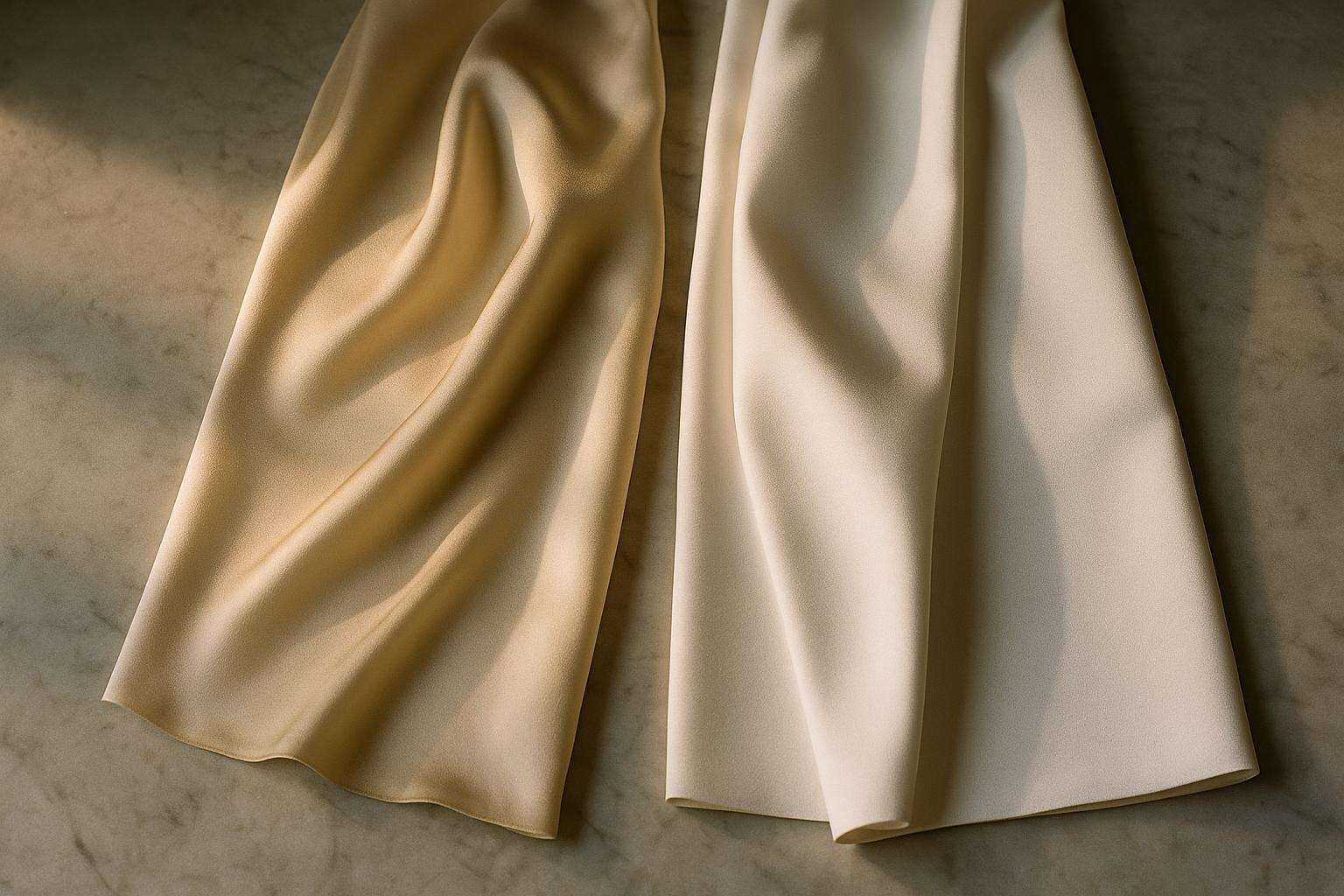
Most wedding gowns are not stark white — and for good reason. Ivory reaches its warmth through actual pigment rather than bleaching, making it more flattering on a wider range of skin tones and more forgiving under flash photography. The right shade comes down to three factors: your undertone, your venue's light, and your designer's specific dye specification — because a Maggie Sottero ivory and a Vera Wang ivory are not the same shade.
What Is the Actual Difference Between Ivory and White Wedding Dresses?
Walk onto a salon floor in 2026 and you will find pure white, ivory, soft ivory, diamond white, champagne, blush, and a handful of house-named proprietary shades that resist easy categorization. The distinction between the first two is the most misunderstood — and it begins not at the eye, but at the dye bath.
True white is created by bleaching synthetic fibers to remove all warm pigment, then introducing optical brighteners: compounds that absorb ultraviolet radiation and re-emit it as visible blue-white light. The result is a dress that reads as brilliant and crisp in person — and that can "blow out" under a photographer's flash, losing all embroidery, lace, and beading detail as the camera sensor overexposes the brightest region of the frame.
Ivory, by contrast, derives its warmth from actual pigment — cream, yellow, or a golden dye base baked into the fiber rather than chemically stripped away. Because it absorbs rather than reflects maximum light, it holds tonal range under flash, keeping texture and embellishment visible in photographs.
The further shades follow a logic of their own. Diamond white sits between stark white and ivory on the warmth spectrum — cooler than ivory, brighter than stark white, and popular in high-sheen duchess satin where it produces an Old Hollywood glow. Soft ivory dips warmer still, flattering tulle skirts by lending creaminess to voluminous fabric without muddying translucency. Champagne introduces visible golden warmth, making it the instinctive choice for fall ceremonies and rustic-outdoor settings.
Maggie Sottero's wedding dress color guide formalizes this into five distinct colorways — white, ivory, soft ivory, champagne, and blush — noting that three or more layers of lining, satin, tulle, and lace interact to produce a composite shade that can vary gown-to-gown even within the same label.
Which Wedding Dress Color Suits My Skin Tone?
The wrist-vein test is the starting point every bridal stylist reaches for, and it translates directly to gown color. In natural daylight, look at the inside of your wrist:
- Blue or purple veins — cool undertones. Stark white may amplify a washed-out or ghostly read on fair cool-toned skin because there is no warm buffer between the bleached fabric and the complexion. Ivory's yellow-gold pigment creates a gradual warm bridge that adds perceived luminosity.
- Green veins — warm undertones. Ivory's golden base harmonizes with yellow-toned and olive complexions. On warm skin, a blue-tinted stark white can produce an unintentional jaundiced contrast.
- Indeterminate (both) — neutral undertones. Both ivory and white are viable. Stylists at Style-Architects Weddings recommend holding swatches against the collarbone in natural light and letting personal preference be the deciding factor.
For deep and dark skin tones, the calculus shifts. True Society Bridal Shops notes in its bridal guides that pure white "often looks best on medium or darker skin tones, as the bright nature of this shade can wash out fairer brides." Champagne also flatters deep skin by complementing richness rather than contrasting with it.
A secondary shortcut that reinforces the vein test: the metal you wear every day. If gold consistently makes your skin appear more alive, ivory is the directive signal. If silver flatters, white belongs in your fitting lineup.
| Shade | Undertone Basis | Best Skin Tone Match | Photo Behavior | Ideal Silhouette / Fabric |
|---|---|---|---|---|
| Stark White | Cool (bleached + optical brighteners) | Medium to dark skin; warm-undertone fair skin | Risk of blow-out on embellishment under flash | Clean satin; minimalist gowns |
| Diamond White | Slightly warm cool | Neutral to warm undertones; medium skin | Luminous without full blow-out risk | High-sheen duchess satin; A-line |
| Ivory | Warm (yellow-cream pigment) | Cool to neutral undertones; fair to medium skin | Holds texture detail under flash | Lace; fit-and-flare; mermaid |
| Soft Ivory | Warm, deeper | Warm, olive, or neutral undertones | Rich, dimensional; warm-light venues | Tulle ball gowns; voluminous skirts |
| Champagne | Golden warm | Warm, olive, deep skin | Deepens lace contrast; photographs warmly | Rustic, garden, fall ceremonies |
Does an Ivory or White Wedding Dress Photograph Better?
This is the question photographers wish more brides asked before ordering, not after. The short answer: ivory is the safer choice for most lighting conditions, and the physics explain why.
Optical brighteners in stark-white fabric function essentially as a camera flare on the gown itself. Under studio flash or direct midday sun, the sensor overexposes the white's peak brightness, erasing the very lace, beading, and hand-sewn embellishments that justified the gown's price. Ivory absorbs more light, holds its tonal range, and lets the camera see every stitch.
The difference is most dramatic at two extremes:
Golden-hour and candlelit ceremonies. Warm color temperature (roughly 2,700–3,200 K for candle and tungsten light) shifts ivory toward a luxurious cream — a read that appears deliberately rich. The same warm light shifts stark white yellow, an effect that looks accidental rather than beautiful. Estelle Bridal's editorial advisories note this as the single most consistent pattern in post-ceremony photography reviews.
Fluorescent salon lighting. Its green-blue spectrum spike makes ivory appear sickly or mustard-yellow, which is why brides should request a natural-light fitting area or take swatches outside before deciding. The salon read is not the venue read.
How Do Vera Wang, Maggie Sottero, and Pronovias Define Their Shade Vocabulary?
Designer dye specifications do not follow a universal standard, which means two gowns both labeled "ivory" can look visibly different side by side on the rack.
Vera Wang treats each shade as a distinct dye-and-fabric specification. Her Haute collections have included "ivory silk charmeuse," "ivory silk faille," and "soft white Italian crepe" as three separate colorways in a single season — each visually differentiated by fabric weight and finishing process. Celebrity commissions illustrate the range: Vanessa Hudgens wore a custom light ivory charmeuse bias-cut cowl-neck slip; Hailey Bieber's reception gown was ivory silk charmeuse in a bias cut; other clients have worn ivory silk faille ball gowns with hand-pleated bodices.
Maggie Sottero formalizes five colorways — white, ivory, soft ivory, champagne, and blush — and is one of the few houses to explain publicly how composite shade works: lace thread color, glitter-tulle layers, fabric sheerness, and silhouette all shift the perceived tone even within a single colorway label. Their published guidance offers a practical rule: ivory excels on lace and fit-and-flare silhouettes because warm pigment deepens texture shadows; diamond white works best on clean satin for Old Hollywood sheen; soft ivory flatters tulle by lending creaminess without muddying translucency.
Pronovias describes ivory and cream as "warmer tone alternatives" to classic white and positions champagne as a further step toward golden warmth. Real brides on Weddingbee's community boards have noted that a Pronovias champagne lining "brings out lace detail and photographs better" than ivory on warmer complexions — precisely because the golden base increases contrast with the lace thread.
Essense of Australia distinguishes ivory from its proprietary "moscato" shade, noting that ivory produces "a bit softer and more subtle" lace, while champagne and moscato reveal the same lacework more dramatically by increasing contrast between the golden ground and the thread.
Rachel Allan flags a practical shopping reality worth knowing: many designers label gowns "ivory" when the finished shade sits closer to eggshell or off-white, meaning the label on an order form may not map cleanly onto what the eye perceives in the salon. A seasoned stylist will know which houses run warm and which run cool within their ivory range.
How Do I Assess the Right Shade in a Bridal Salon?
The salon environment is one of the most hostile conditions for bridal color assessment — fluorescent tubes, white walls, and mirrors conspire to misrepresent nearly every shade. Five practices that bridal stylists consistently recommend:
- Photograph in the salon, then step outside. Hold the dress against your collarbone and take two photos — one inside under salon light, one in natural daylight. Trust the outdoor version; the indoor one is diagnostic, not definitive.
- Request the natural-light alcove. Most established boutiques — including multi-location chains like True Society — maintain a window-adjacent fitting area because experienced stylists know fluorescent distortion is real. If a salon has no such space, take swatches to a doorway.
- Wear your wedding-day makeup shade. Foundation undertone shifts the effective contrast between skin and gown more than most brides anticipate. Come to the appointment with a close approximation of the finished look.
- Compare each shade against your collarbone, not against each other. Ivory next to white always appears yellow; white next to ivory always appears stark. Those perceptions are optical illusions of simultaneous contrast. The only relevant reference is your skin.
- Ask the stylist which houses run warm or cool in their ivory. A Maggie Sottero ivory and a Pronovias ivory are not the same dye. A seasoned stylist's institutional memory of each atelier's color behavior is one of the most underused resources on the salon floor.
One Fine Day Bridal advises brides who remain genuinely undecided after daylight swatching to bring a trusted friend with an eye for color — not for validation, but for the specific question: "Against my skin in this light, does one of these make me look more alive?" That answer almost always arrives within sixty seconds.
Considered Counsel
Frequently asked
What is the actual difference between ivory and white wedding dresses?
The difference is more than a shade — it is a fundamental dye and fabric chemistry question. True white is produced by bleaching synthetic fibers, often introducing optical brighteners that absorb UV light and re-emit it as a cool blue-white glow; under flash photography, this can cause embellishment and lace detail to "blow out." Ivory reaches its creamy hue through warm-toned pigment — cream, yellow, or a golden dye base — which holds texture and dimension under the same flash. Designers further subdivide these into named proprietary shades: Maggie Sottero formally recognizes white, ivory, soft ivory, champagne, and blush as distinct colorways, each interacting differently with the layers of lining, satin, tulle, and lace that make up a finished gown.
Which wedding dress color suits my skin tone best?
The most reliable starting point is the wrist-vein test, recommended by bridal stylists at True Society and Ellee Couture Boutique. Under natural daylight, veins that read blue or purple indicate cool undertones — and those brides often find ivory more flattering because its warm pigment adds luminosity rather than contrast. Veins that appear green signal warm undertones, where ivory's golden base harmonizes with the skin. For deep and dark skin tones, stark white or diamond white can be a striking, intentional choice, as True Society notes it "often looks best on medium or darker skin tones." The jewelry shortcut reinforces this: if gold consistently makes your skin appear more alive, ivory is the directive signal; if silver flatters, white is worth trying.
Does an ivory or white wedding dress photograph better?
Ivory photographs with more nuance in most lighting conditions. Stark white fabrics contain optical brighteners that cause sensors to overexpose the brightest areas of the frame, erasing lace, beading, and embroidery detail in the process. Ivory absorbs more light and holds its tonal range, keeping those details visible in both print and digital. The advantage is most pronounced in two extremes: golden-hour outdoor ceremonies, where warm color temperature (2,700–3,200 K) enriches ivory to a luxurious cream while tinting stark white yellow; and flash-lit reception interiors, where optical brighteners in white fabric can produce a faint blue-violet cast on camera. That said, an experienced photographer can compensate — but giving yourself the safer shade removes one variable.
Why does my ivory dress look yellow in salon lighting?
Fluorescent salon lighting has a pronounced green-blue spike in its light spectrum that shifts warm tones — including ivory — toward yellow or dull mustard, misrepresenting the gown completely. Estelle Bridal advises all brides to request a natural-light fitting area or to step outside the salon with fabric swatches before deciding, because the fluorescent read is not the read you will see at your venue. A second factor is simultaneous contrast: when ivory is placed directly next to stark white, the eye exaggerates the yellow difference between them. The solution is always to hold each shade against your collarbone in natural light — the relevant reference is your skin, not the adjacent gown.
How do designers like Vera Wang and Maggie Sottero define ivory vs. white?
Each house maintains its own proprietary shade system, and they do not map cleanly onto each other. Maggie Sottero formally categorizes gowns as white, ivory, soft ivory, champagne, and blush, noting that fabric weight, lace thread color, tulle sheerness, and lining layers all shift the composite shade — so a Maggie Sottero "ivory" may differ visually from another house's "ivory." Vera Wang's Haute collections treat each color as a distinct dye specification: "ivory silk charmeuse," "ivory silk faille," and "soft white Italian crepe" are three separate shades, not interchangeable. Pronovias describes ivory and cream as "warmer tone alternatives" to classic white, with champagne as a further warm step. Rachel Allan notes that many designers label gowns "ivory" when the finished shade sits closer to eggshell or off-white, meaning the order-form label may not match what the eye perceives in the salon.
Can a fair-skinned bride wear a white wedding dress without looking washed out?
Yes — with some caveats. The risk is greatest for fair brides with cool undertones, where stark white can create a high-contrast pairing that reads as ghostly rather than luminous, because there is no warm buffer between the bleached fabric and a cool-toned complexion. Ivory addresses this by introducing a gentle warm pigment that acts as a tonal bridge. However, fair brides with warm or neutral undertones may find that a carefully chosen diamond white — which sits between stark white and ivory on the warmth spectrum — works well, particularly in satin finishes that reflect light differently from matte crepe. The definitive test is always daylight against the collarbone, not the flattest salon fitting room.
What shade of wedding dress works best for an outdoor garden ceremony?
Ivory and soft ivory are the traditional outdoor choices, and the physics support the preference. Garden ceremonies typically combine natural daylight — which shifts throughout the day from a cooler morning white to a warmer golden afternoon — with dappled, directional light from foliage. Ivory gowns absorb and warm with the light, reading as richer and more intentional as the day progresses. Stark white can appear starkly bright under midday sun and take on a greenish tint in the shade of trees. Champagne, particularly in fall or rustic settings, is a further warm option that Pronovias stylists and Weddingbee forum members have noted photographs especially well in wooded or vineyard environments. Diamond white is a strong choice if you want luminosity without the optical-brightener risk of stark white.