The Wedding Dress
Mermaid Wedding Dress: Fit, Flattery & the Trumpet Difference
How the mermaid silhouette hugs to the knee before flaring, why it differs from a trumpet, which body types wear it best, and what every bride must know about mobility and construction before she says yes.
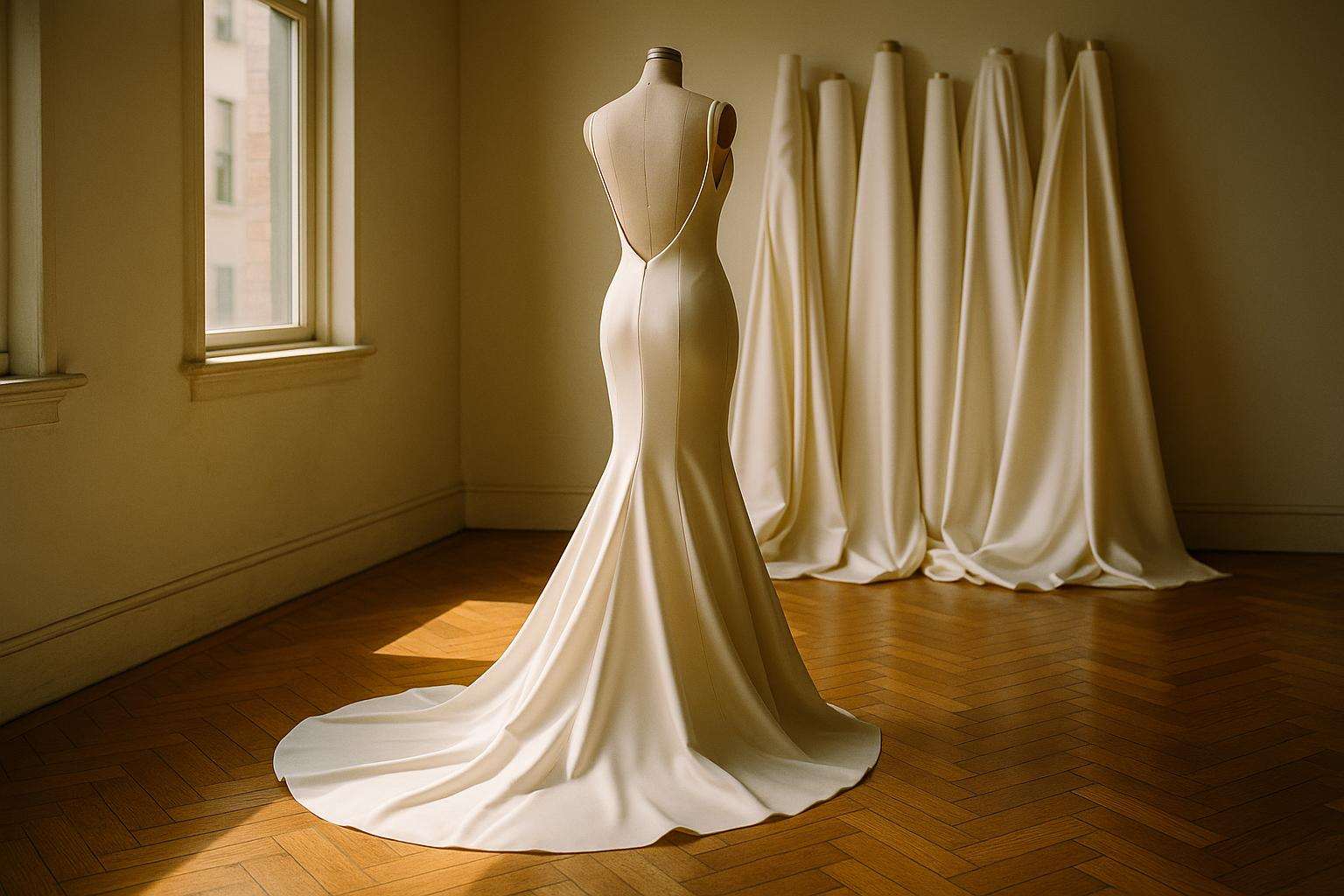
A mermaid wedding dress hugs the body from bust through thigh and flares dramatically at or below the knee — this below-knee break point is what separates a true mermaid from a trumpet. It is among bridal fashion's most structured, precise, and photogenic silhouettes, best suited to hourglass, athletic, and tall figures, but requiring honest assessment of mobility, fabric, and alteration cost before committing.
What exactly is a mermaid wedding dress, and what makes it different?
The mermaid wedding dress takes its name from the silhouette it creates: body-skimming through the bust, waist, hips, and thighs, then fanning into a full flare at or below the knee — the classic fishtail. That below-the-knee break point is the definition. Any gown that flares earlier belongs to a different silhouette family.
The mermaid is among the most structured and technically precise constructions in bridal design. The fitted section must trace the body with exceptional accuracy — which means it is one of the most demanding silhouettes to alter, and one of the most punishing of an ill-fitting sample. It also delivers maximum red-carpet drama: the tightly fitted line through the thighs and the sudden release into volume creates a kinetic effect as the bride moves that no other silhouette quite replicates.
For 2026, designers across every price tier — from Stella York to Pronovias to Galia Lahav — continue to make the mermaid one of their most prominent silhouettes, updated with modern fabrics, architectural seaming, and restrained embellishment that reads as heritage rather than costume.
What is the real difference between a mermaid and a trumpet wedding dress?
The terms are misused interchangeably in retail settings often enough that a bride can walk out of a boutique convinced she has tried on a mermaid when the gown was, in fact, a trumpet. The distinction matters — both in how the dress looks and in how it feels to wear it all day.
| Feature | Mermaid | Trumpet |
|---|---|---|
| Flare begins | At or below the knee | Around mid-thigh |
| Drama level | Bold, high-fashion, editorial | Romantic, softer, fluid |
| Stride restriction | Significant — small steps required | Moderate — closer to A-line mobility |
| Best for | Hourglass, tall, athletic frames | Hourglass, pear, petite frames |
| Alteration complexity | Very high — flare-point precision critical | High — but more forgiving at the knee |
| Sitting & dancing ease | Challenging — requires technique | Easier — skirt releases sooner |
A trumpet gown keeps the body close through the hip and upper thigh, then releases into volume at mid-thigh — a softer, more fluid transition that still reads as fitted and sleek but allows a more natural stride and makes sitting and dancing considerably less effortful. Many bridal stylists describe the trumpet as the "practical mermaid" — you get much of the drama with meaningfully more freedom. According to True Society Bridal Shops, brides who love the mermaid aesthetic but spend their receptions on the dance floor are routinely steered toward the trumpet after a candid conversation about the difference.
The mermaid holds the fitted line through the knee before releasing. That extra fitted length is everything: it creates the signature dramatic flare, but it also means the bride takes smaller steps, cannot take stairs at full pace, and will find sitting down a carefully managed act rather than a casual one. These are not dealbreakers — they are simply facts to weigh before the appointment.
What body types does the mermaid wedding dress suit — and who should pause before choosing it?
The mermaid is often described as flattering for "all body types" in bridal marketing copy, which is generous but not quite accurate. The silhouette has genuine strengths for certain figures and real considerations for others.
Hourglass figures are the textbook match. The mermaid traces balanced bust-to-hip proportions and cinches a defined waist — it is doing exactly what the silhouette was designed to do, with almost no visual trickery required.
Athletic or rectangular frames benefit from the curves the silhouette creates. Strategic ruching at the hips, off-the-shoulder or portrait necklines, and vertical panel seaming can all introduce the suggestion of an hourglass within a mermaid cut. Maggie Sottero notes that thoughtful seaming placement is often more effective than shaping undergarments for this figure in a fitted gown.
Tall brides carry the elongated fitted section most naturally. On a tall frame, the extended torso-to-knee line reads as commanding rather than overwhelming, and long trains are proportionate rather than excessive.
Petite brides should approach with care. If the flare point falls at or below the knee — as a true mermaid demands — the proportion of fitted fabric relative to total gown height can read as bottom-heavy on a shorter frame. A trumpet, where the flare releases at mid-thigh, is typically more proportionate. Ask your stylist to pin up the hem before you make a decision so you can see exactly where the break falls on your body, not on the sample.
Apple-shaped figures may find the snug fit around the midsection uncomfortable in wear and unforgiving in the silhouette. Empire waist and A-line gowns are routinely recommended as more flattering alternatives by bridal consultants.
What fabrics are used in mermaid wedding dresses, and how do they affect fit and comfort?
Fabric is not a secondary choice in a mermaid gown — it is structural. The cloth determines how the silhouette holds, how the bride moves through the day, and how the gown photographs.
Stretch crepe — sometimes sold under brand names like "Regal crepe" — is the dominant fabric in modern mermaid construction. It is a medium-stretch, matte-finish cloth that sculpts the body without boning, carries a heavier drape that creates smooth lines, and photographs beautifully: the matte surface does not catch light the way satin does, eliminating the seam shadows and surface variations that can show on structured silhouettes in edited images. According to Maggie Sottero, stretch crepe has been described by designers as feeling "as supportive as shapewear" — the compression it provides means many brides in well-fitted stretch crepe mermaid gowns skip a shaping layer entirely. The honest trade-off: thick crepe retains body heat, making it a less comfortable choice for warm-weather or outdoor ceremonies.
Structured lace — Chantilly, French lace, or geometric appliqués over an underlining fabric such as mikado or satin — creates a more ornate silhouette. Fully boned lace provides its own support but restricts movement further than crepe. Modern lace applications on mermaid gowns lean toward asymmetrical placement and 3D raised embroidery rather than all-over coverage, which reads as current rather than vintage. Lace gowns require specialist dry cleaning to protect beading and motifs — a care cost to factor into the lifetime price of the gown.
Mikado silk is also common in the category: stiffer than crepe with a subtle sheen, it holds the mermaid silhouette rigidly and drapes beautifully in photographs, but it trades flexibility for structure. For warm-weather or destination weddings, lightweight stretch crepe or chiffon over a fitted liner is the most comfortable choice for a mermaid cut.
How much do mermaid wedding dress alterations cost, and what should brides budget for?
Mermaid and trumpet gowns are among the most technically demanding silhouettes to alter in bridal tailoring. The fitted line must track the body precisely — even a half-inch deviation at the hips or thighs can restrict movement or break the visual line of the silhouette in a way that is immediately visible. This is not the territory for a general alterations tailor; book a specialist bridal seamstress.
Common alterations on a mermaid gown include taking in or letting out the bodice and hip seams, adjusting the flare point (raising or lowering where the skirt releases), hemming — which on a full lace or beaded hem costs significantly more than a simple satin hem — and adding a bustle for the reception. According to Zola's alteration cost guide, bustle alterations run $100–$350 for most gowns, with elaborate multi-layer lace or beaded trains reaching $400 or more. Converting a simpler silhouette to a fully fitted mermaid cut can cost $500–$1,000. Budget for two to three fittings beginning eight to ten weeks before the wedding.
For the bustle specifically: because the mermaid skirt is fitted through the knee, standard American-style bustles — which loop fabric at the waist — can add awkward bulk at the back and disrupt the silhouette. Bridal tailors most commonly recommend a French bustle (or under-bustle), which tucks the train underneath the skirt for a smooth, clean line through the reception. A practical note from experienced bridal professionals: have your maid of honor attend the final fitting and record video of every hook point being demonstrated. Mermaid bustles with multiple attachment points are notoriously difficult to execute under pressure on the morning of the wedding, and a video walkthrough is worth far more than written instructions.
Which mermaid wedding dresses are worth considering in 2026, across price tiers?
Three designers illustrate the breadth of what the mermaid silhouette offers across the market in 2026.
Stella York (a label under Essense of Australia, founded 2011) delivers designer-quality mermaid gowns at accessible price points, with styles typically starting around $1,200 at authorized boutiques. Style 6654 combines lace, tulle, and Regency organza over a sweetheart neckline, with silver and ivory beading throughout, a full tulle skirt, cathedral train, horsehair hemline, and plus-size availability. Style 6473 pairs beaded Ivory Silver Lace over Ivory Dulce Satin with Porcelain Tulle; original retail is approximately $1,899, with sample sales offering significant reductions.
Pronovias, the Barcelona-founded bridal group with gowns in sizes 0–28 through its global boutique network, offers the ROMENTINA (2025 Collection) — a mermaid in luxurious satin with a sleeveless sweetheart neckline, waist gathering, side slit, and removable rhinestone tulle sleeves — starting at $2,770. The Atelier Pronovias AGLOS (2026 Collection) is a mermaid in crepe with a V-neckline, available by appointment at pricing on request. Pronovias recommends ordering nine to twelve months before the wedding date to allow time for production and alterations.
Galia Lahav, the Israeli couture house founded in Tel Aviv in 1984, is the reference point for the mermaid at its most uncompromising. The Freya is a hand-beaded 3D lace mermaid with delicate scoop neckline; the Evangeline pairs a baroque strapless corset with an elongated mermaid skirt, both in embroidered French lace; the Maya is built on 3D floral embroidery over silk tulle with off-the-shoulder straps and a caviar tulle train. Ready-to-order couture ranges from $9,000 to $15,000; bespoke begins at $15,000. Galia Lahav gowns are available through authorized retailers including Kleinfeld in New York.
Considered Counsel
Frequently asked
What is the difference between a mermaid and a trumpet wedding dress?
The key distinction is where the skirt flares. A true mermaid gown hugs the body through the bust, waist, hips, and thighs and releases into volume at or below the knee — so the fitted silhouette continues well past the hip. A trumpet gown flares earlier, around mid-thigh, creating a softer, more fluid transition that allows easier movement and a less restrictive stride. Retailers sometimes use the terms interchangeably, but on the salon floor the difference is tangible: mermaid requires smaller steps and makes sitting less comfortable; trumpet feels closer to an A-line. Brides who want mermaid drama with more practical mobility are often steered toward the trumpet by experienced bridal stylists. When trying gowns, ask the consultant to be explicit about which term the label uses and where the flare point falls on your actual frame before committing.
What body type looks best in a mermaid wedding dress?
Hourglass figures are the textbook match: the silhouette traces balanced bust-to-hip proportions and cinches a defined waist for a results-oriented fit that needs almost no visual trickery. Athletic or rectangular frames benefit from the illusion of curves that strategic ruching, off-the-shoulder necklines, and panel seaming create within a mermaid cut. Tall brides carry the elongated fitted section most naturally — the proportions scale well and allow for long trains without interruption. Petite brides should ask the boutique to pin up the hem before committing: if the flare point falls at or below the knee on a shorter frame, the skirt can read as bottom-heavy. A trumpet silhouette, with its higher mid-thigh flare, is typically more flattering for a petite figure. Apple-shaped figures may find the snug fit around the midsection uncomfortable; many stylists recommend an empire waist or A-line as kinder alternatives.
What fabric is used in mermaid wedding dresses?
Three fabrics dominate the mermaid category, each with distinct trade-offs. Stretch crepe — sometimes marketed as Regal crepe — is the modern workhorse: a medium-stretch, matte-finish cloth that sculpts the body without boning, drapes smoothly for photography, and has been described by designers as feeling 'as supportive as shapewear.' Its trade-off is heat retention, making it a less comfortable choice for warm-weather or outdoor ceremonies. Structured lace — Chantilly, French lace, or geometric appliqués over an underlining such as mikado — creates a more ornate silhouette; fully boned lace provides its own support but restricts movement further. Mikado silk is also common: stiffer than crepe with a subtle sheen, it holds the silhouette rigidly but trades flexibility for structure. For warm-weather weddings, lightweight stretch crepe or chiffon over a fitted liner is the most comfortable choice.
How much do mermaid wedding dress alterations cost?
Mermaid and trumpet gowns are among the most technically demanding to alter in bridal tailoring — even a half-inch deviation from measurements can restrict movement or break the line at the hips and thighs. Common alterations include taking in or letting out bodice and hip seams, adjusting the flare point, hemming (especially costly on beaded hems), and adding a bustle for the reception. According to Zola's expert advice, bustle alterations typically run $100–$350, with elaborate multi-layer lace or beaded trains reaching $400 or more. Converting a simpler silhouette to a fitted mermaid cut can cost $500–$1,000. Budget for two to three fittings starting eight to ten weeks before the wedding, and book a specialist bridal seamstress rather than a general alterations tailor — the precision required is genuine couture-level work.
How do I bustle a mermaid wedding dress?
Because the mermaid skirt is fitted well below the hips, standard American-style bustles — which loop fabric up at the waist — can disrupt the silhouette by adding awkward bulk at the back. Bridal tailors most commonly recommend a French bustle (also called an under-bustle) for mermaid and trumpet gowns: it tucks the train underneath the skirt for a smooth, invisible look that preserves the silhouette's clean line through the reception. For gowns with heavy beading at the hemline, an asymmetrical sling bustle is sometimes recommended instead. The practical tip from bridal experts: have your maid of honor attend the final fitting and record video of the seamstress demonstrating every hook point. Mermaid bustles with multiple attachment points are notoriously difficult to execute under time pressure on the wedding day, and a video walkthrough is worth its weight in tulle.
Is a mermaid or trumpet wedding dress better for petite brides?
Generally, a trumpet is more flattering for petite brides, though the answer depends on where the flare point falls on your specific frame. The mermaid silhouette keeps its fitted line through the knee — on a shorter frame, that means a larger proportion of the total gown is in the fitted section before the flare releases, which can read as bottom-heavy or overwhelm a petite figure. The trumpet's mid-thigh flare breaks sooner, creating a longer visual 'skirt' relative to the fitted section, which is more proportionate on a petite frame. If a mermaid silhouette is your heart's desire, ask your consultant to test the gown with the hem pinned up so you can see exactly where the flare begins on your body before committing. Choosing a floor-length gown without a train also reduces visual weight significantly for petite brides.
What are examples of mermaid wedding dresses at different price points in 2026?
Three price tiers offer very different experiences. At the accessible end, Stella York (a label under Essense of Australia) offers mermaid styles starting around $1,200 at authorized boutiques — Style 6654 combines lace, tulle, and Regency organza over a sweetheart neckline with a full cathedral train, and is available in plus sizes. In the mid-luxury tier, Pronovias's ROMENTINA (2025 collection) is a satin mermaid with a sweetheart neckline, waist gathering, side slit, and removable rhinestone tulle sleeves starting at $2,770. At couture level, Galia Lahav's named pieces — Freya (hand-beaded 3D lace mermaid), Evangeline (baroque corset paired with an embroidered French lace mermaid skirt), and Maya (3D floral embroidery over silk tulle with a caviar tulle train) — range from $9,000 to $15,000 for ready-to-order; bespoke begins at $15,000.