The Wedding Dress
Plus-Size Wedding Dress: Silhouettes, Support & Where to Shop
Structured support, the most flattering silhouettes for curves, and the inclusive retailers who carry sizes through 30 and beyond — a complete guide for plus-size brides shopping in 2026.
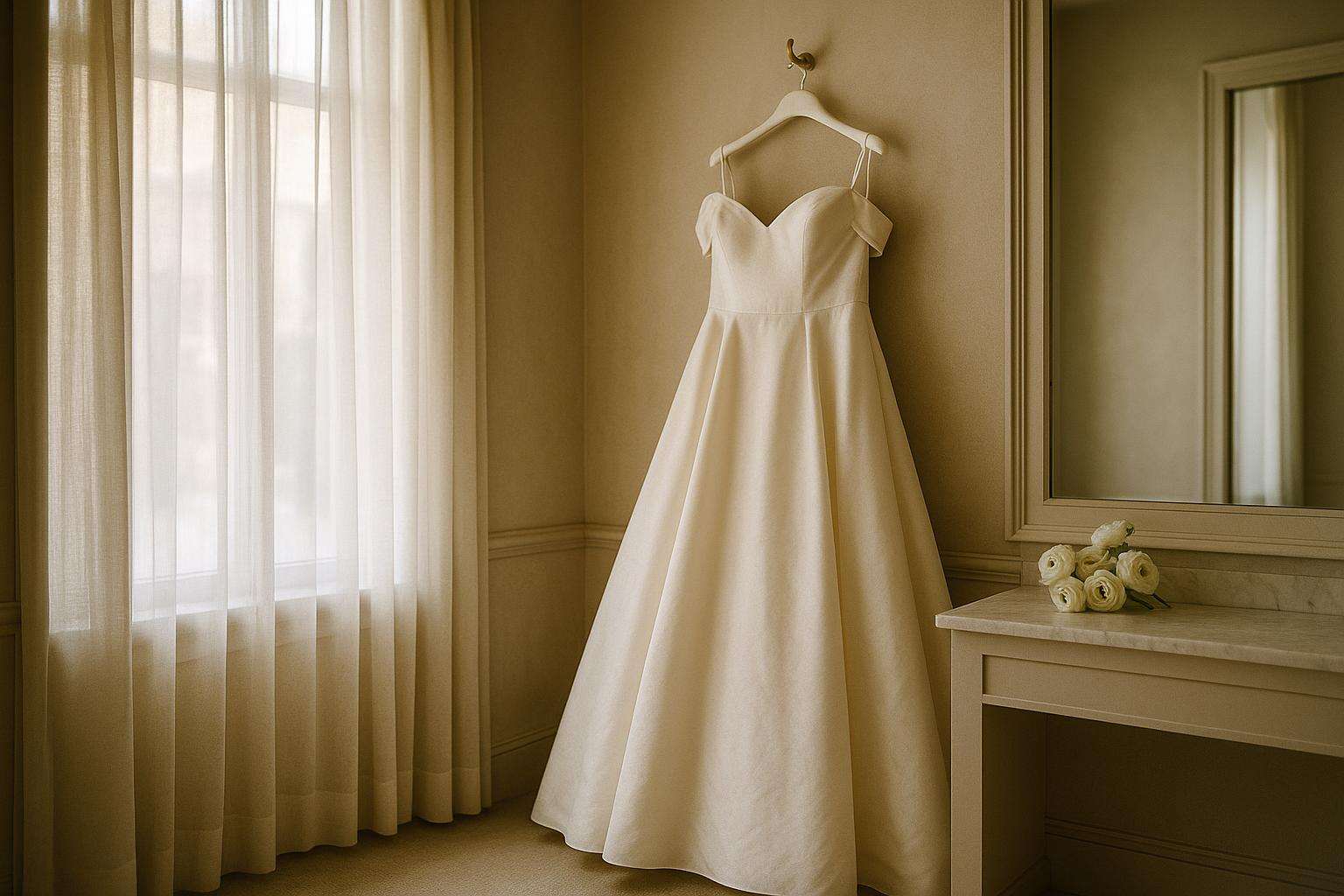
The most flattering plus-size wedding dress silhouettes are the A-line (universally shape-friendly), ball gown (balances proportions), and mermaid (celebrates an hourglass figure). Retailers including Azazie (sizes 0–30, no upcharge), David's Bridal (14W–30W, floor samples), Mori Lee Julietta, and Essense of Australia's EveryBody/EveryBride programme (up to size 34) offer real, well-constructed options. Budget $350–$700 for alterations and start shopping nine to twelve months out.
The plus-size bride has never had more choice — and never had more reason to shop with intention. In 2026, the bridal market includes dedicated plus-size lines engineered from the ground up for fuller figures, online retailers offering sizes through 30 with no upcharge, and boutique chains that stock extended samples on the floor so you can actually try a gown rather than imagine it pinned over a size-12 sample. What you need is a clear understanding of which silhouettes serve your body best, which bodice structures give you support and comfort across a long wedding day, and which retailers will meet you where you are.
This guide is built from real brands, real sizing data, and real price ranges — no vague encouragement, no generic advice. The goal is that you leave your first appointment knowing exactly what you are looking for and why.
What wedding dress silhouette is most flattering for plus-size brides?
The honest answer is that the most flattering silhouette is the one that makes you feel like yourself — and that is only discovered by trying multiple options. That said, structural guidance is genuinely useful because different silhouettes address different fitting challenges. The five major silhouette families behave differently on different body shapes, and understanding the mechanics helps you walk into a boutique with a purposeful agenda rather than simply pulling whatever is on the rack.
| Body Shape | Recommended Silhouette | Why It Works | Neckline Pairing |
|---|---|---|---|
| Hourglass (balanced bust and hip, defined waist) | Mermaid, trumpet, fit-and-flare | Follows the natural curve; celebrates a defined waist without adding volume where none is needed | Sweetheart, scoop, V-neck |
| Pear (narrow shoulders, fuller hips and thighs) | A-line, ball gown | Skirt volume balances proportions; embellished or detailed bodice draws the eye upward | Bateau, off-shoulder, portrait |
| Apple (fuller midsection, broader shoulders) | Empire-waist, soft A-line | Empire seam places emphasis above the midsection; gentle flare skims rather than tightens | V-neck, sweetheart, plunging |
| Inverted Triangle (broad shoulders, narrower hips) | Ball gown, A-line | Full skirt adds lower-half volume to balance wide shoulders; detailed skirt draws attention downward | Scoop, V-neck, asymmetric |
| Rectangle (even proportions, less defined waist) | Sheath with ruching, empire-waist | Ruching, ruffles, or a belted waist create the illusion of curves; tiered skirts add dimension | Halter, one-shoulder, jewel |
The A-line deserves special mention as the near-universal recommendation from professional bridal stylists for plus-size brides. Fitted through the bodice and gently flaring from the waist or hip, it creates a defined waist without clinging to the hip or thigh, elongates the silhouette, and photographs beautifully from every angle. True Society's styling guides consistently cite the A-line as the most shape-agnostic silhouette in the plus-size bridal wardrobe. The drop-waist variation — where the flare seam sits at the low hip rather than the natural waist — has become one of the dominant 2026 structural trends and is particularly elongating for petite plus-size brides.
What bodice support structures matter most for plus-size gowns?
Support is where many plus-size brides find the biggest difference between a gown that feels like a garment and one that feels like armour against a long day. A well-engineered plus-size bodice should do three things: lift and define the bust, provide abdominal support without compressing the midsection uncomfortably, and distribute weight evenly across the torso so you are not fighting the dress by mid-afternoon.
Boning and internal structure. Most quality bridal gowns include vertical boning channels — rigid or semi-rigid strips sewn into the bodice lining that hold the gown's shape and provide lift. For plus-size brides, the placement and number of boning channels matters more than in straight-size construction: channels positioned along the side seams provide lateral support; boning at the centre front holds the bust panel flat; curved boning at the waist creates definition without cutting into the body. Ask your stylist specifically which construction your shortlisted gowns use.
Corset backs versus zip backs. A corset or lace-up back is often recommended for plus-size brides because it allows the gown to be adjusted precisely to your measurements and accommodates minor weight fluctuations between ordering and the wedding day. A zip back requires the dress to fit exactly as ordered — which is fine if your measurements are stable, but leaves no flexibility. Many designers offer corset-back options on their plus-size styles for this reason.
Built-in cups and bra panels. Many plus-size gowns include sewn-in cup inserts or modesty panels that eliminate the need for a separate strapless bra. This is a practical advantage: a good bra fitting appointment adds friction to the alterations process, and built-in support that is sized correctly for the gown is almost always more secure than a separately purchased undergarment. Confirm with your seamstress at the first fitting whether the built-in cups are providing adequate support for your size.
Fabric weight and structure. Structured fabrics — duchess satin, mikado, scuba crepe, heavy chiffon — hold their shape through a long day better than lightweight or slippery fabrics. Stretch crepe, used extensively by Maggie Sottero's extended-size line, is particularly valued for plus-size gowns because it provides structure and support while moving with the body rather than against it.
Which retailers carry the best plus-size wedding dresses in 2026?
The retailer landscape for plus-size bridal falls into three categories: online-first retailers with the widest size ranges and no upcharge; national chains with floor samples and specialist stylists; and designer lines engineered specifically for plus-size figures. Here is a clear comparison of the major options.
| Retailer / Label | Size Range | Price Range | Key Feature | Size Upcharge? |
|---|---|---|---|---|
| Azazie | 0–30 + free custom sizing | $79–$750 | At-Home Try-On (3 samples, $15 each); no size upcharge; 200+ styles | No |
| David's Bridal | 14W–30W | $200–$1,500 | Plus-size floor samples; size-18 fit model for design; in-store specialist stylists | No |
| Essense of Australia (EveryBody/EveryBride) | Up to size 34 | $1,500–$3,500 | Re-engineered construction (not scaled up); Spring 2026 collection now available | Varies by retailer |
| Mori Lee Julietta | Plus-size dedicated line | $800–$2,500 | Designed by Madeline Gardner for plus figures from the ground up; wide silhouette range | No (purpose-built) |
| Maggie Sottero / Rebecca Ingram / Sottero & Midgley | Up to size 28 | $1,200–$3,000 | Stretch crepe and intricate lace; Maggie's Closet retailer-finder for extended samples | Yes, typically $100–$250 |
| Allure Bridals (Allure Womens) | 14W–32W | $1,000–$3,500 | Designer aesthetic in extended sizes; available through boutiques including Becker's Bridal Outlet | Varies by retailer |
| True Society | 2–34 (order range) | $800–$3,000 | Multi-location US boutique; extended-size floor samples; knowledgeable plus-size stylists | Varies by designer |
A note on sample availability. The most common frustration for plus-size brides shopping traditional boutiques is the limited sample pool — most bridal samples are cut in sizes 10 to 14, leaving extended-size brides trying on gowns that are clipped and pinned rather than properly fitted. David's Bridal and True Society stand apart because they stock plus-size floor samples, meaning you can physically try a gown in approximately your size. For brides who cannot find boutiques with extended samples locally, Azazie's At-Home Try-On programme ships up to three sample gowns for $15 each, eliminating the floor-stock problem entirely and covering more than 200 styles including A-line, mermaid, ball gown, and sheath silhouettes.
How should a plus-size bride approach the fitting process?
The fitting room is where the dress becomes yours — and where decisions made thoughtfully in advance pay dividends. Six principles that bridal specialists recommend consistently for plus-size brides:
Start nine to twelve months out. Many plus-size styles are made to order with production windows of three to five months. Booking early gives you the widest selection, the least time pressure, and the flexibility to change your mind. David's Bridal advises booking a 60-minute midweek appointment for the most one-on-one attention from a stylist.
Call ahead about sample sizes. Before driving to a boutique, ask specifically which sizes are on the floor in your approximate measurement range. A boutique that cannot put you in something close to your size is a frustrating appointment for everyone; a boutique that stocks extended samples is worth travelling to.
Order to your largest measurement. Bridal gowns cannot be let out — fabric is cut to fit and there is rarely enough seam allowance to add size after the fact. Order to whichever of your measurements — bust, waist, or hip — falls into the largest size bracket, and alter down. Essense of Australia's sizing guidance notes that bridal sizing runs approximately two sizes smaller than street clothing: a street size 14 typically maps to bridal size 16 or 18.
Budget separately for alterations. Alterations for a plus-size gown run $350 to $700 for standard work; complex lace or silk constructions reach $900 to $1,200. Plan three to four fittings across eight to ten weeks. The final appointment — two to three weeks before the wedding — should address hemming, steaming, and the bustle.
Bring your wedding-day foundation garments and shoes. Heel height changes the hem measurement; the undergarments you wear change how the bodice sits. Bring both to every fitting, including the first one.
Ask directly about size upcharges before you fall in love with a gown. Many boutiques add $200 to $500 for sizes above 16 or 18. Knowing the true price before you commit emotionally is a kindness to yourself. Retailers like Azazie and David's Bridal do not charge size upcharges; others do. Lovella Bridal's editorial on size fees gives a frank account of how these charges vary across the market.
The plus-size bridal market in 2026 is the most inclusive it has ever been — with labels engineered specifically for fuller figures, online programmes that remove the floor-sample barrier, and boutiques investing in extended-size inventory. The bride who arrives informed about her silhouette options, her support needs, and her retailer choices walks into the fitting room with confidence. That confidence, as every stylist will tell you, is what the dress ultimately needs to work.
Considered Counsel
Frequently asked
What wedding dress silhouette is most flattering for plus-size brides?
The A-line is the near-universal recommendation from professional bridal stylists for plus-size brides, and for a structural reason: the fitted bodice defines the waist while the gradual flare from the hip skims over — rather than clings to — the thigh and lower body. For hourglass figures with a defined waist, mermaid and trumpet silhouettes celebrate curves beautifully. Ball gowns suit pear and inverted-triangle shapes by adding lower-half volume. The important caveat is that the most flattering silhouette is the one that makes you feel confident — and that is only discovered in the fitting room, not on a chart. Book appointments that include all four major silhouettes and commit to trying each.
Which retailers carry plus-size wedding dresses in sizes above 28?
A handful of retailers and labels stock extended sizing beyond bridal size 28. Azazie offers sizes 0 through 30 with free custom sizing and no upcharge, and their At-Home Try-On programme ships samples to your door. David's Bridal carries 14W through 30W with plus-size floor samples. Essense of Australia's EveryBody/EveryBride programme goes to size 34 through authorized boutiques including Town and Country Bridal and Carolina Bridal World. True Society (multi-location US chain) can order in sizes 2 through 34. Allure Bridals' Allure Womens sub-line covers 14W through 32W. For any designer above size 28, always confirm availability directly with the boutique before booking an appointment.
Does Azazie have plus-size wedding dresses in custom sizes?
Yes. Azazie offers every gown in their catalogue in sizes 0 through 30, and for brides whose measurements fall outside standard sizing, they offer a free custom-size option at checkout. You submit your exact measurements — bust, waist, hip, height — and Azazie cuts the gown to those dimensions. Crucially, Azazie does not charge a size upcharge, so a custom-sized gown in size 26 costs exactly the same as a size 6. Their At-Home Try-On programme allows brides to select up to three sample dresses for $15 each (with free return shipping) to assess silhouette and fabric quality before committing to a purchase. Prices across the collection start at $79 and reach approximately $750 for the most embellished styles.
What is the Mori Lee Julietta collection?
Julietta is Mori Lee's dedicated plus-size bridal line, designed by Madeline Gardner specifically for fuller figures rather than scaled up from straight-size patterns. The construction difference matters: seam placement, internal boning channels, and fabric distribution are engineered for plus-size proportions, resulting in a gown that supports and celebrates curves rather than simply enclosing them. The collection spans ball gowns, A-lines, trumpet silhouettes, and mermaids, with signature design elements including dropped waistlines, asymmetric ruching, and tiered skirts. Julietta is available through authorized Morilee retailers nationwide, including RK Bridal in New York.
What is the Essense of Australia EveryBody/EveryBride programme?
EveryBody/EveryBride is Essense of Australia's inclusive sizing initiative, offering select gowns from the core Essense of Australia collection in extended sizes up to size 34 through authorized boutique retailers. The programme distinguishes itself by re-engineering construction — not simply scaling — for the extended range: proportions, internal support structures, and fabric placement are redesigned for plus-size figures. The Spring 2026 EveryBody/EveryBride collection is available through retailers including Town and Country Bridal and Carolina Bridal World. Brides should contact their nearest authorized Essense of Australia retailer to confirm which specific styles are available in extended sizes, as not every gown in the main collection is offered in the programme.
How much do plus-size wedding dress alterations cost?
Alterations for a plus-size gown typically run $350 to $700, though complex construction work in delicate fabrics like lace or silk charmeuse can reach $900 to $1,200. The cost depends on fabric complexity, the number of changes required, and the seamstress's experience with plus-size bridal construction. Plan for three to four fittings: an initial pinning appointment, one or two refinement sessions, and a final appointment two to three weeks before the wedding to address hemming, steaming, and the bustle. Budget alterations as a line item separate from the dress price, and never underestimate it — many plus-size brides find alterations represent 20 to 30 percent of their total gown investment.
When should a plus-size bride start shopping for a wedding dress?
Start boutique appointments nine to twelve months before your wedding date and place your order no later than eight months out. Most designer plus-size gowns are made to order with production windows of three to five months; rush orders attract surcharges of 15 to 30 percent. Once the gown arrives — typically three to six months before the wedding — allow ten to twelve weeks for the alterations process with buffer time between each fitting. Begin your research twelve to eighteen months out: use that window to develop your silhouette vocabulary, identify retailers that stock plus-size floor samples, and explore online try-on programmes such as Azazie's At-Home Try-On. The earlier you start, the more options are available to you — and the less pressure you will feel in the fitting room.
Do bridal boutiques charge extra for plus-size wedding dresses?
Many do, but not all. Traditional boutique-stocked designers frequently add 10 to 20 percent, or a flat $200 to $500, for sizes above 16 or 18 — a practice the industry calls a size upcharge or plus-size fee. The rationale given is additional fabric and pattern complexity. Retailers that do not charge a size upcharge include Azazie and David's Bridal, both of which offer inclusive pricing across their size ranges. Before falling in love with a gown at any boutique, ask directly whether extended sizes carry a price premium — and factor the answer into your total budget. For brides who want to avoid size fees entirely, Azazie's online-first model and David's Bridal's inclusive pricing policy make both strong starting points.