The Wedding Dress
Second Wedding Dress: Style Guidance for Marrying Again
Color freedom, formality without the first-wedding rulebook, and silhouette choices that honor exactly where you are now — a grounded guide to dressing for a second or later marriage.
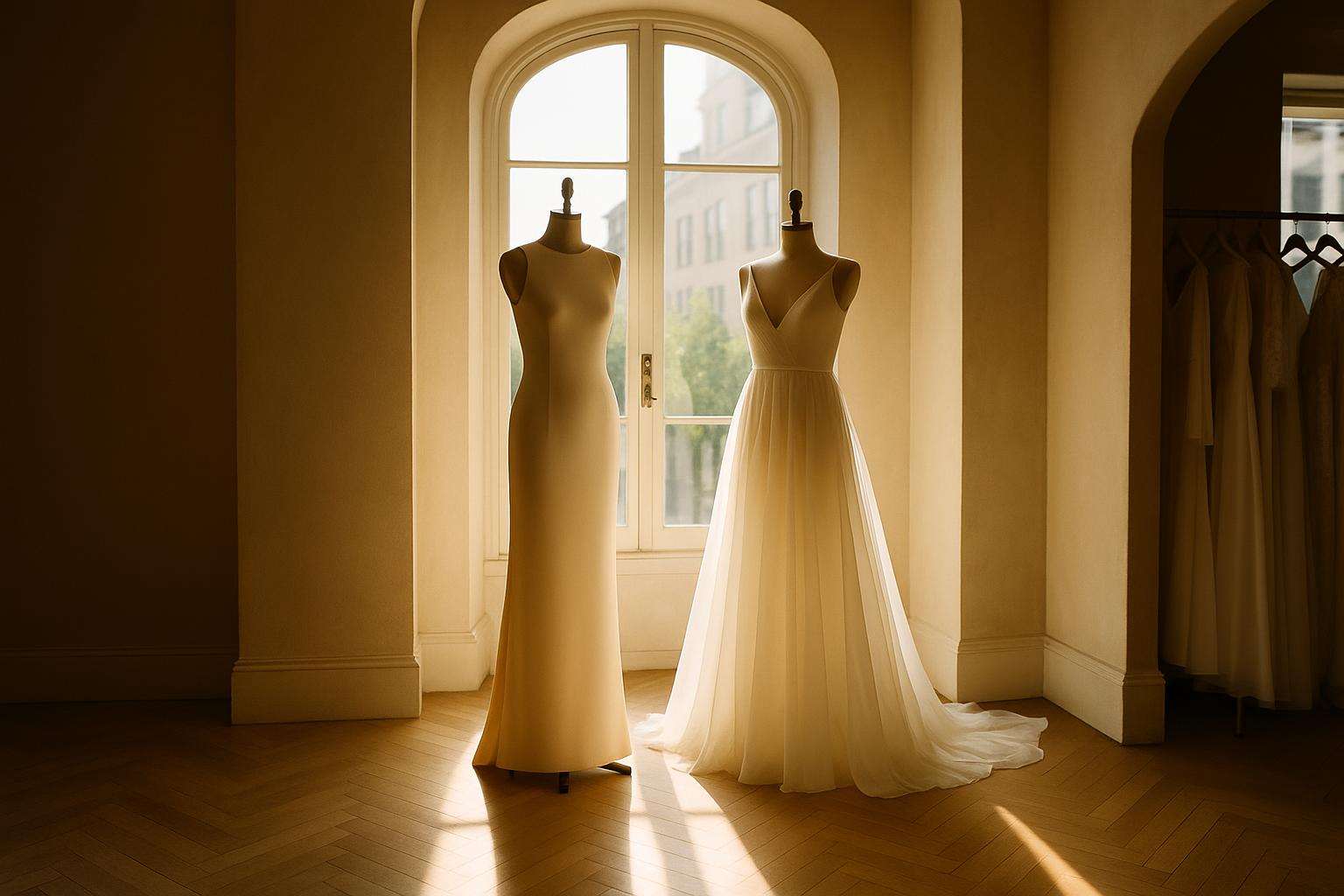
A second wedding dress is governed by venue and guest count, not marital history. White is fully sanctioned, formality scales with ceremony size, and the market — from BHLDN and David's Bridal to Kleinfeld and Danielle Frankel — now offers considered edits for the return bride across every silhouette, color, and price point in 2026.
Can you wear white to your second wedding?
The short answer is yes — unequivocally. White, ivory, and off-white are entirely appropriate for a second-time bride, and the etiquette authorities who once hedged on this point have stopped doing so. The white wedding dress tradition traces to Queen Victoria's 1840 wedding, where the color was chosen to display the lace on her gown — a signal of wealth and craft, not of marital status. The purity association was a later cultural overlay, and it has since dissolved.
Meghan Markle wore white at her 2018 wedding to Prince Harry, a remarriage for both, setting a visible modern precedent that editors and stylists now cite routinely. The current editorial consensus — from The Knot, from David's Bridal, from Kleinfeld's own bridal guides — is uniform: wear what makes you feel most like yourself, regardless of how many times you have been married.
That said, the second wedding is also the moment many brides feel genuinely free to depart from convention entirely. Champagne, blush, and soft ivory read as distinctly bridal while marking a clear visual difference from the first wedding's register. More dramatic choices — sage green, dusty blue, even black — appear with increasing frequency in 2026 bridal collections. Adrianna Papell's editorial specifically highlights blush and champagne as especially well-suited to second-time brides. The guiding principle is intention: wear a color that feels like a deliberate choice, not an inherited default.
What does ceremony size and venue tell you about the right dress?
Formality for a second wedding is governed by the same principle that governs any wedding: let the setting and guest count anchor the decision. David's Bridal's editorial frames it directly — a courthouse ceremony calls for something different than an outdoor reception for eighty, and marital history has no bearing on that calculus.
| Setting | Typical Guest Count | Dress Register | Silhouettes That Work | Price Range |
|---|---|---|---|---|
| Courthouse / City Hall | Under 10 | Semi-formal to intentional casual | Midi dress, sheath, tailored jumpsuit, structured two-piece | $100–$800 |
| Intimate garden or backyard | 10–40 | Semi-formal / garden formal | Flowy maxi, tea-length A-line, bridal separates, soft column | $200–$2,000 |
| Restaurant or private venue | 20–60 | Cocktail to black-tie optional | Midi or mini in crepe or chiffon, fitted sheath, minimalist A-line | $300–$3,000 |
| Full formal reception | 75+ | Formal / black-tie optional | Full-length gown in any silhouette, column, fit-and-flare, A-line | $800–$6,000+ |
Courthouse and elopement. BHLDN — Anthropologie's dedicated bridal brand, launched in 2011 — maintains a City Hall Bride edit of clean, intentional pieces in lightweight crepe and satin at $198–$2,600. Adrianna Papell's accessible occasion line starts at $100 for tea and midi-length styles. The White Dress by the Shore in Clinton, Connecticut stocks an elopement-specific edit alongside its full boutique inventory, a sign of how much commercial demand this category now commands.
Garden or intimate reception. Flowy maxis, tea-length dresses, and bridal two-piece separates all suit a guest count under 40. Blush and soft floral prints read beautifully outdoors. Pinterest's 2025 Annual Wedding Trends Report found searches for "city hall elopement" jumped over 190% year-over-year — the market has followed.
Full formal venue. A floor-length gown is entirely appropriate when the ceremony scale justifies it. Kleinfeld Bridal's minimalist-gown editorial notes that sheaths, columns, and structured crepe gowns are the most popular choices with second-time brides who want a refined, uncluttered full gown — not a reprise of the first wedding's maximalism.
What silhouette works best for a second-time bride?
Second-wedding silhouettes are dominated by two shapes: the sheath and the A-line. Both prioritise ease, movement, and a refined rather than architectural effect — qualities that align with how second-time brides consistently describe their dress goals.
Sheath and column. The sheath follows the body from bust to hem with minimal volume, relying on the fabric and the cut to carry the look. In crepe, it reads as sharply modern; in satin, as classic and formal; in chiffon, as effortlessly romantic. It is the silhouette most closely associated with the intentional second-wedding aesthetic — unhurried, self-possessed, photograph-ready at any ceremony size.
A-line. The A-line is the most universally flattering silhouette in bridal fashion, releasing from the natural waist in a triangular flare. It provides movement and ease without requiring the hips and thighs to carry the silhouette — a practical advantage for a longer celebration. Kleinfeld Bridal's minimalist-gown editorial consistently directs second-time brides toward slim and modified A-lines as an alternative to the structural ball gown.
Bridal jumpsuits and separates. David's Bridal and BHLDN both identify jumpsuits and two-piece sets as especially popular with second-time brides — a visual chapter break and a practical choice for a more relaxed ceremony. A crepe or structured-chiffon jumpsuit in ivory or blush reads as completely bridal while departing clearly from the first wedding's template.
What about the ball gown? A ball gown is appropriate when the venue and guest count justify it. The reason second-time brides gravitate toward sheaths and A-lines is not that a ball gown is off-limits — it is that many second weddings are intentionally smaller and more personal, and the dress follows suit.
Which designers offer the best second-wedding edits?
Jenny Yoo is the label most frequently cited in second-wedding editorials for its flowing silhouettes, delicate fabrics, and clean lines. Her New York label — and the more accessible Jenny by Jenny Yoo sub-line — price bridal at roughly $1,750–$3,000. Jenny Yoo gowns are available at Kleinfeld Again (Kleinfeld's resale and sample arm), Jenny Yoo's own boutique, and BHLDN, making the label accessible across multiple retail contexts.
Danielle Frankel occupies the architectural end of the second-wedding market — structured-yet-soft pieces with avant-garde construction details that resist easy categorisation. Retail prices range $3,950–$15,000. In 2019 she was selected by Vogue and the CFDA as the first bridal designer to participate in their Fashion Fund — a signal of her standing in the broader fashion conversation, not just the bridal niche. Pre-owned Frankel pieces appear regularly on Stillwhite and Nearly Newlywed at meaningful discounts.
BHLDN is the dominant mid-market retailer for second weddings. At $198–$2,600, it carries its own label and guest designers including Watters, Catherine Deane, Needle & Thread, Marchesa Notte, Tadashi Shoji, and ML Monique Lhuillier. Its vintage-inspired aesthetic and separates options are well matched to the second-time bride who wants something that feels personal rather than templated — and the price range means a full-length gown, a midi dress, and a cover-up are all within the same budget as a single mid-range boutique gown.
Adrianna Papell occupies the accessible end of the market, with styles from $100–$400 and a published editorial guide specifically addressing second and non-traditional brides. Blush, champagne, and tea-length silhouettes are the editorial's recurring recommendations.
David's Bridal offers sheaths, A-lines, and jumpsuits at entry-level price points across its national retail network. Their editorial identifies sheaths and jumpsuits as especially popular with second-time brides — a useful starting point for a bride who wants to try silhouettes before committing to a boutique appointment.
Kleinfeld Bridal in New York carries Amsale, Watters, Rivini, Sareh Nouri, and Paloma Blanca alongside its full designer roster. Its minimalist-gown editorial explicitly recognises the second-bride market, and Kleinfeld Again — the salon's resale and sample arm — carries Jenny Yoo, Vera Wang, and Oscar de la Renta at resale prices.
What does it mean to debunk age-appropriate elegance myths?
The idea that a second-time bride should dress more conservatively — shorter hem, less embellishment, no veil, no train — rests on no formal etiquette authority. It is cultural noise, and it has largely evaporated from the editorial mainstream. Adrianna Papell's style guide addresses this directly, arguing that the goal is to feel like the most confident, beautiful version of yourself, regardless of age or marital history.
The practical translation: a bride in her forties or fifties has no obligation to choose a midi dress over a floor-length gown, or to omit a veil, or to select a muted color palette. The Knot's editorial position is that the dress decision should be driven entirely by personal style and ceremony context — not by a notional rule about what is age-appropriate for a remarrying bride. The second wedding is, if anything, the occasion where a bride has earned the confidence to trust her own judgment completely.
"A second-time bride should wear something modest and understated" is etiquette folklore, not etiquette guidance. No formal authority ever codified it. Modern editorial consensus — from The Knot, David's Bridal, and Adrianna Papell — is uniform: dress for who you are now, at this ceremony, in this venue. The only constraint is venue-appropriate formality, which applies to any wedding regardless of the bride's history.
How do you shop differently the second time around?
Bring fewer people. The first appointment is often crowded with opinions. Second-time brides consistently report preferring to bring one trusted companion or to shop solo. The signal-to-noise ratio is better, and the decision feels more cleanly personal.
Trust your own taste. Having lived in and photographed a first wedding gown, a bride knows with far more precision what works on her body, what photographs well, and what she actually feels comfortable wearing for six hours. The Knot's editors advise letting that experience speak louder than external pressure.
Consider a different silhouette. A first ball gown followed by a sheath or A-line is a clear visual chapter break — in photographs and in the lived experience of wearing it. If the first dress was heavily embellished, a clean crepe column marks a different intention.
Consider the resale market. Stillwhite lists over 102,000 preowned gowns — including Vera Wang, Jenny Yoo, and Oscar de la Renta — at approximately $29.95 to list (no buyer commission). Nearly Newlywed offers authenticated resale with installment payments; a well-kept gown under two years old typically resells at around 50% of its retail price. Both platforms carry designer names that would require a full boutique budget to access new.
Budget with realism. The Knot's 2025 Attire and Fashion Study places the average first-wedding gown at approximately $2,000. Second-time brides at courthouse and elopement ceremonies typically spend $100–$500; those hosting full receptions span the same wide range as first-timers. The dress budget should reflect the ceremony, not the marriage number.
Considered Counsel
Frequently asked
Can you wear white to your second wedding?
Yes — white, ivory, and off-white are entirely appropriate for a second-time bride in 2026. The convention that only first-time brides could wear white was never formally codified; it emerged from a loose cultural assumption that has since dissolved. Etiquette authorities and bridal editors are now uniform on this point: wear the color that makes you feel most like yourself. Meghan Markle wore white at her 2018 wedding to Prince Harry, setting a visible modern precedent. That said, a second wedding is also the moment many brides feel genuinely free to explore — blush, champagne, sage green, and soft ivory all appear with increasing frequency and are considered fully bridal choices rather than compromises.
What dress should you wear for a small or courthouse second wedding?
Formality for a second wedding is governed by the setting and guest count, not the marital number. For a courthouse or city hall ceremony, midi dresses, tailored jumpsuits, and sleek sheaths in any color are all appropriate. BHLDN — Anthropologie's bridal brand — maintains a dedicated City Hall Bride edit of clean, lightweight crepe and satin pieces at $198–$2,600. Adrianna Papell's accessible line ($100–$400) offers tea-length and occasion styles purpose-built for smaller ceremonies. The White Dress by the Shore in Clinton, Connecticut is one boutique that stocks an explicit elopement and small-ceremony edit alongside its full bridal inventory. For an intimate garden reception of under 40 guests, a flowy maxi or two-piece separates in blush or soft florals read beautifully.
Is a ball gown appropriate for a second wedding?
A ball gown is appropriate if the venue and guest count justify it — a formal venue with 75 or more guests is the natural context. The dress should match the ceremony's scale, not the bride's marital number. What has changed for second-time brides is that many actively choose not to replicate the first wedding's register. Consultants and style editors at The Knot observe that second-time brides gravitate toward sheaths, columns, A-lines, and structured crepe gowns — not because a ball gown is off-limits, but because the second wedding tends to be a more considered, intentional expression of personal style rather than an inherited ceremony template.
What silhouette works best for a second-time bride?
There is no single correct silhouette, but two choices dominate second-wedding editorials: the sheath and the A-line. Sheaths and column gowns — in crepe, satin, or structured chiffon — read as refined and unhurried; they photograph well at small ceremonies and scale effortlessly from courthouse to garden reception. The A-line is the most universally flattering silhouette in bridal fashion, releasing from the waist to provide movement and ease. Both silhouettes are at the core of Kleinfeld Bridal's minimalist-gown editorial, which explicitly identifies second-time brides as a primary audience for the refined, non-fussy full gown. Separates and bridal jumpsuits have also claimed a significant share of second-wedding wardrobes, particularly at BHLDN and David's Bridal.
How is shopping for a second wedding dress different from the first?
Most second-time brides report the experience as meaningfully different — and better. The most consistent advice from style editors and bridal consultants is to bring fewer people: one trusted companion or none, rather than the crowd that can derail a first appointment. Second-time brides also tend to trust their own taste more readily, having lived in and photographed their first gown. The Knot editors advise choosing for how you feel in the dress rather than what tradition or others' expectations suggest. Practically, the timeline is often shorter: second weddings are frequently smaller, which makes off-the-rack and sample dresses — available immediately — a realistic option rather than a compromise. The resale market is another avenue that many second-time brides use for the first time.
Where can you buy a second wedding dress for less?
The resale market is the most significant source of value for second-time brides. Stillwhite is the largest global marketplace for preowned wedding dresses, with over 102,000 gowns — including designer names such as Vera Wang, Jenny Yoo, and Oscar de la Renta — listed from boutique and individual sellers; the listing fee is $29.95 with no commission charged to the buyer. Nearly Newlywed offers a fully managed resale experience with authentication, installment payment options, and a 30% platform commission; a well-cared-for gown under two years old typically resells at approximately 50% of retail. At the new-dress end, Adrianna Papell and David's Bridal both maintain price-accessible second-wedding edits starting at $100–$150 for occasion-length styles.
What colors are appropriate for a second wedding dress?
Any color is appropriate. The practical question is what reads as intentionally bridal rather than merely dressed-up, and the answer varies by formality. White, ivory, and off-white remain the most common choices precisely because they photograph well and carry a bridal register that guests recognise. Champagne and blush have become strong alternatives — warm, distinctly bridal, and subtly non-traditional. Adrianna Papell's editorial guide specifically highlights blush, champagne, and tea-length silhouettes as well-suited to the second-time bride. More dramatic choices — sage green, dusty blue, even black — appear increasingly in 2026 collections, with designers citing a broad move toward what they call the new neutrals and ethereal pastels. The guiding principle is intention: wear a color that means something, not one chosen by default.