The Wedding Dress
Strapless Wedding Dress: Support Engineering & Styling
How a strapless bodice stays up — the boning, grip lining, and internal corsetry behind the silhouette — plus who it flatters most and how to accessorize the open neckline.
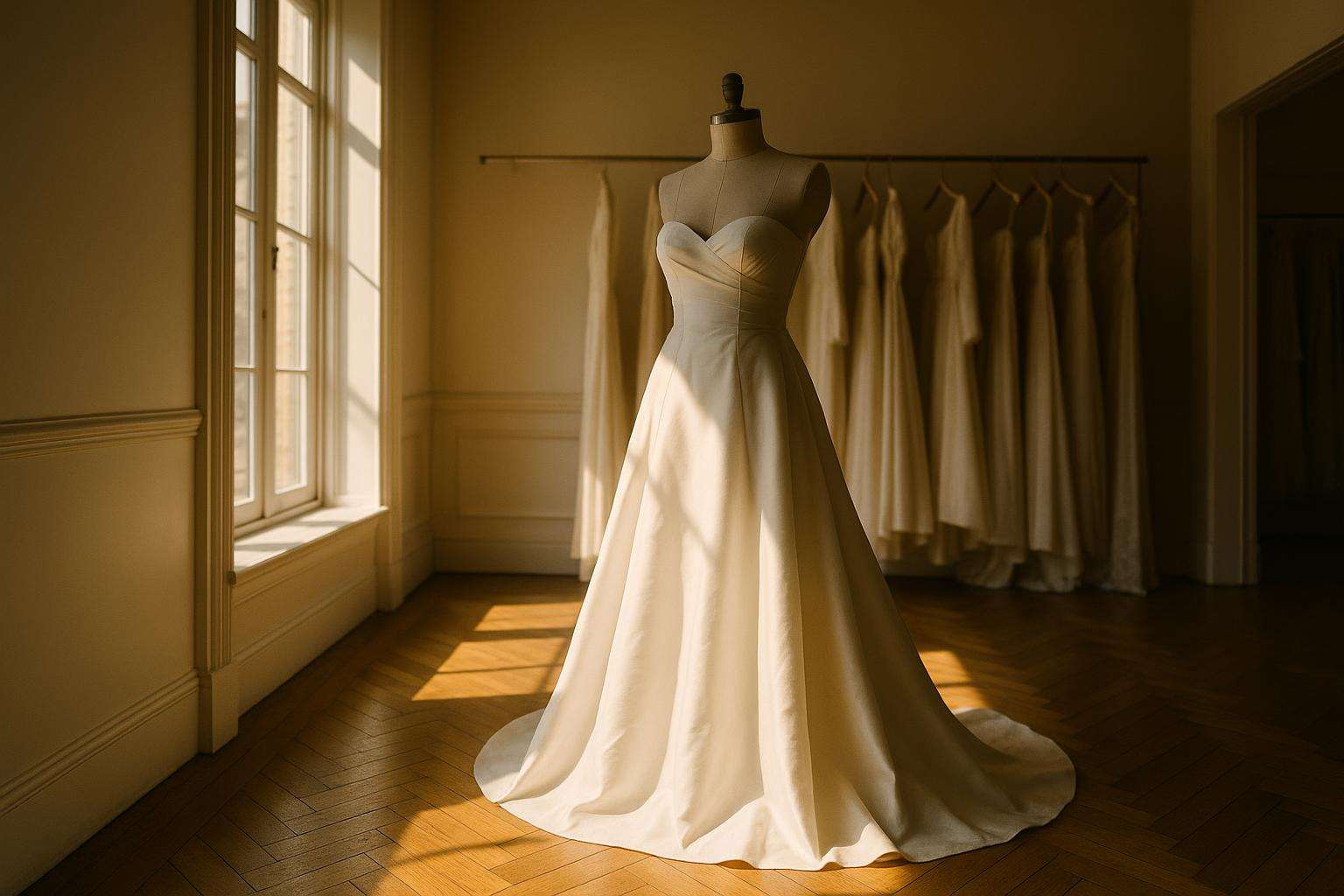
A strapless wedding dress stays up through engineered internal structure — spiral steel boning anchored to a snug waist, cotton coutil underlining, and a silicone grip lining — not tape or luck. The quality of the fit and alteration determines whether the silhouette works on your body. When the engineering is right, the open neckline is one of the most elegant frames in bridal fashion.
The strapless wedding dress has been the dominant bridal silhouette for decades. From Vera Wang's sculptural column gowns to the sweetheart-neckline ballgowns that fill the floors of Kleinfeld Bridal in New York, it is the silhouette brides most often picture when they close their eyes and imagine walking down the aisle. And yet it is also the silhouette most associated with a specific anxiety: Will it stay up?
The answer — when the gown is properly made and correctly altered — is unambiguously yes. What follows is a complete account of the engineering behind that confidence, the alterations that reinforce it, the undergarment options that back it up, and the styling choices that make the open neckline sing.
How Does a Strapless Wedding Dress Stay Up Without Straps?
A well-constructed strapless bodice is, at its core, an internal corset. The primary structural element is boning — rigid or semi-flexible channels sewn vertically into the bodice lining to hold the fabric against the torso, resist gravity, and create a lifted silhouette without any shoulder contact.
The ideal boning material for bridal construction is spiral steel, not the flat plastic boning common in fast-fashion or prom gowns. Spiral steel flexes laterally with the body while maintaining firm vertical resistance — which matters enormously when a bride is dancing, laughing, or drawing the deep deliberate breath she takes just before the doors open. Plastic boning has no meaningful lateral give and can buckle or dig in under sustained movement and body heat.
A properly supported strapless bodice uses a minimum of six to eight boning channels, with additional placements at the side seams where gravitational pull on the skirt is greatest. Two channels set approximately half an inch apart at the center back create what experienced couturiers describe as a structural “spinal column” for the entire bodice. Front-center boning prevents the fabric from creasing or folding at the sternum under the downward weight of the skirt.
Crucially, boning only functions against a fixed anchor: the waist. Bones push upward from the waist toward the bust. If the waistline fit is even slightly loose, the entire upward leverage collapses and the bodice will drift.
Reinforcing the boning structure are two additional layers. First, cotton coutil underlining — a tightly woven, minimally stretchy textile that has been the standard in couture corsetry for over a century — serves as the interlining layer that anchors the boning channels and prevents the outer shell from distorting under movement. Layers of silk lining, coutil, and outer satin or lace are laminated together to create a self-supporting structure. Second, a strip of silicone grip lining sewn along the top interior edge of the bodice creates continuous passive friction against the skin — functioning as an anti-slip system that works throughout the day without any active effort from the wearer. Ella's Alterations notes that brides often underestimate how much of their comfort on the wedding day comes from this single interior detail.
What Are the Internal Construction Differences Between Strapless Gowns?
Not all strapless gowns are built equally, and the construction differences are significant. The table below compares the three tiers of strapless bridal construction a bride is likely to encounter across the market — from entry-level production to couture-level engineering.
| Construction Tier | Boning Type | Underlining | Grip Lining | Typical Price Range | Representative Brands |
|---|---|---|---|---|---|
| Entry-level / fast-fashion bridal | Flat plastic boning, 4–6 channels | Synthetic lining only | None | $200–$700 | Mass-market online retailers |
| Mid-market bridal (production houses) | Spiral steel, 6–8 channels | Polyester or cotton-blend coutil | Partial silicone strip at neckline | $800–$2,500 | Maggie Sottero, Allure Bridals, Justin Alexander |
| Designer / couture bridal | Spiral steel + flat steel busk, 8–12+ channels | 100% cotton coutil, multi-layer | Full-width silicone interior band | $3,000–$15,000+ | Vera Wang, Monique Lhuillier, Kleinfeld Bridal exclusives |
The practical implication: a mid-market strapless gown from Maggie Sottero or Allure Bridals, properly altered, will perform as well as or better than a designer gown that has not been fitted. Construction is the floor; alteration is the ceiling.
What Undermines Strapless Support — and What Can Be Done?
The most common structural challenge in strapless design is the low-dipping back neckline. Removing fabric from the back reduces the surface area the boning can brace against, shifting the mechanical load toward the front and creating the sensation that the bodice is migrating downward. Stylists at Kleinfeld Bridal advise brides to factor back neckline depth into their structural expectations before committing to a silhouette — the lower the back, the more critical the front-bodice engineering and the waist alteration become.
Alteration is where structural shortfalls are corrected. The most effective interventions, in order of impact:
- Side-seam take-ins at the bust and waist. This is the primary strapless alteration. A skilled seamstress works at the side seams — never the center back, which distorts proportions — shaping the bodice to the individual torso and restoring the snug waist anchor the boning requires.
- Cup-size adjustment. If neckline gaping persists after side-seam work, this secondary alteration reshapes the internal cup channels without any visible change to the exterior.
- Retrofitting boning channels. A seamstress can add spiral steel channels to a gown that shipped under-boned, typically adding $200–$500 to the alteration bill.
- Sewn-in bra cups. Foam or molded cups sewn directly into the lining eliminate the need for any external undergarment and provide consistent shape regardless of dress movement.
- Silicone grip tape. An invisible, inexpensive strip sewn along the upper interior edge meaningfully reduces slippage during dancing.
- Grosgrain waist stay. A ribbon attached inside at the natural waist distributes skirt weight and prevents the bodice from riding down — a technique standard in the construction of heavy ballgowns and fit-and-flare silhouettes.
What Should I Wear Under a Strapless Wedding Dress?
When a gown is correctly fitted, no external undergarment is necessary — this is one of the genuine freedoms of a properly structured strapless bodice. For brides who want additional security or coverage, the field has expanded considerably:
Adhesive bra cups. The MAGIC Bodyfashion Magic Gala Bra (reusable silicone cups, approximately €29.95) offers bandless coverage for strapless and backless gowns, with larger-bust coverage available via their dedicated Wedding Collection at magicbodyfashion.com. The NOOD Game Changer adhesive bra ($49.50 for a four-pack) is engineered for fuller busts and claims sweat-proof hold for over eight hours through a hemp-fabric construction; available at lovenood.com.
Breast tape. Fabric breast tape has moved from backstage solution to mainstream bridal product. The leading options:
- Brassybra (97% cotton, 3% spandex; A–G cups; waterproof; born from a real wedding wardrobe failure in 2012) — available at brassybra.com and featured in Southern Bride.
- Perky Pear Original Lift & Shape Tape (patented heat-activation adhesive that bonds stronger with body temperature; cotton-backed, breathable; A–K cups) — verified in real-world bridal wear from 10 a.m. to midnight.
- NOOD Shape Tape (3-inch wide, $29.50; 4-inch wide, $36.50; hemp fabric; guaranteed sweat-proof) — available at lovenood.com and Breakout Bras.
- MAGIC Bodyfashion Boob Tape XL (10 cm wide for larger busts; available in five skin tones) — part of their Wedding Collection.
Application rule for all adhesives: skin must be completely clean, dry, and free of lotion, oils, sunscreen, spray tan, and fragrance. Practice the application before the wedding day and wear it through a full-day rehearsal. Remove with baby oil or coconut oil, saturating the adhesive and allowing at least five minutes of soak time before peeling.
How Should I Style the Neckline of a Strapless Wedding Dress?
The open neckline of a strapless gown is one of the most versatile canvases in bridal fashion. The uninterrupted frame from shoulder to décolletage accommodates almost every jewelry approach — the question is one of proportion and restraint.
Statement necklace. A sweetheart or straight-across neckline creates space for a single substantial piece — a diamond rivière, a strand of South Sea pearls, or a delicate choker that follows the neckline's natural curve. The rule is simplicity in the ears if the neck is the focal point: studs or small drops, never competing chandeliers.
Bare neckline with earrings. The most classic strapless choice is no necklace at all, allowing the décolletage to speak for itself, anchored by a single pair of striking earrings — chandelier drops, antique drops, or modern geometric studs depending on the dress's own formality. Vera Wang's most enduring strapless gowns are often styled precisely this way.
Layered delicate chains. For a contemporary approach, two or three fine gold or platinum chains at varying lengths soften the horizontal neckline edge and add movement without competing with the gown's architecture. Monique Lhuillier's Spring 2026 bridal collection shows this layered approach well against her strapless taffeta and silk faille silhouettes.
Floral or vine headpiece. When a strapless gown is paired with a low or no-jewelry approach, a floral or vine headpiece — fresh flowers, a botanical hair vine, or a wreath — draws the eye upward and completes the bare-shouldered frame with texture and movement rather than sparkle.
The one choice that consistently reads as overwrought: a statement necklace and chandelier earrings and a full headpiece simultaneously. The strapless silhouette earns its power from what it leaves open. Trust the architecture of the dress to do the work, and let the accessories complete rather than compete.
How Do I Evaluate Strapless Fit at My Bridal Fitting?
The fitting room is where structural problems are cheapest to solve. Both Justin Alexander and Allure Bridals publish fitting guidance that points to the same systematic approach. Bring your final undergarment choice to every appointment. Perform the two-finger test under the arm — two fingers' width at an angle signals correct tension; tighter restricts breathing, looser signals an insufficiently anchored waist. Then conduct a movement test: lift both arms above the head, twist at the waist, take a deep breath, simulate a dance turn. If the bodice travels downward at any point, mark it and request remediation before you leave.
Stay in the gown for at least twenty minutes per appointment. Short-term fitting reveals proportion; extended wear reveals structural drift. Sit down and stand up repeatedly — the bodice should return to the same position each time. Schedule your first fitting six to eight weeks before the wedding, leaving room for two to three follow-up appointments to verify each round of alterations.
The strapless wedding dress, when properly engineered and individually fitted, is not a gamble. It is a collaboration between the gown's internal architecture, the seamstress's skill, and the bride's understanding of how it all works together. Go into the fitting informed, and the silhouette will do everything you ask of it.
Considered Counsel
Frequently asked
How does a strapless wedding dress stay up without straps?
A well-engineered strapless bodice functions as an internal corset. Vertical channels of spiral steel boning push upward from a snug waistline anchor, holding the fabric against the torso without any shoulder contact. This structure is reinforced by a cotton coutil underlining — a tightly woven textile used in couture corsetry for over a century — and a silicone grip lining sewn along the top interior edge of the bodice. When all three elements are correctly fitted and altered to your specific measurements, the gown stays in position through dancing, hugging, and a full twelve-hour day. The waist fit is the critical variable: if the waist is even slightly loose, the boning loses its leverage and the bodice drifts.
What type of boning is best for a strapless wedding gown?
Spiral steel boning is the gold standard for bridal strapless construction. Unlike the flat plastic boning found in fast-fashion or prom gowns, spiral steel flexes laterally with the body while maintaining firm vertical resistance — essential for a bride who is breathing deeply, dancing, or embracing guests over a long day. A well-supported strapless bodice uses a minimum of six to eight boning channels, with additional placements at the side seams. Two boning channels set approximately half an inch apart at the center back create what experienced couturiers call a structural “spinal column” for the bodice. If your gown arrived with insufficient boning, an experienced seamstress can retrofit additional spiral steel channels into the lining — a retrofit that typically adds $200–$500 to the alteration bill but transforms the wearing experience.
What should I wear under a strapless wedding dress?
When the gown's internal boning is correctly fitted, no external bra is required — this is one of the genuine advantages of a properly structured bridal bodice. For brides who prefer extra security or fuller coverage, the most reliable options are: a strapless longline bustier with silicone grip edges (extending below the waist for maximum anchor); adhesive bra cups such as the MAGIC Bodyfashion Magic Gala Bra (reusable silicone, approximately €29.95) or the NOOD Game Changer adhesive bra ($49.50 for a four-pack); or fabric breast tape such as Brassybra (97% cotton, 3% spandex; A–G cups) or Perky Pear Original Lift & Shape Tape (heat-activation adhesive; A–K cups). Whichever option you choose, bring the identical product to every fitting appointment so all alterations reflect the final foundation.
How do you alter a strapless wedding dress so it does not fall down?
The most effective alteration is taking in the side seams at both the bust and waist — this shapes the bodice to your individual torso and creates the snug waist anchor that boning requires to function. A competent seamstress always works at the side seams, not the center back, which would distort the front-to-back proportions. If gaping persists at the neckline after side-seam work, a secondary cup-size adjustment reshapes the internal cup channels without any visible change to the exterior. Additional interventions include retrofitting boning channels, sewing foam or molded cups directly into the lining, adding silicone grip tape along the upper interior edge, and installing a grosgrain waist stay to distribute skirt weight and prevent the bodice from riding down through the reception.
How do I test strapless support at my bridal fitting?
The fitting room is where structural problems are cheapest and simplest to solve. Justin Alexander and Allure Bridals both recommend a systematic physical evaluation: wear your final undergarments to every appointment; perform the two-finger test under the arm (two fingers' width at an angle signals correct tension — tighter restricts breathing, looser signals insufficient grip); then conduct a movement stress test — lift both arms above the head, twist at the waist, take a full deep breath, and simulate dancing. If the bodice travels downward at any point, note it immediately and request remediation before leaving. Stay in the gown for at least twenty minutes: short-term fitting reveals proportion, extended wear reveals structural drift. Schedule your first fitting six to eight weeks before the wedding to allow time for two to three follow-up appointments.
Does a strapless wedding dress flatter all body types?
The strapless silhouette flatters a broad range of figures when chosen and fitted well. It is particularly celebrated on brides with defined shoulders and collar bones, an hourglass figure, or a balanced bust-to-waist ratio, because the uninterrupted shoulder-to-hip line elongates the frame and draws the eye naturally upward. Brides with broader shoulders can balance the look through skirt volume — a full ballgown or A-line skirt draws attention to the waist and hips rather than the shoulder width. Brides with fuller busts benefit most from gowns with substantial internal structure: seek styles from Maggie Sottero or Allure Bridals that specify spiral steel boning, and work with a specialist seamstress for a truly custom fit. The biggest determinant of whether a strapless gown works on any figure is the quality of the alteration, not the figure itself.